Three sites. One system. A day at a leisure business
Tennis courts, football pitches, a pool and a café across three sites, usually run with a diary, a spreadsheet, a card machine and a group chat. This is a day at a demonstration leisure business running all of it on Parsware instead.
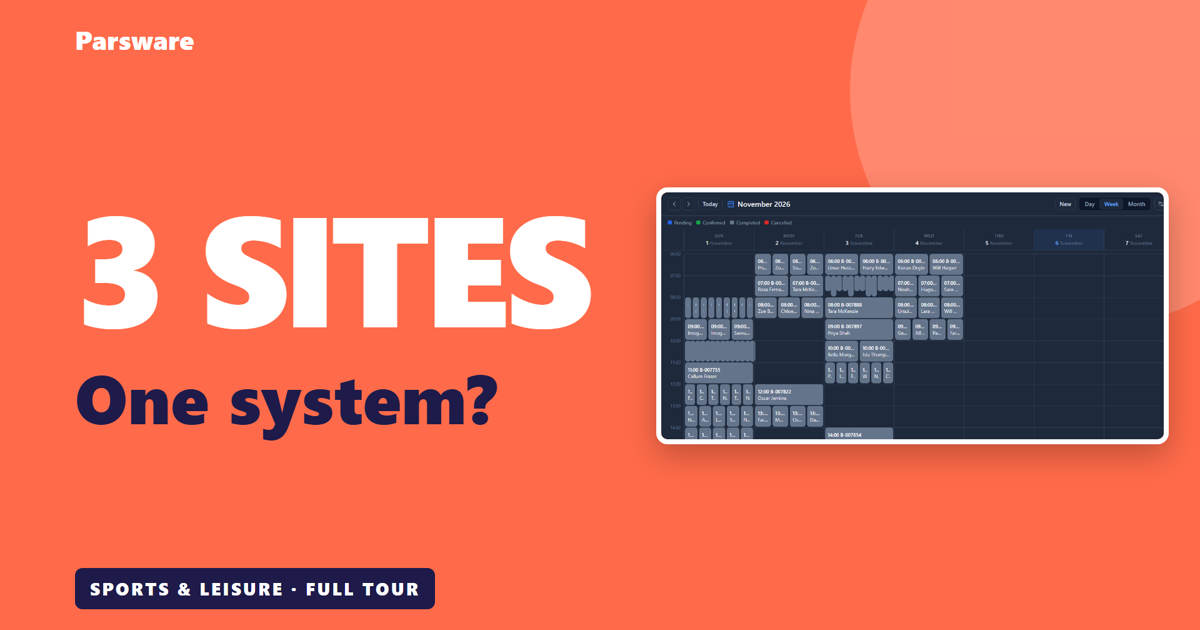
Three sites: a tennis club, a football centre, and a leisure centre with a pool, a studio and a café. How many systems does it take to run them?
For most clubs the honest answer is four or five. A diary for bookings. A spreadsheet of members. A card machine that knows nothing about either. And a group chat to sort out everything the other three got wrong.
This article follows one day at a demonstration business running all three sites on Parsware's Sports & Leisure application. Every picture is the real application, with demonstration data. If you would rather watch, the same day is a three-minute film.
Before the doors open
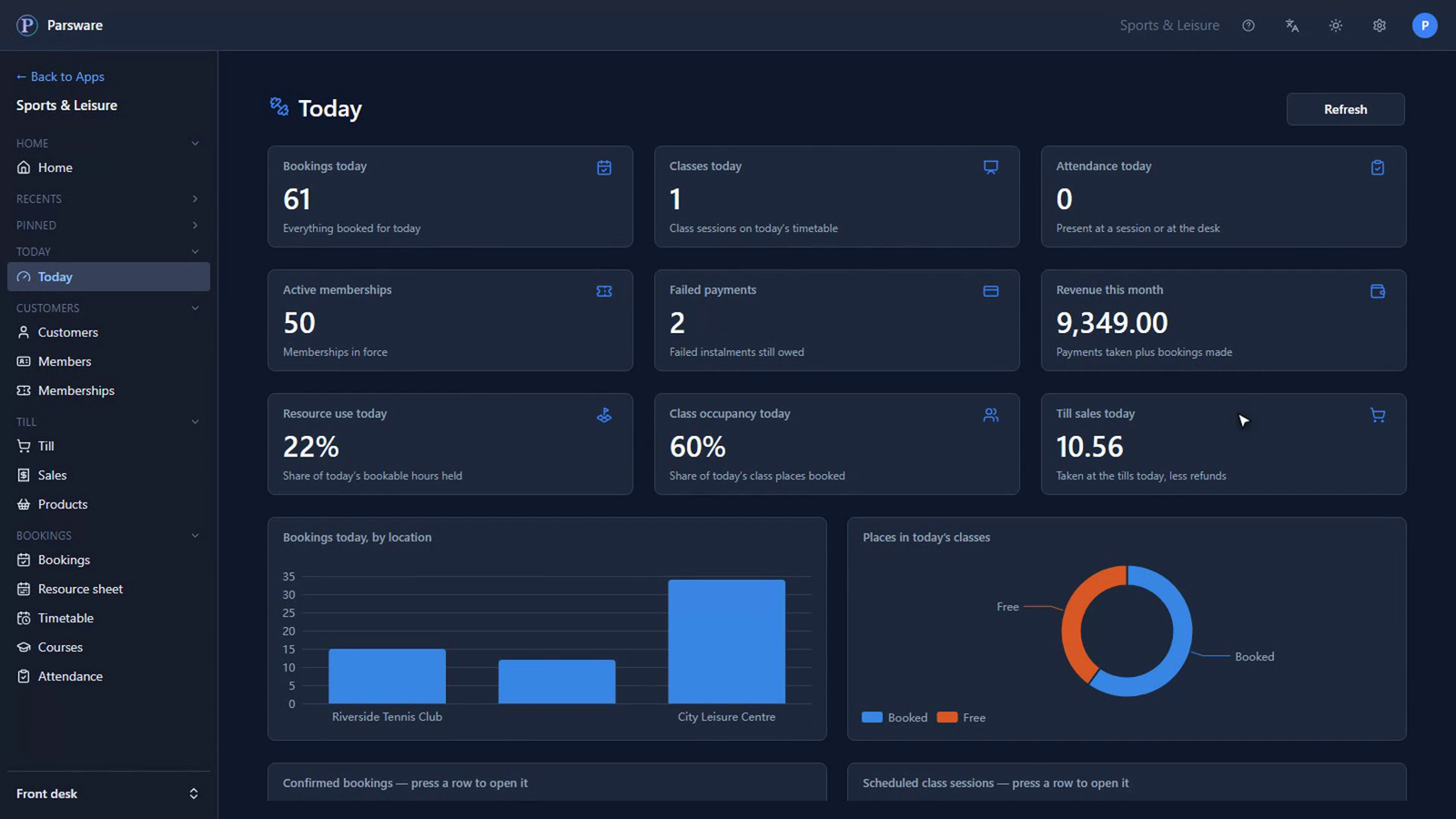
The manager's first screen is Today: today's bookings, today's classes, who has come in, the month's revenue, a failed payment to chase, how much of the courts and lanes are in use, and how full the classes are. It covers all three sites, and nobody had to put it together.
A court, booked once
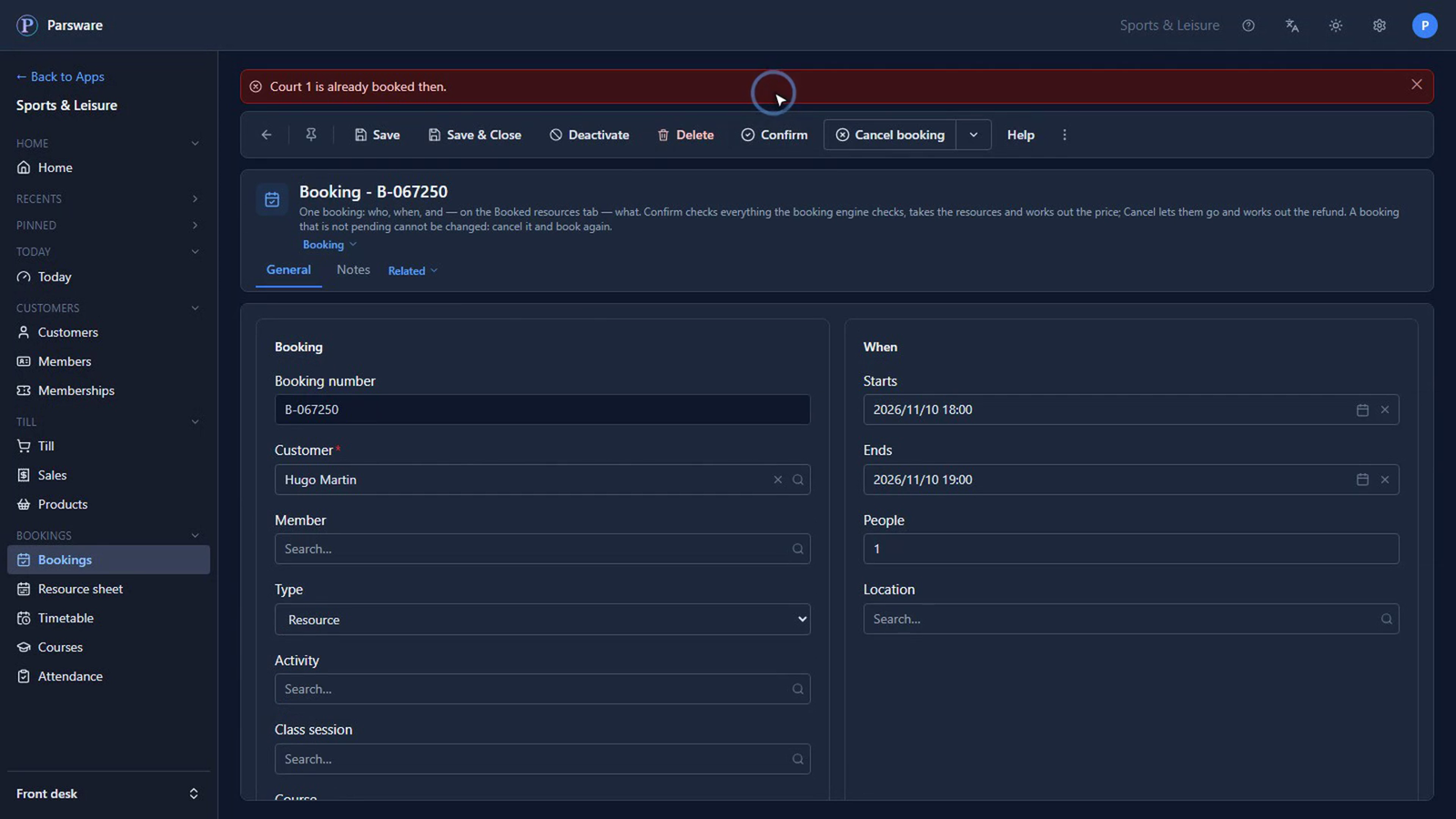
A member rings for a court on Tuesday evening. The receptionist picks her name, the time and Court 1, and presses Confirm. Parsware checks the court is free and the club is open, and prices the booking. She's a tennis member, and her membership includes four courts a month, so this one costs her nothing, and the booking records which part of her membership it used.
Then somebody else asks for Court 1 at the same time. It says no, there and then, rather than on the night with two people standing at the gate:
Classes that know when they're full
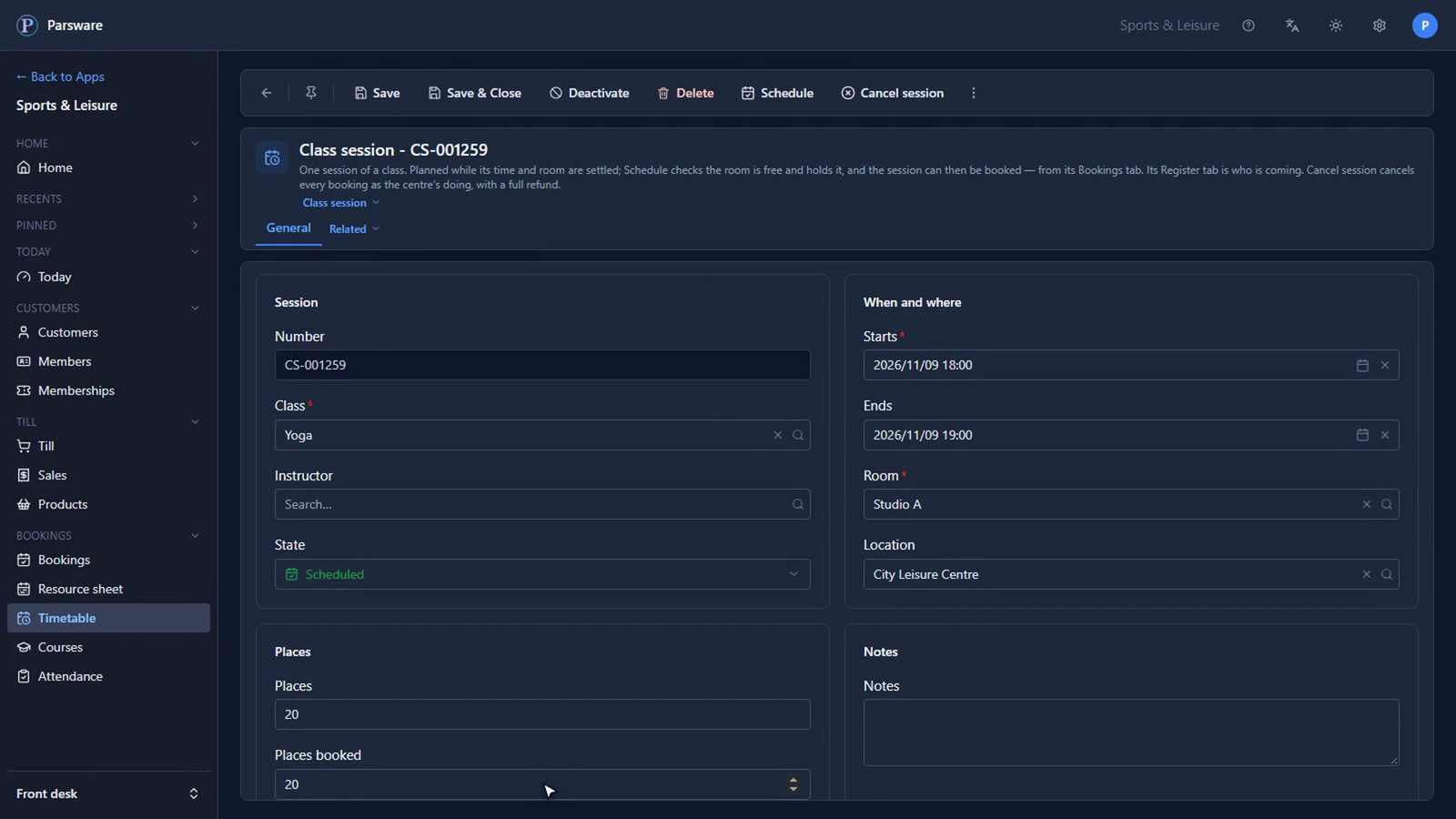
Classes work the same way. Monday's yoga has one place left; book it and the session knows. Twenty places, twenty booked, and the next person is told the class is full instead of being squeezed onto a clipboard.
A café till that knows your members
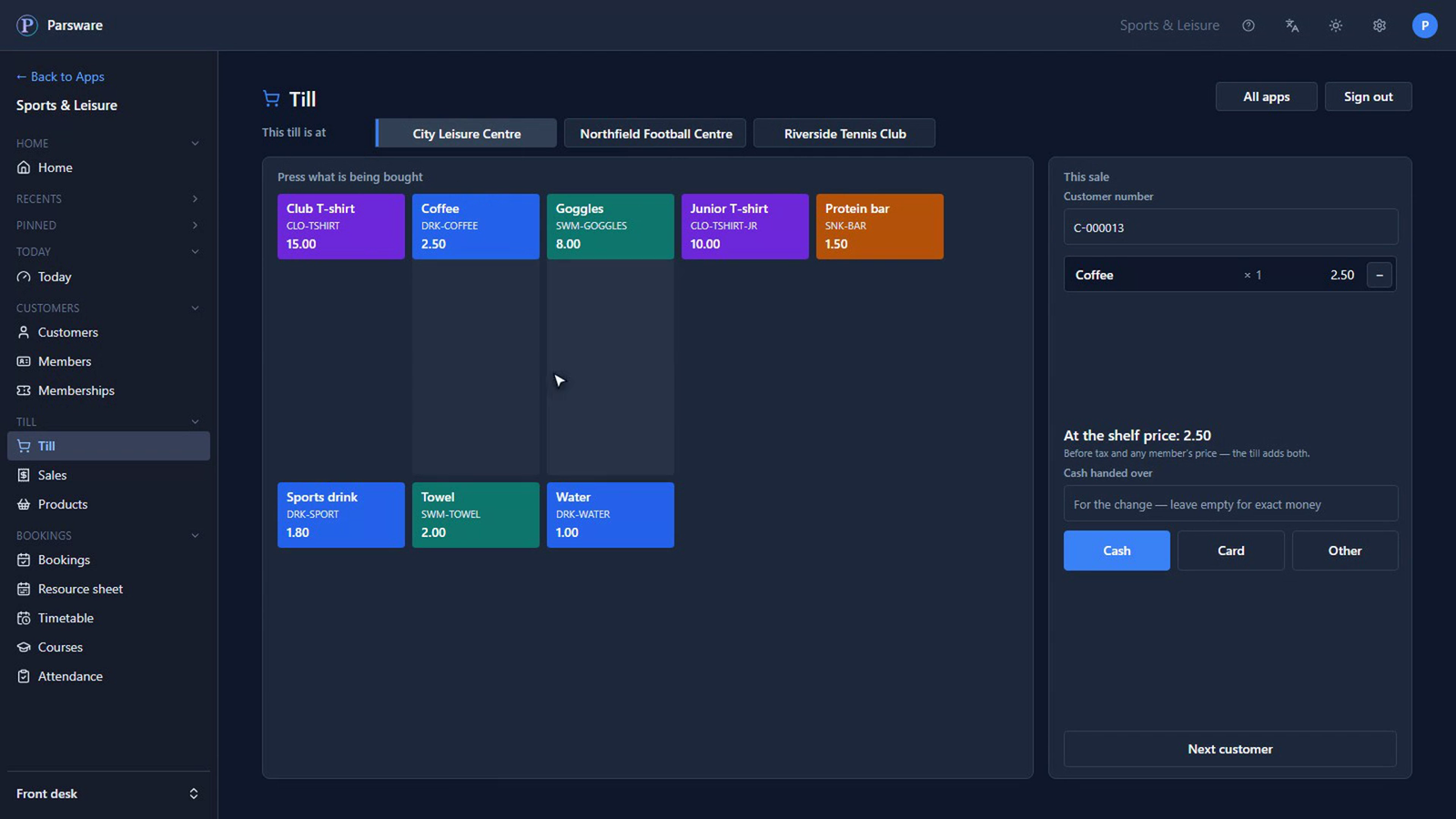
At the café the till knows which site it's at, and it knows your members: type a member's number and they pay members' prices. A coffee and a water, cash handed over, the change worked out, and the sale recorded against the right site.
Memberships that pay in instalments
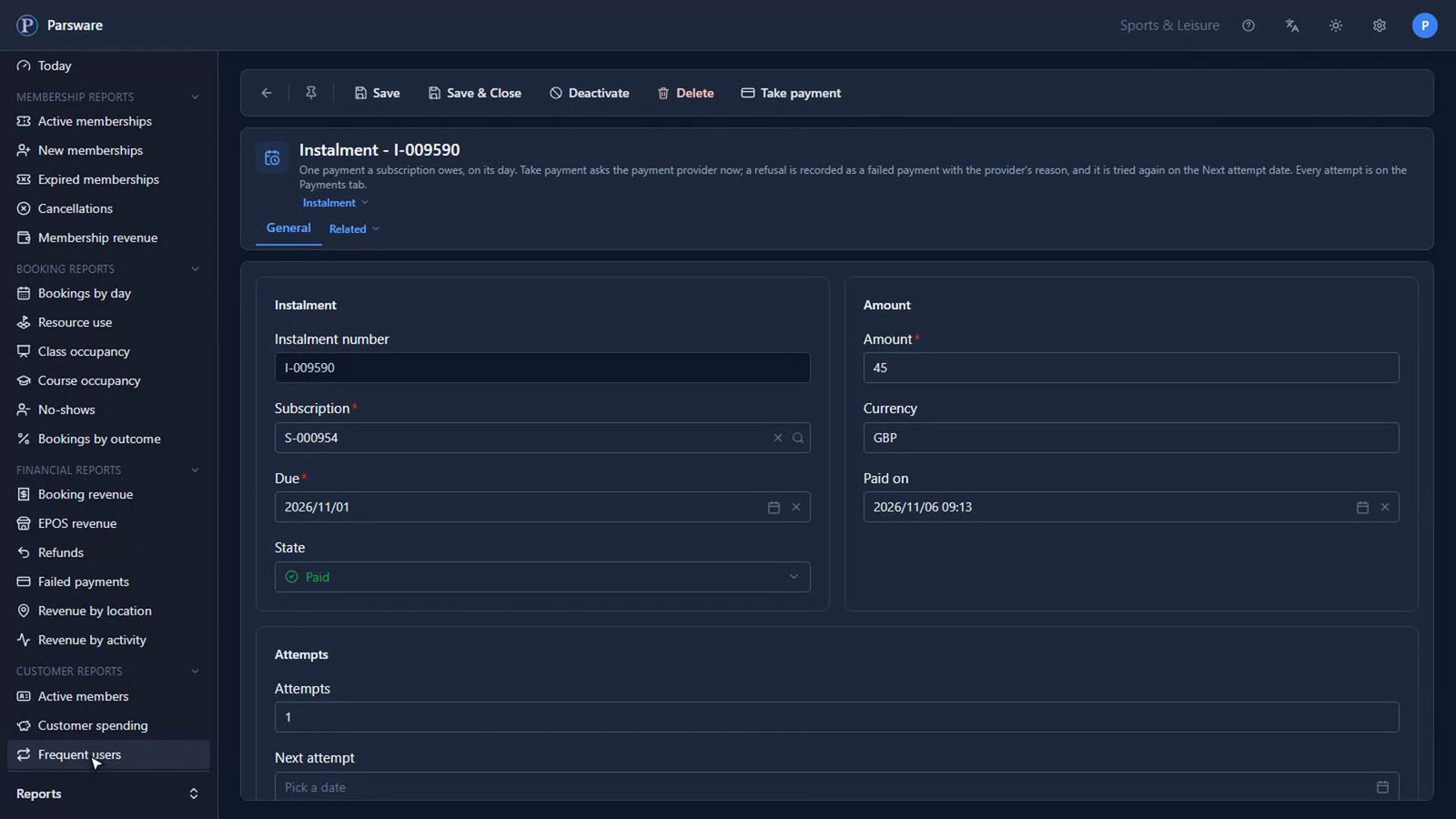
Memberships are paid in instalments, each with its own date. Take one at the desk and it's marked paid; if a card is declined, the membership says so until it is settled, so nobody has to remember who owes what.
The numbers, already added up
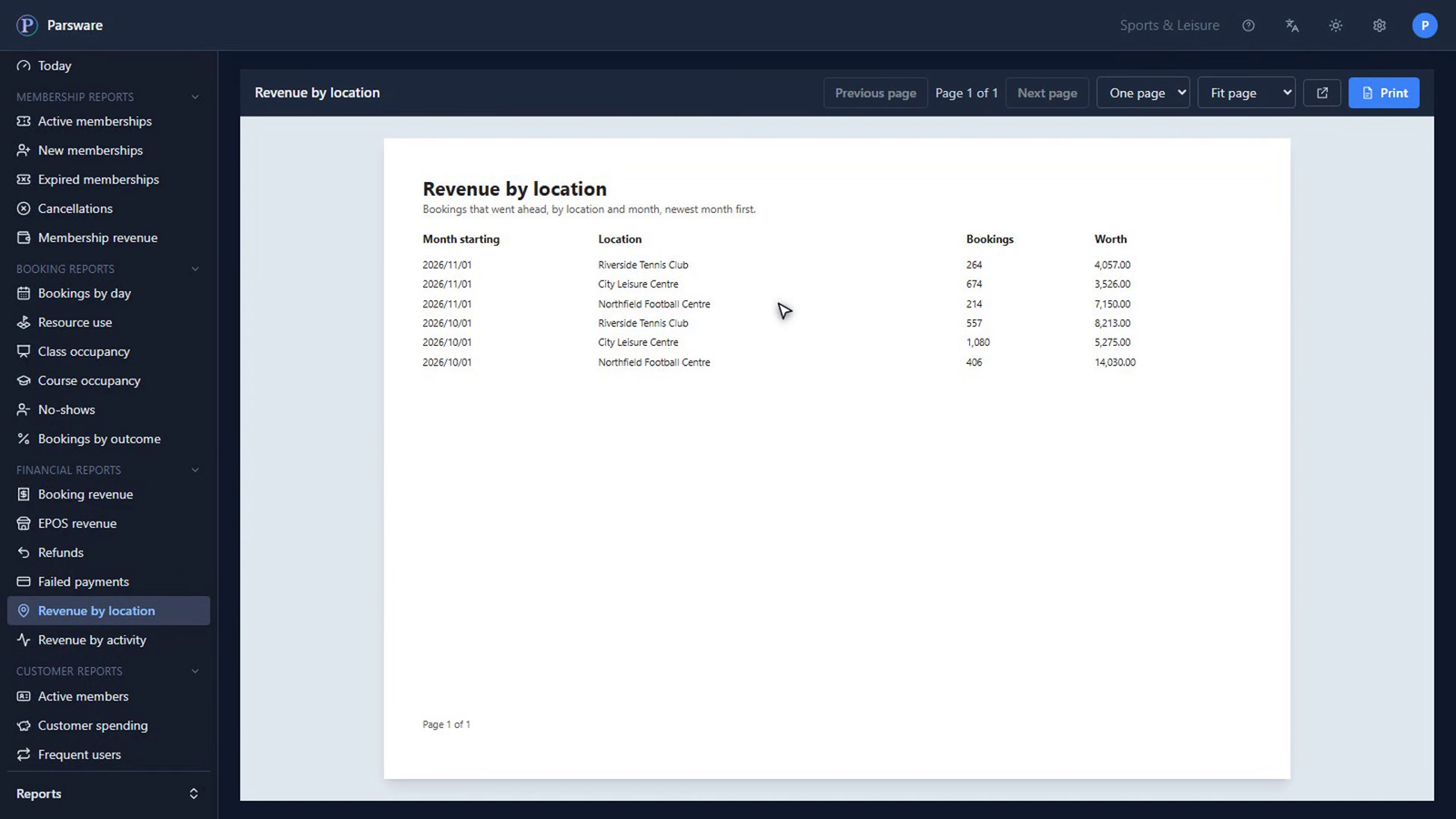
At the end of the day or the month, the reports are already there: revenue by site, how full your classes are, who didn't turn up. They print, and nobody spends Sunday rebuilding them in a spreadsheet.
One system, one set of records
The front desk, the till, the instructors' register and your numbers all work from the same records. A booking made at the desk is the booking the sheet shows, the booking the report counts and the booking the member's allowance is taken from.
The next articles in this series take each part on its own: members and what they get, bookings that can't clash, prices, cancellations, classes, the till, billing, booking online, and your numbers.
Tell us how your business runs, and we'll show it to you running. Get in touch.