The café till that knows your members
A coffee is £2.50, and £2 for a member. So who at the counter knows which customer is which? Here is a demonstration club whose till knows its members, works out the change, and writes every sale down against the right site.
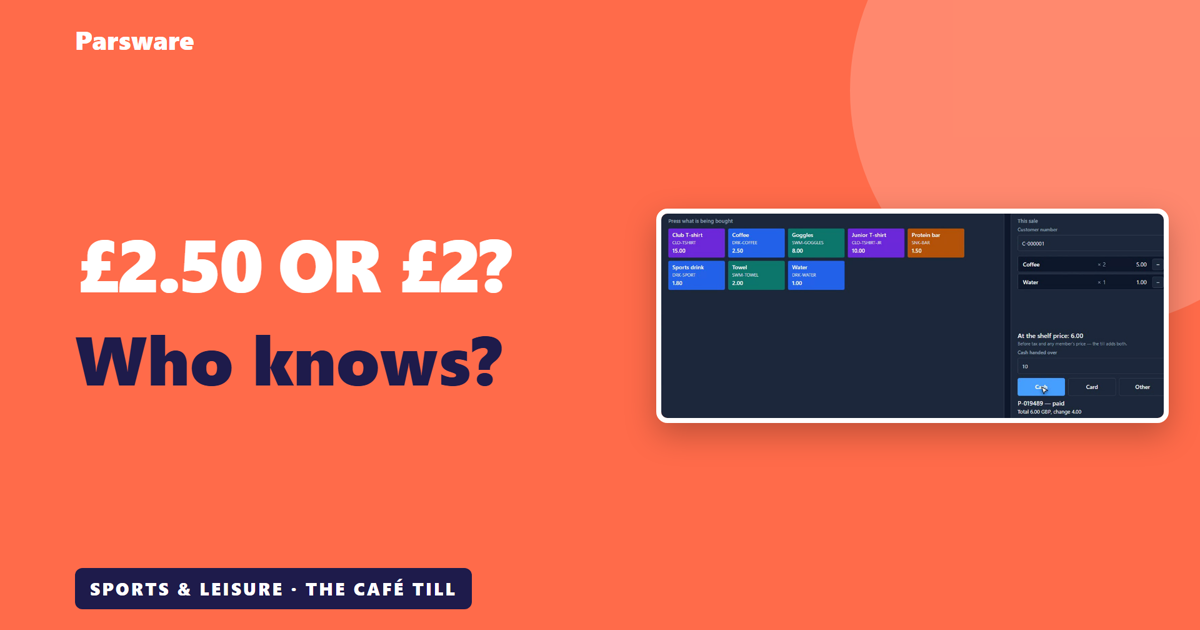
A coffee is £2.50. For a member, it's £2. So who, at the café counter, knows which customer is which?
At most clubs, the café runs on a card machine that knows nothing about the club. Members' prices are a list taped to the counter, sales go in a notebook, and at the end of the day somebody counts the money against it, and wonders who gave whom a member's price.
This is the café till at a demonstration three-site leisure business on Parsware. Every picture is the real application, with demonstration data.
The till
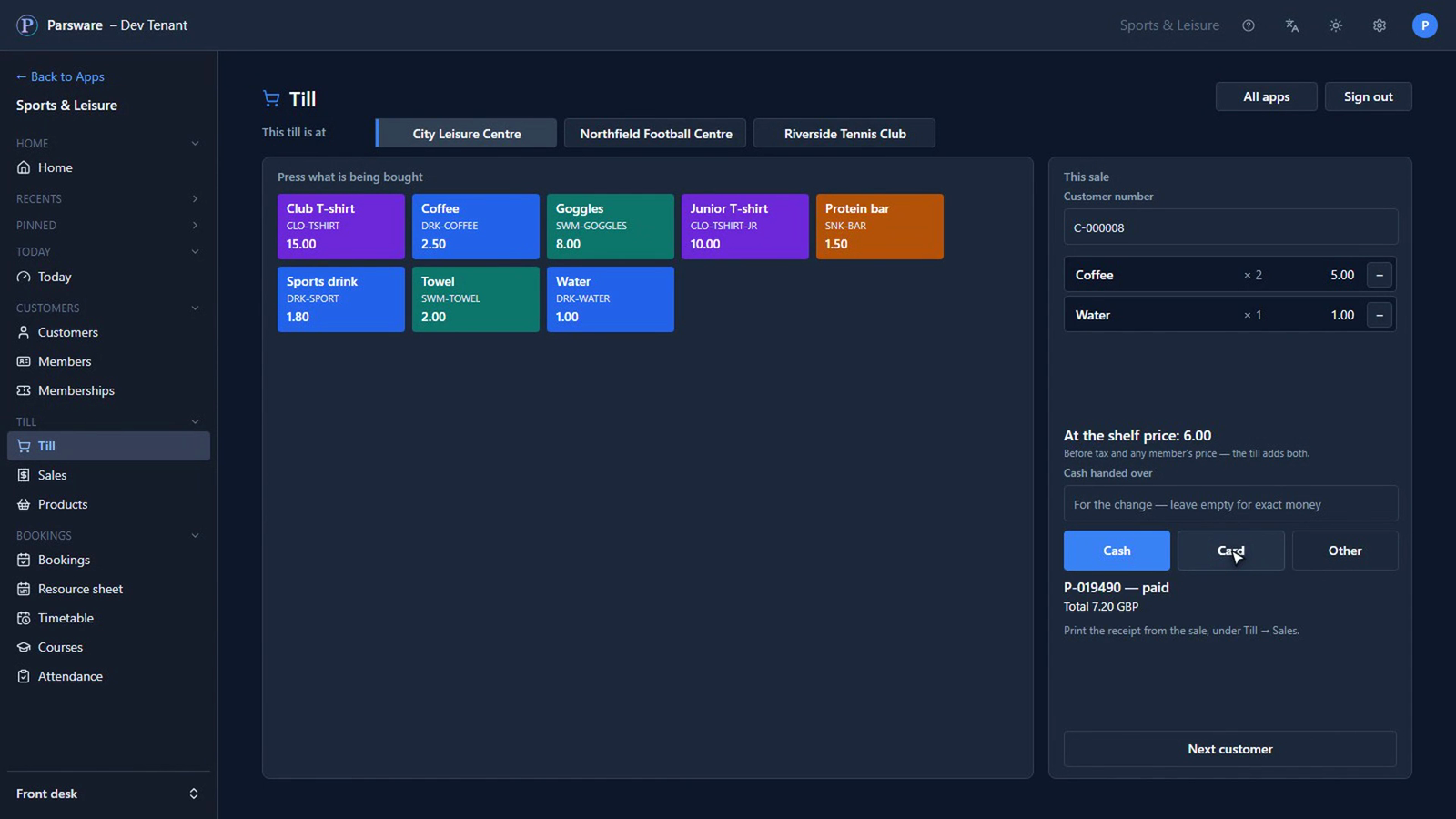
Till → Till is a screen made for the counter. Say where it is (here, City Leisure Centre), then press what's being bought. Every product shows its code and its price on the shelf.
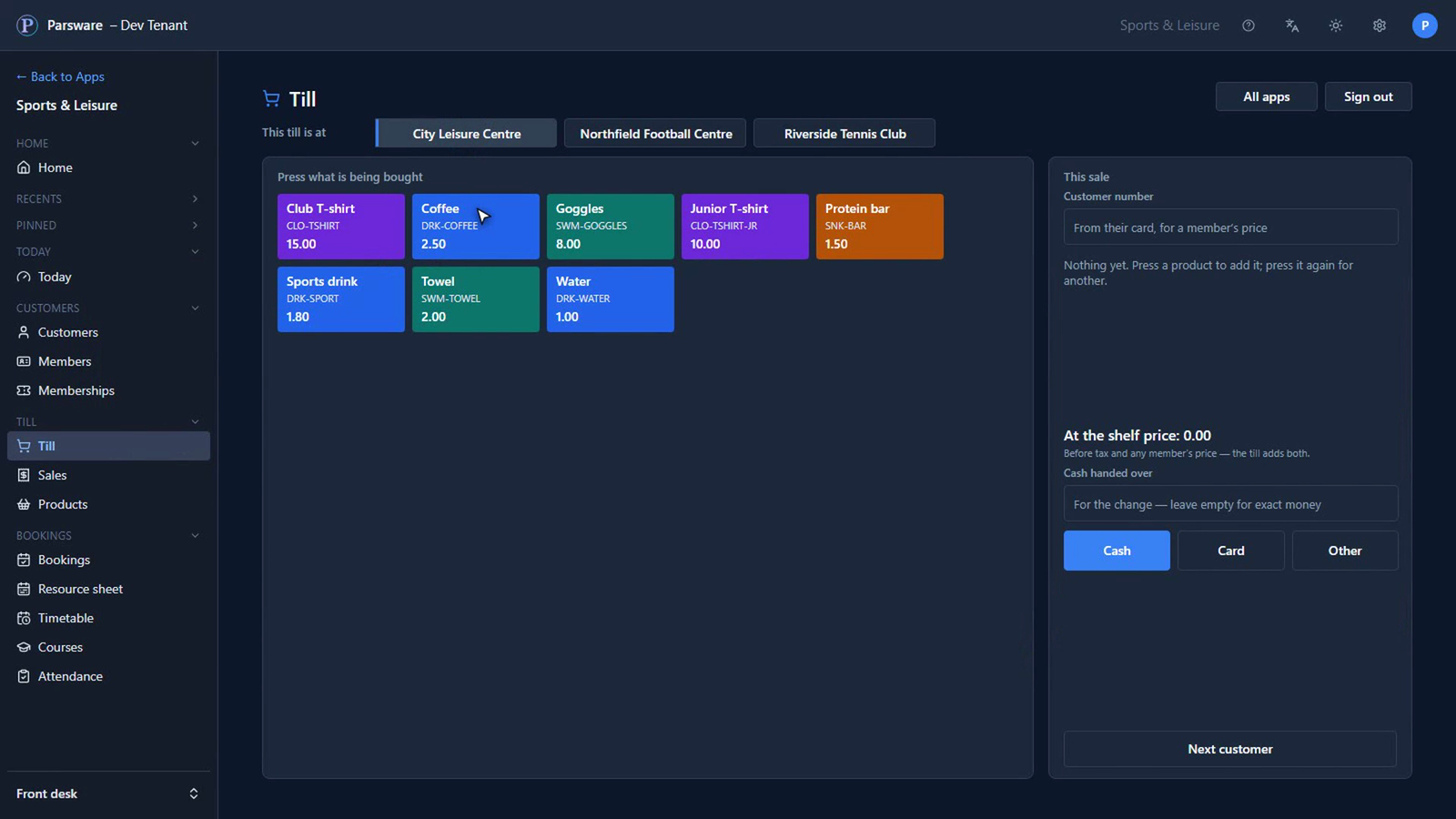
A member's prices, from her card
Amira wants two coffees and a water. Her customer number is on her card, so whoever is serving types it in, and the till knows she's a member.
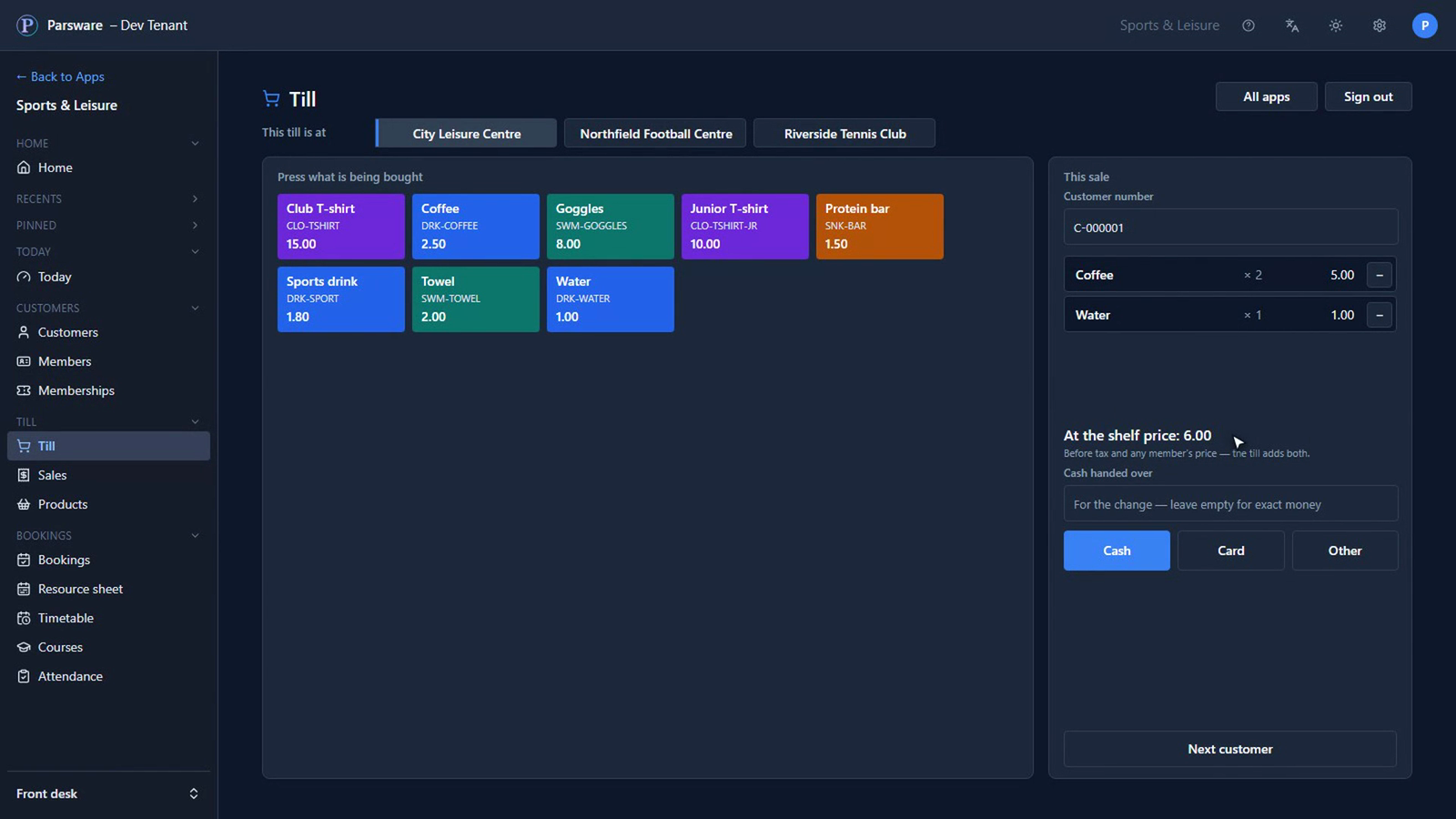
At the shelf price that's £6.00. Members' prices and tax aren't the server's job: the till works them out when the sale is paid, from the products' own prices and the member's membership.
Cash, and the change
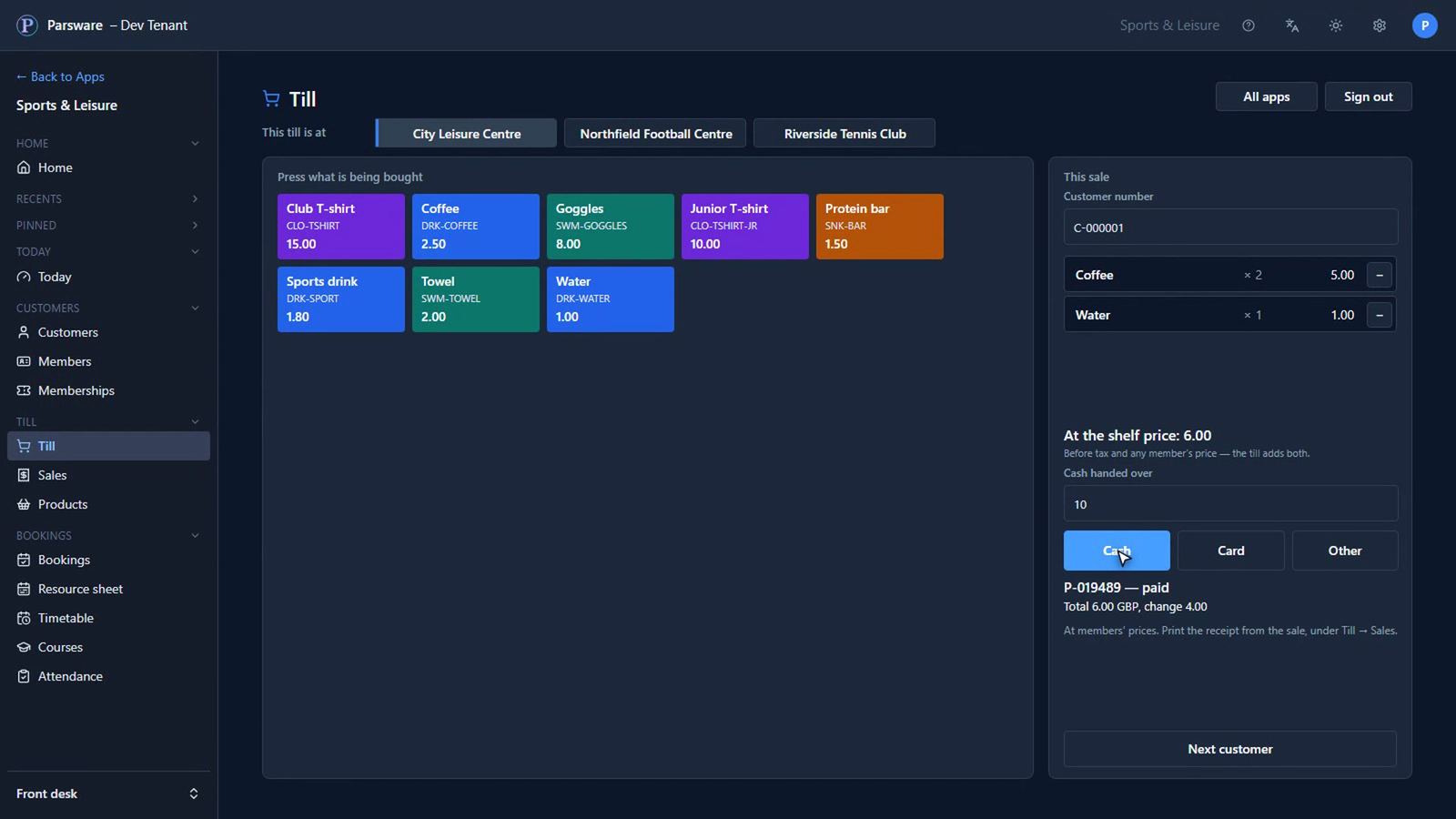
She hands over a ten-pound note: Cash. The till answers with a sale number and what was taken: £6.00 with tax, at members' prices, a pound off her coffees, and £4.00 change.
The same order, not a member
Next customer. Hugo isn't a member, and he wants the same. For him it's £7.20, and he pays by Card, through the club's own payment provider. If a card is declined, the sale stays open and the next attempt pays that same sale, so nobody is charged twice.
Every sale, written down
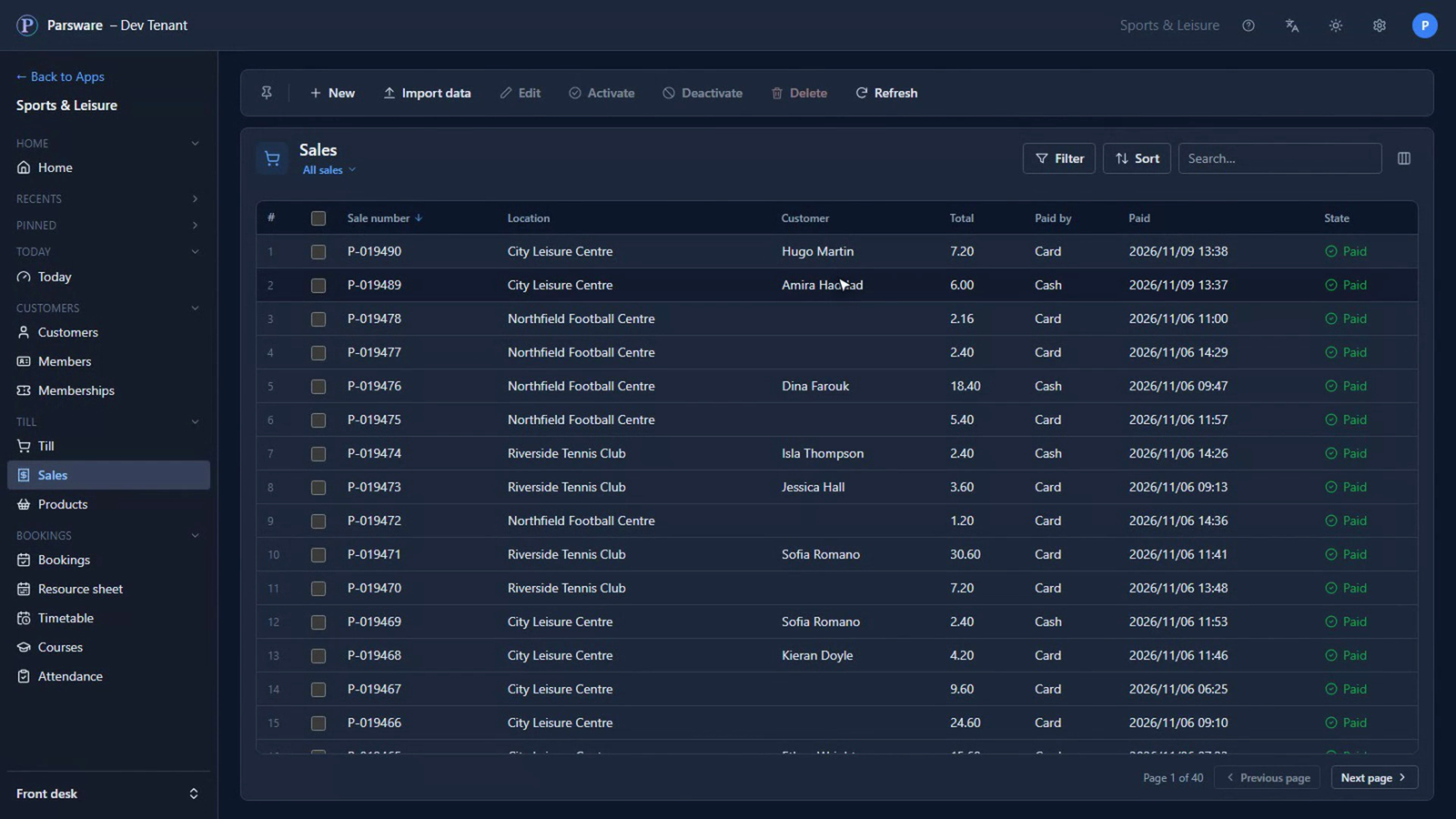
Till → Sales has every sale, against the right site: who bought, how much, how they paid and when. Nobody copies a notebook into a spreadsheet, and the money taken at the till counts in the day's figures alongside bookings and memberships.
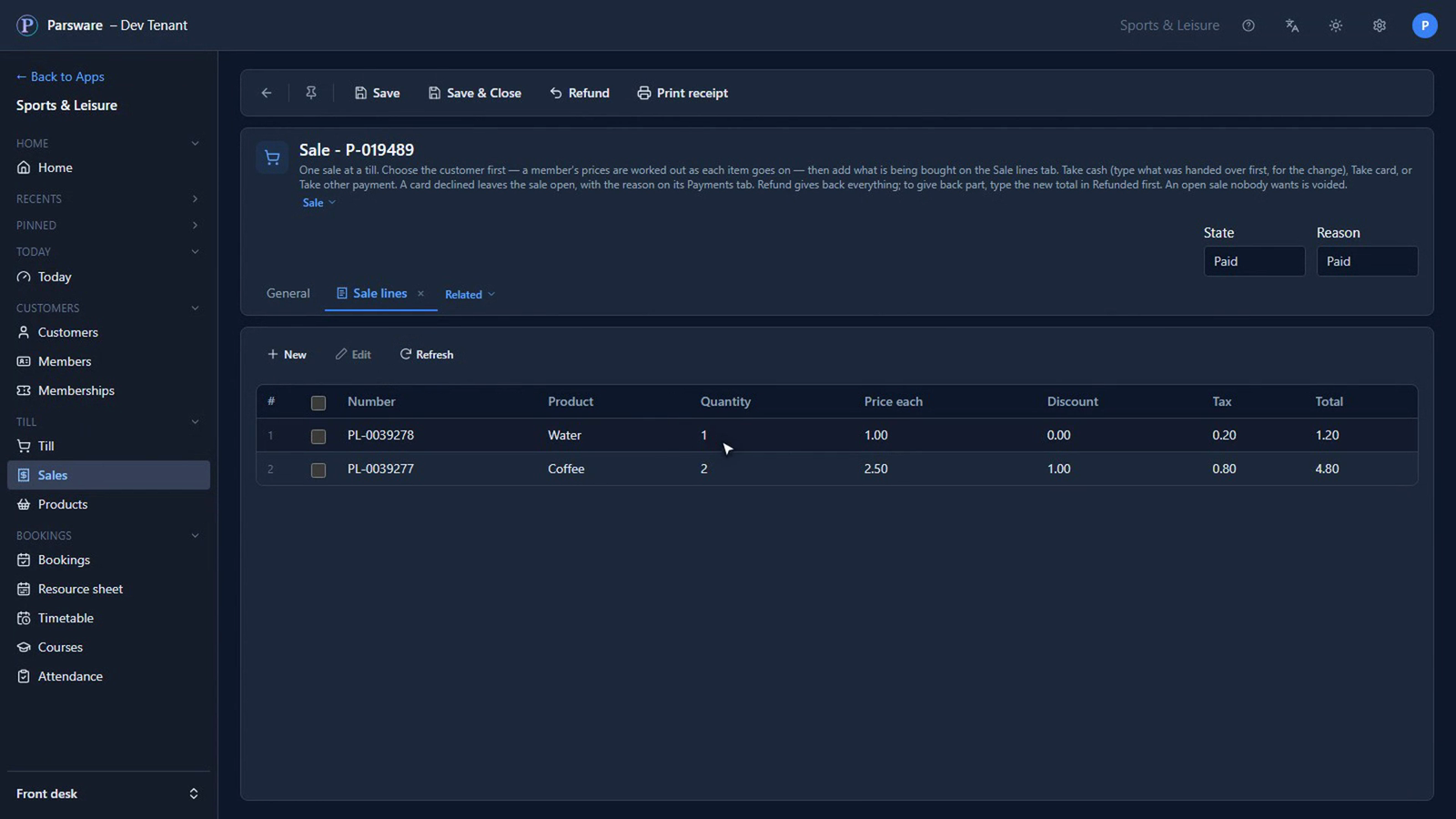
Amira's sale shows each line: her coffees at the members' price, a pound off, and the tax on every line.
Part of a sale refunded
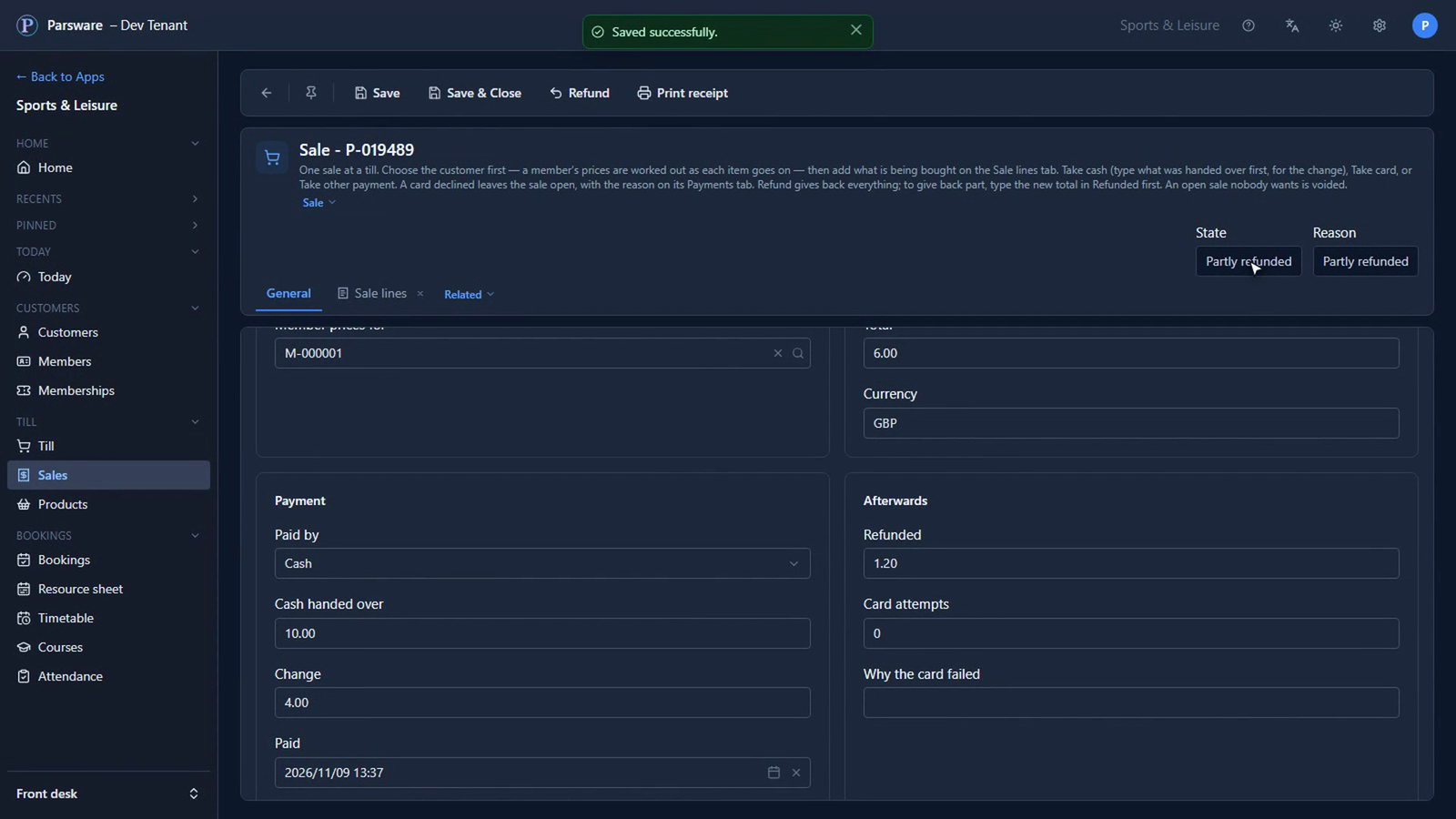
Her water ends up on the floor. On the sale, type what's given back (£1.20) into Refunded, and press Refund. It was cash, so no card provider is asked: the money is handed back over the counter, and the sale says Partly refunded. A paid sale is never edited or deleted. The refund is recorded beside it.
The receipt
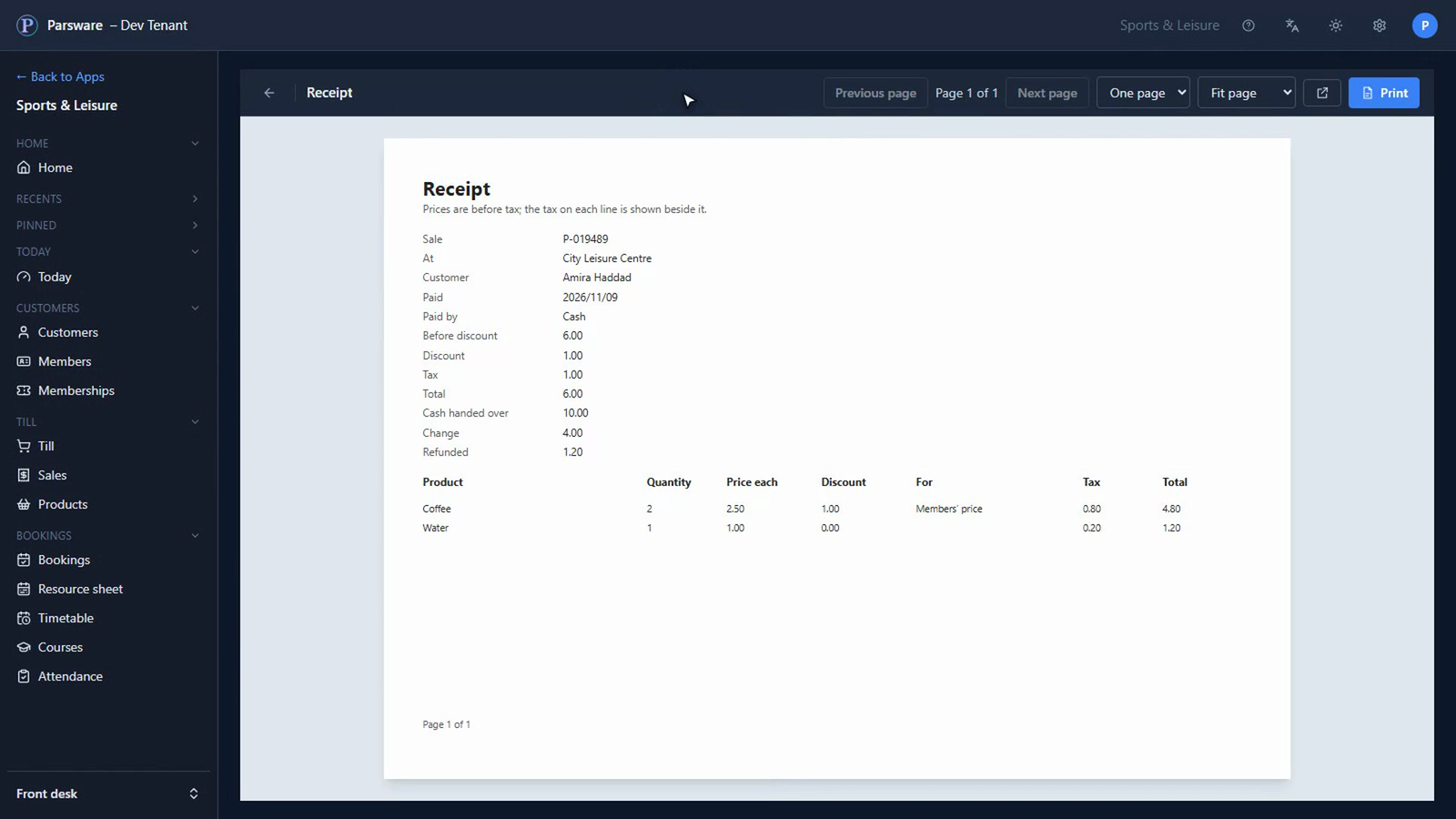
Print receipt prints from the sale: the members' price on her coffees, the cash she handed over, her change, and the £1.20 she was given back.
What changes for you
The price at the counter is the system's, not whoever is serving's. Members pay members' prices because the till knows them, the change is worked out, and every sale is written down against the right site, with its refunds and its receipt.
Tell us how your business runs, and we'll show it to you running. Get in touch.