Prices that work themselves out
Eight pounds or eighteen? Members and non-members, peak evenings and weekends: at most clubs every booking is a sum somebody does in their head. Here is a demonstration club where prices are a list of rules, and every booking says which rule set its price.

Eight pounds, or eighteen? Who works out what a court costs, and do they get it right every time?
Most clubs price from a sheet on the wall: members and non-members, evenings and weekends, and the exceptions somebody remembers. Every booking is a sum done in somebody's head, and a member who was charged the visitor's price finds out from their bank statement.
This is how prices work at a demonstration three-site leisure business on Parsware. Every picture is the real application, with demonstration data.
Prices as a list of rules
A price list is a set of rules kept in one place. Members pay £8 an hour on weekdays, £12 at peak and £15 at weekends; everyone else pays £18, or £25 at weekends. There are rules for other things too: a fee for floodlights on the football pitches, ten percent off the studio for members, a price per person for weekend yoga.
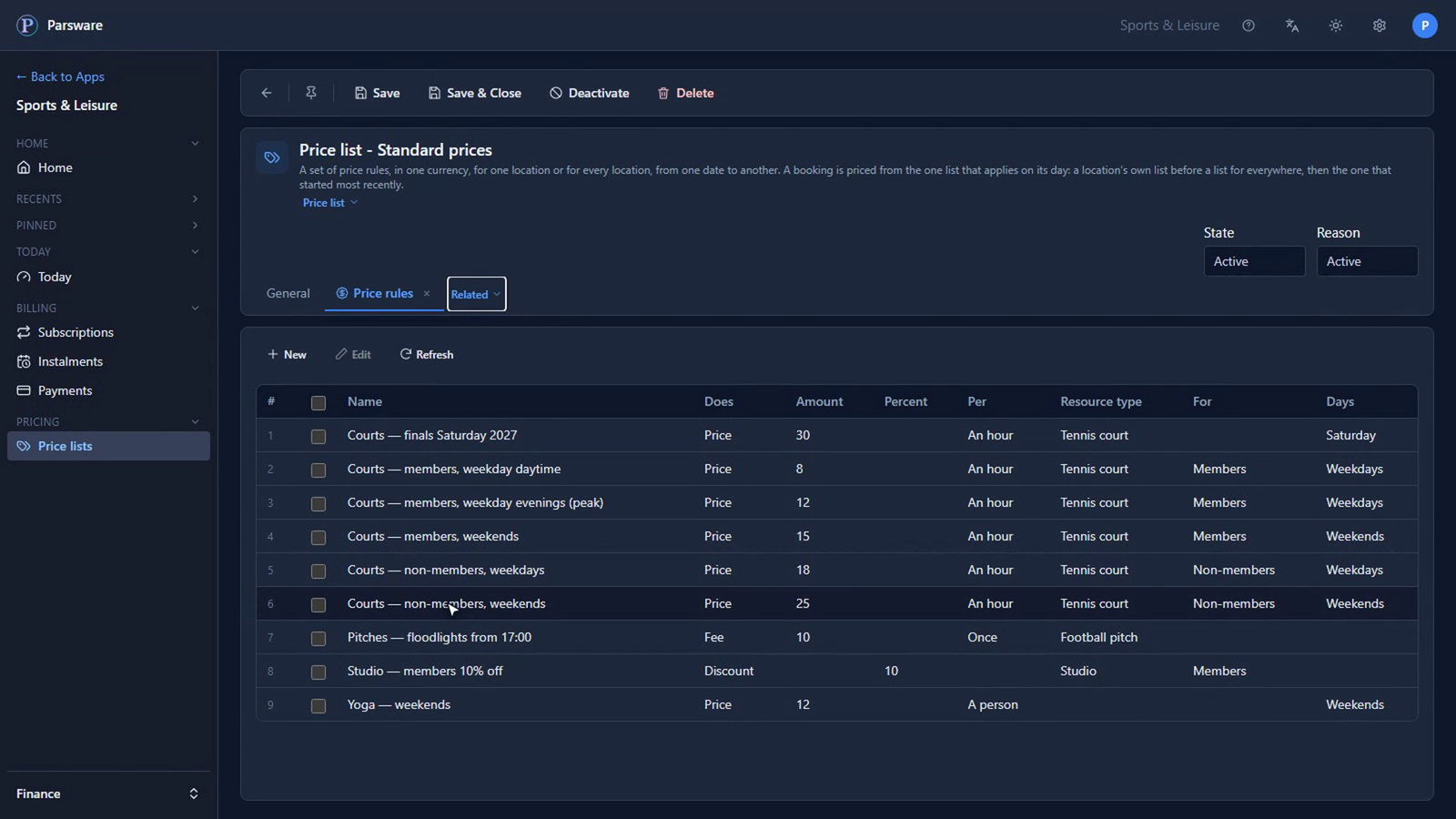
Each rule says when it applies
A rule says what it is for, whom it is for and when. Peak is weekdays, from 17:00 until 22:00, for members. Leave a condition empty and the rule holds for everything; where several prices fit a booking, the most specific one wins.
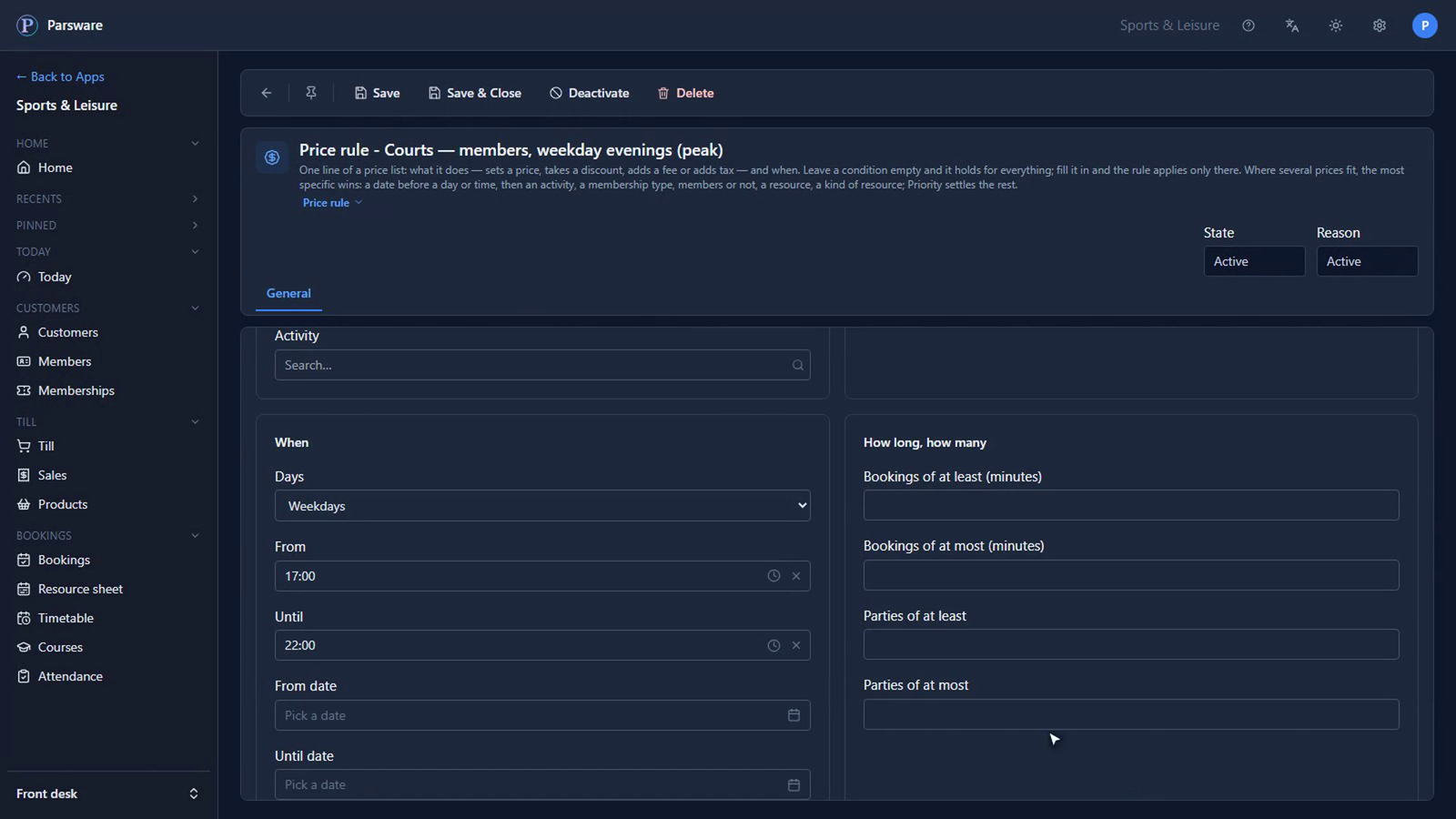
A booking, priced when it is confirmed
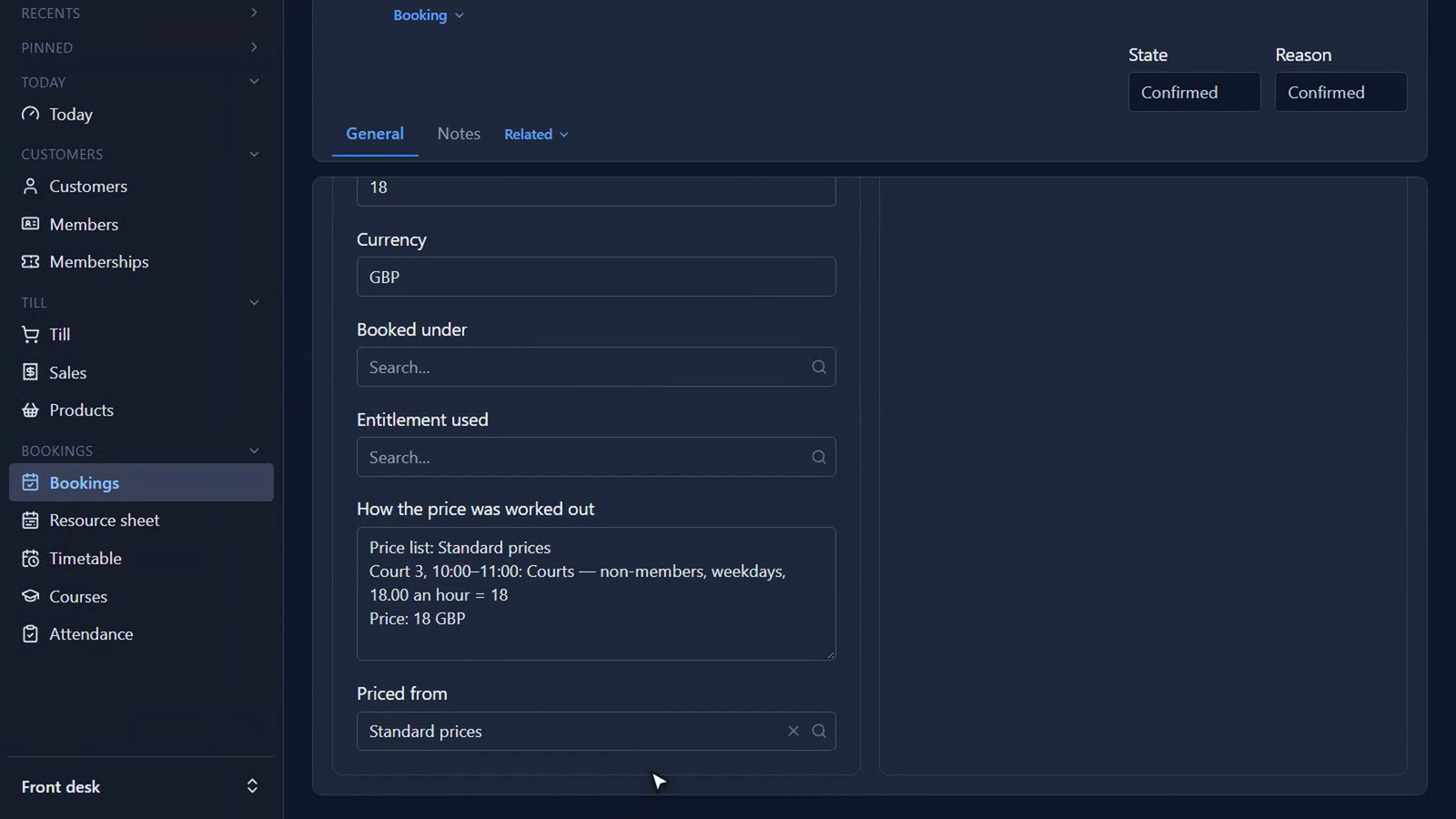
A visitor who isn't a member books a court for Tuesday morning. When the booking is confirmed the price works itself out: £18. The booking also says how, under How the price was worked out: which price list, which rule, and the sum.
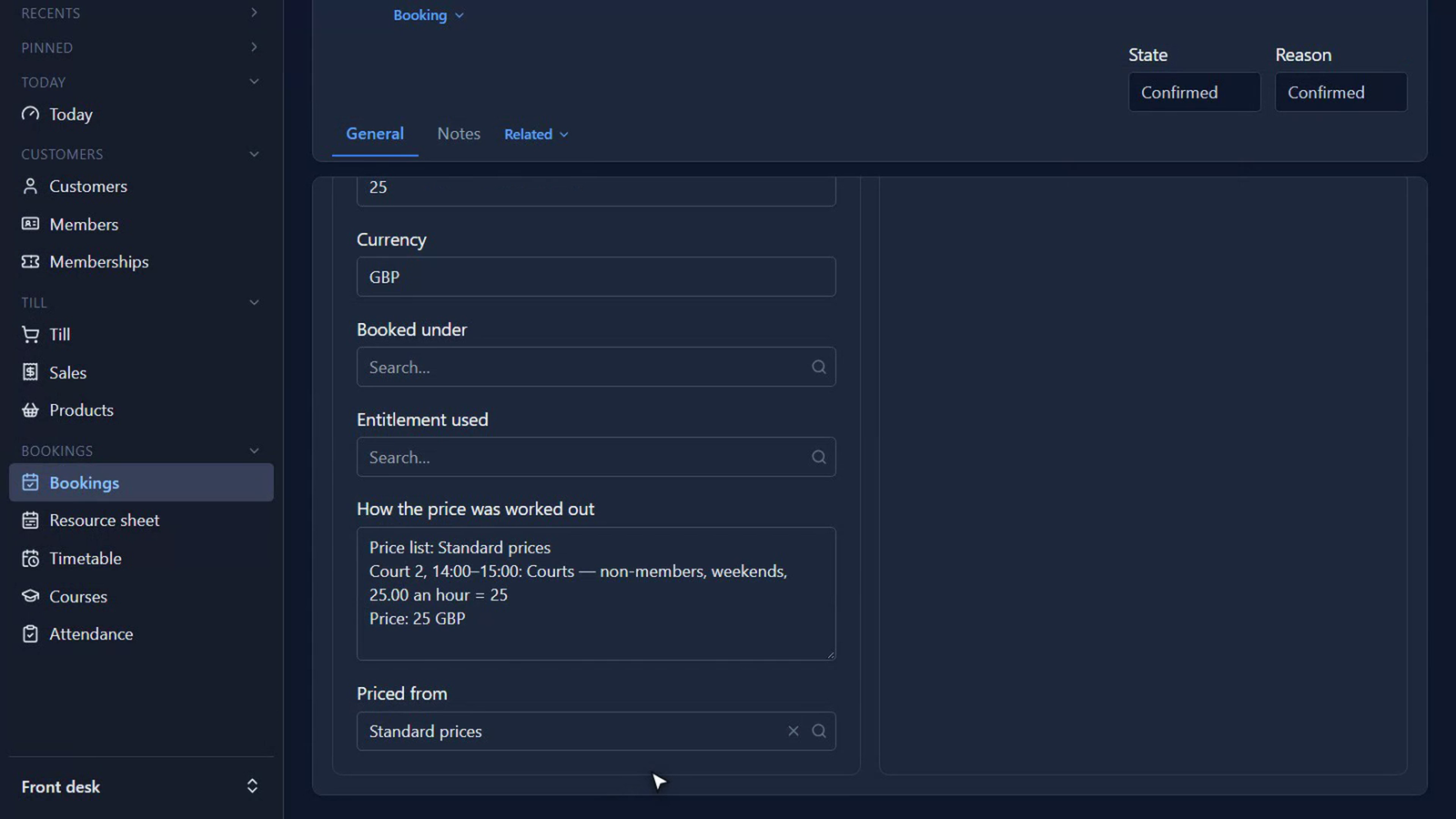
The same visitor on Saturday afternoon pays the weekend price, and the booking says so:
A member's included court
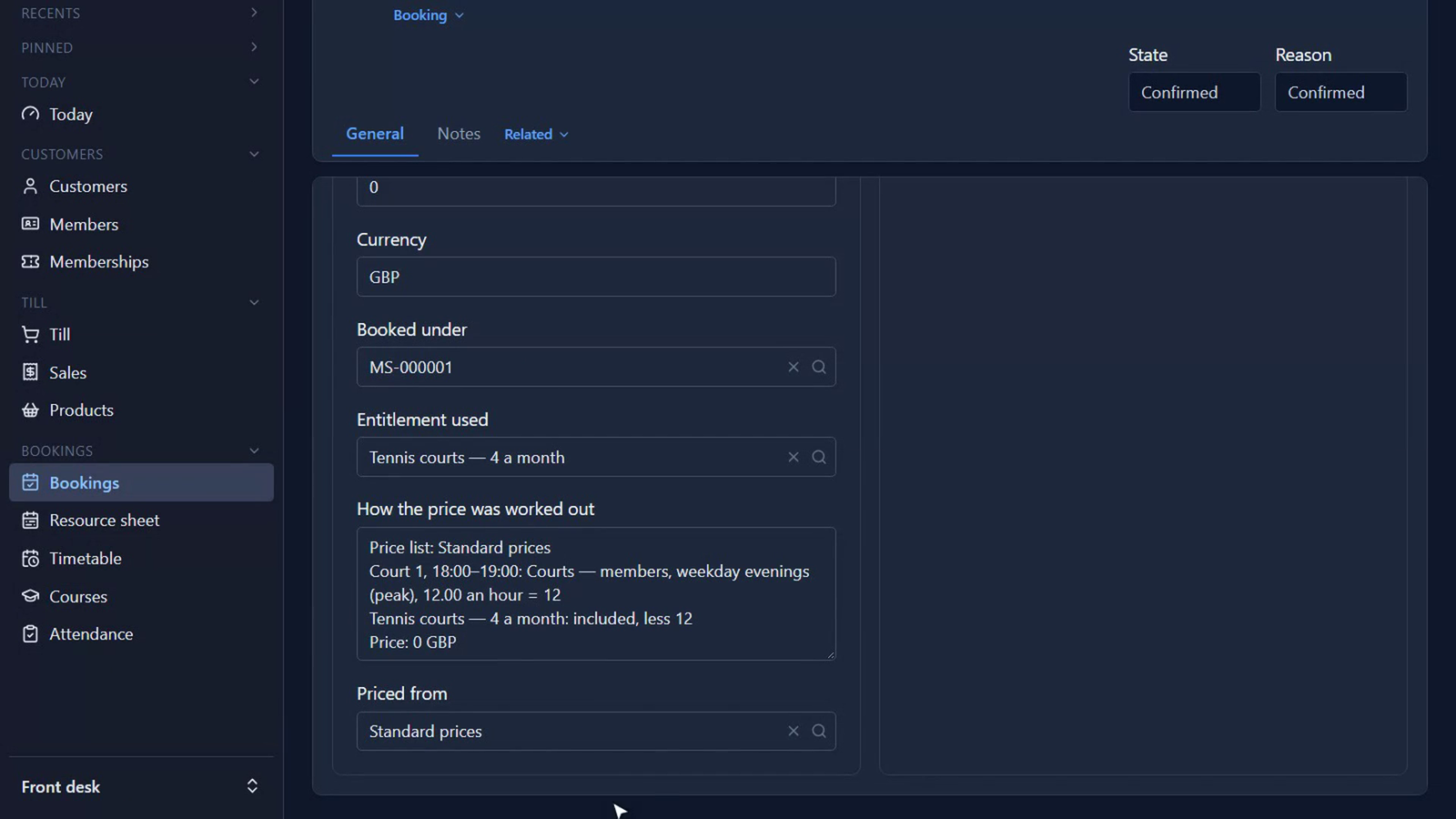
A member on a Tuesday evening is at the peak rate, £12 an hour. But her membership includes four courts a month, so the £12 is taken off and she pays nothing. The booking shows both steps, and which part of her membership it used.
What changes for you
Change a rule, and the next booking is priced by it. A booking that was already confirmed keeps the price it was given, and says why. Nobody at the desk does the sums, and when a customer asks why a court cost what it did, the answer is on the booking.
Tell us how your business runs, and we'll show it to you running. Get in touch.