From "can I buy this?" to the board report
Somebody needs to buy something, and finding out whether they can takes a fortnight of emails. Here is one forklift truck going through a company of forty people, from the question to the page the board reads.
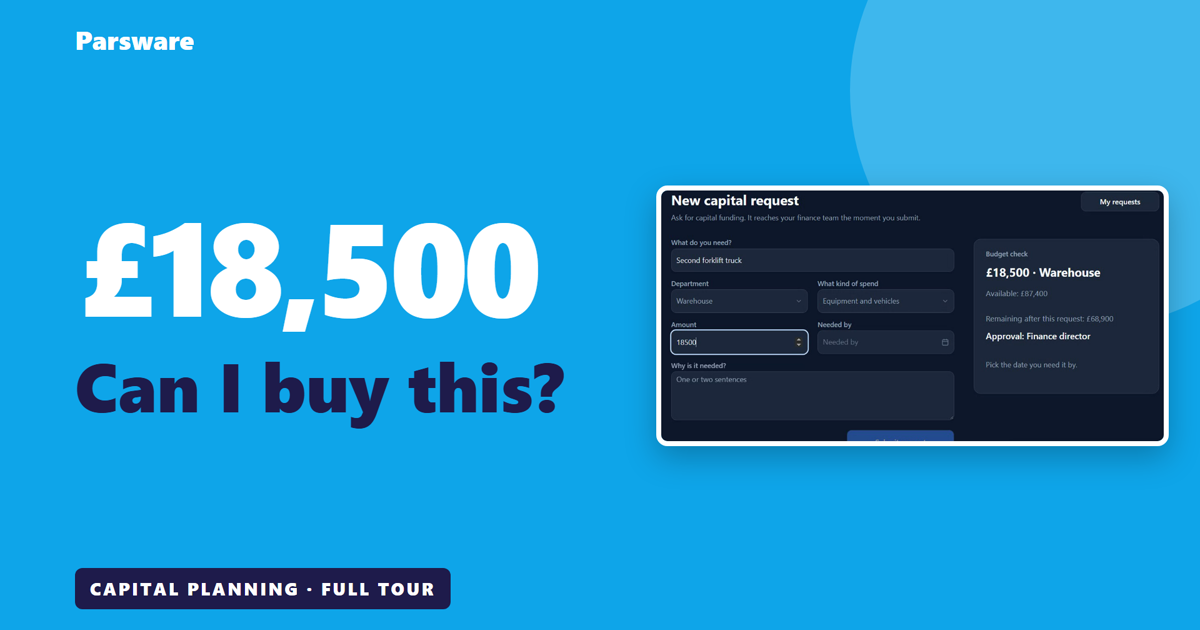
Monday morning. Your warehouse manager needs a second forklift truck, at £18,500. Who do they ask? And is there even the money for it?
In most companies, finding out takes a fortnight. An email to the boss. A message to finance. A spreadsheet somebody last updated in August. And by the time the board meets, nobody is quite sure what was agreed, or by whom.
Here is the same question on Parsware. The business in this tour is a demonstration: a distribution company of forty people, with £600,000 to spend this year across Sales, Operations, the Warehouse and IT. The screens are the real application.
The answer is on screen before anyone asks
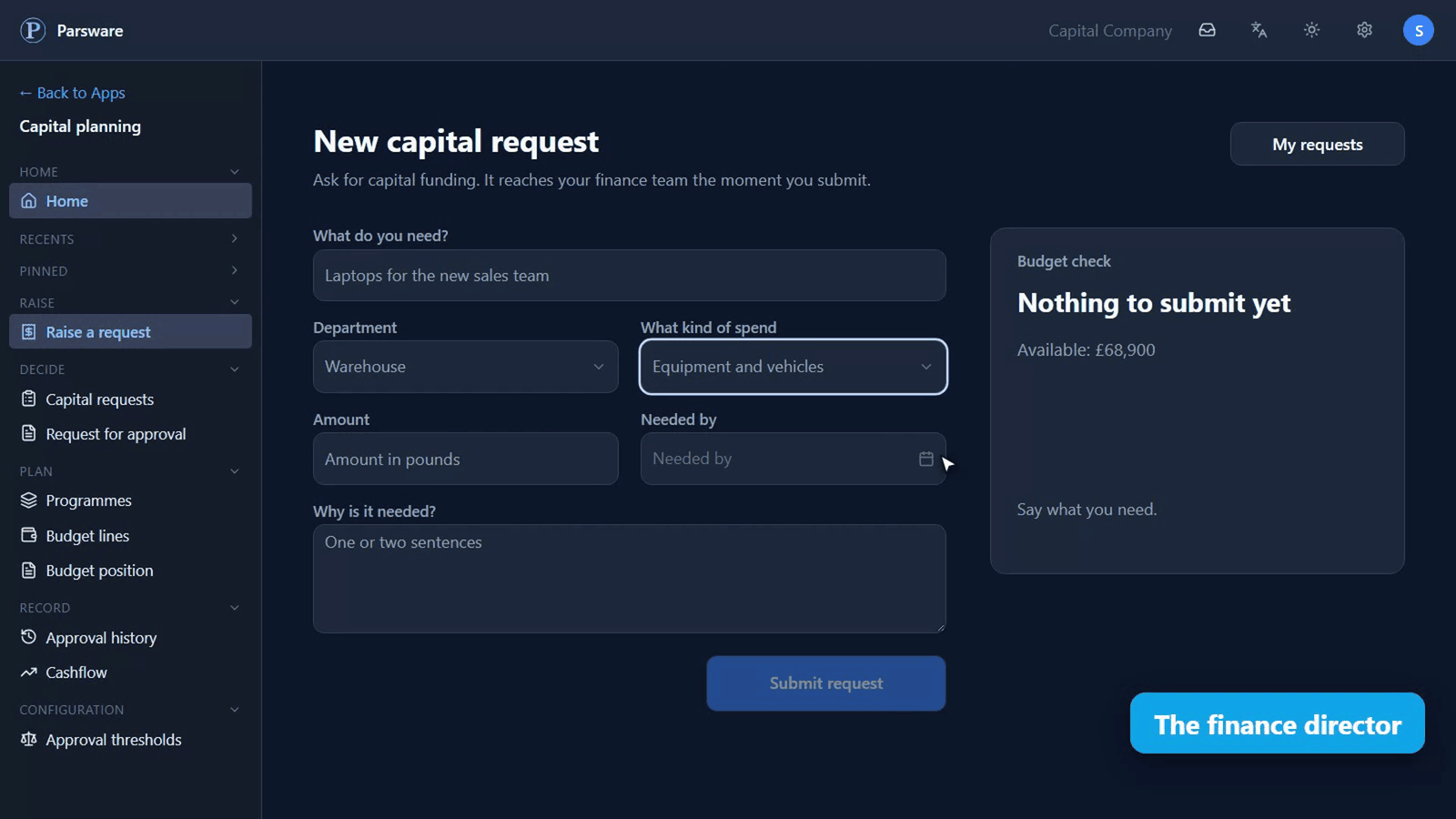
The manager opens one page and says what they need, which department it's for, and what kind of spending it is. Those last two name a budget, so before a price has been typed, the first question is already answered: £87,400 is left for warehouse equipment.
Then they type the price, and the second question answers itself.
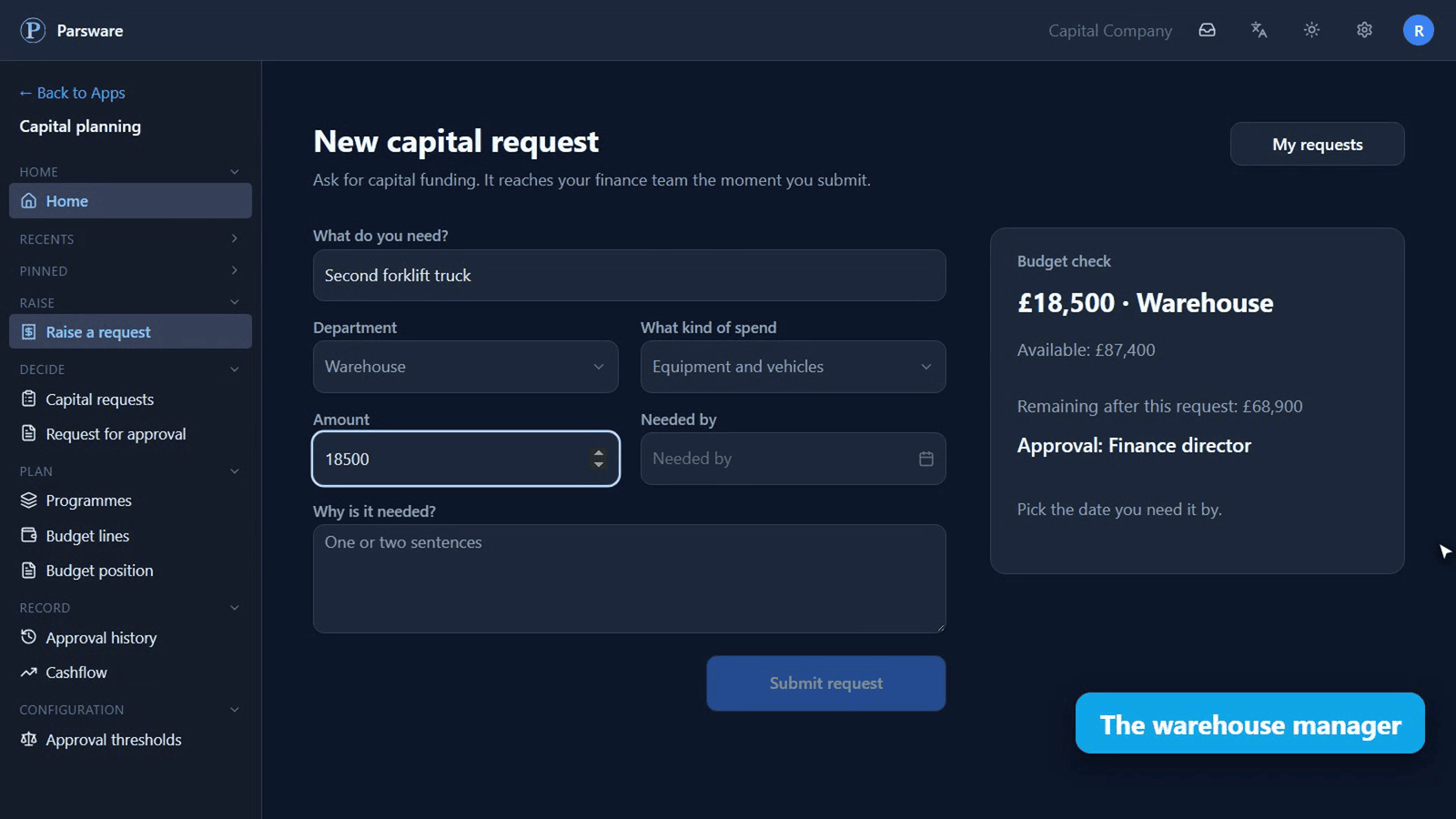
Nobody had to remember the rule or look it up. In this company:
| The amount | Who decides |
|---|---|
| Up to £5,000 | The department head |
| £5,000 to £25,000 | The finance director |
| Over £25,000 | The finance director, then the investment group |
Those limits are yours. They sit in one place, and when you change one, every request after it follows the new rule.
Asking for too much stops there
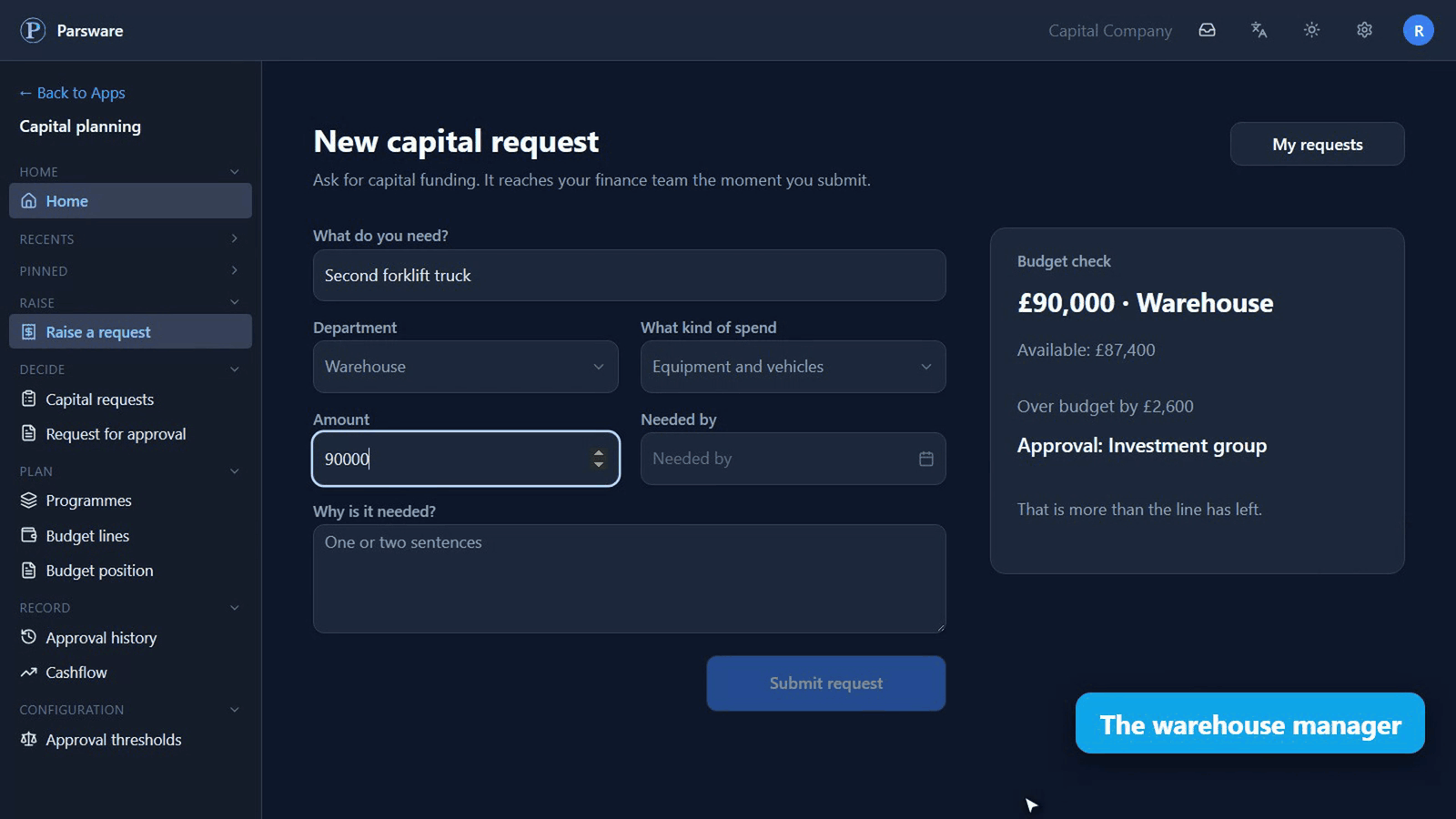
Ask for more than the budget has, and it says so, by how much, and the button to send it goes dead. The manager finds out now, rather than in two weeks' time from somebody who had to go and check.
At the right price, they add the date it's needed and the reason, and send it. That's all of the asking, and they can see where it has got to without chasing anybody.
It is waiting for the right person
Nobody has rung the finance director, and nobody has forwarded anything. The request is waiting for them, with a number on their inbox.
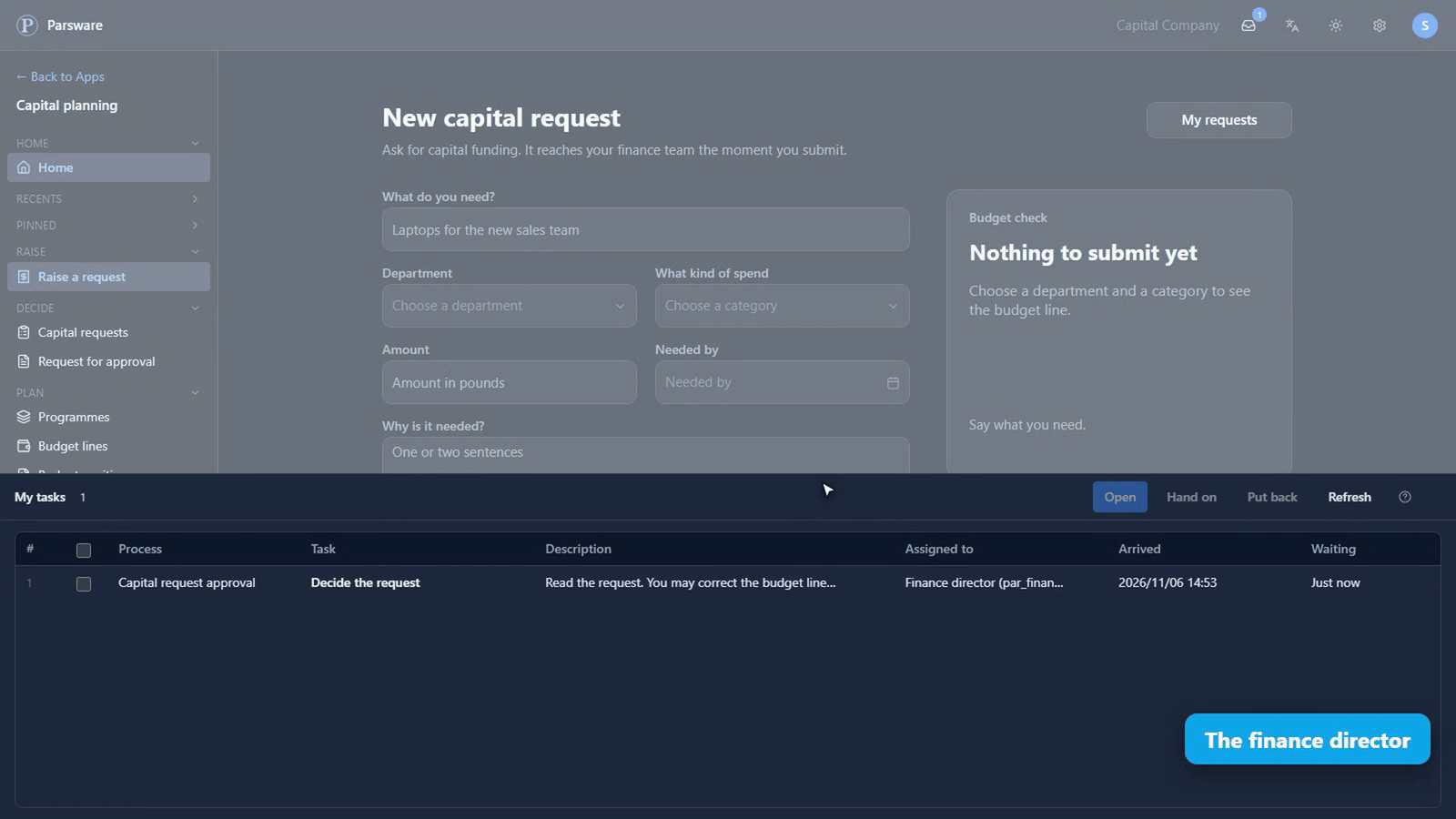
They open it and see what's wanted, which budget it comes from, what it costs, and the reason in the manager's own words. They can send it back for more detail, turn it down, or pass it to the investment group. This one they approve, with a note.
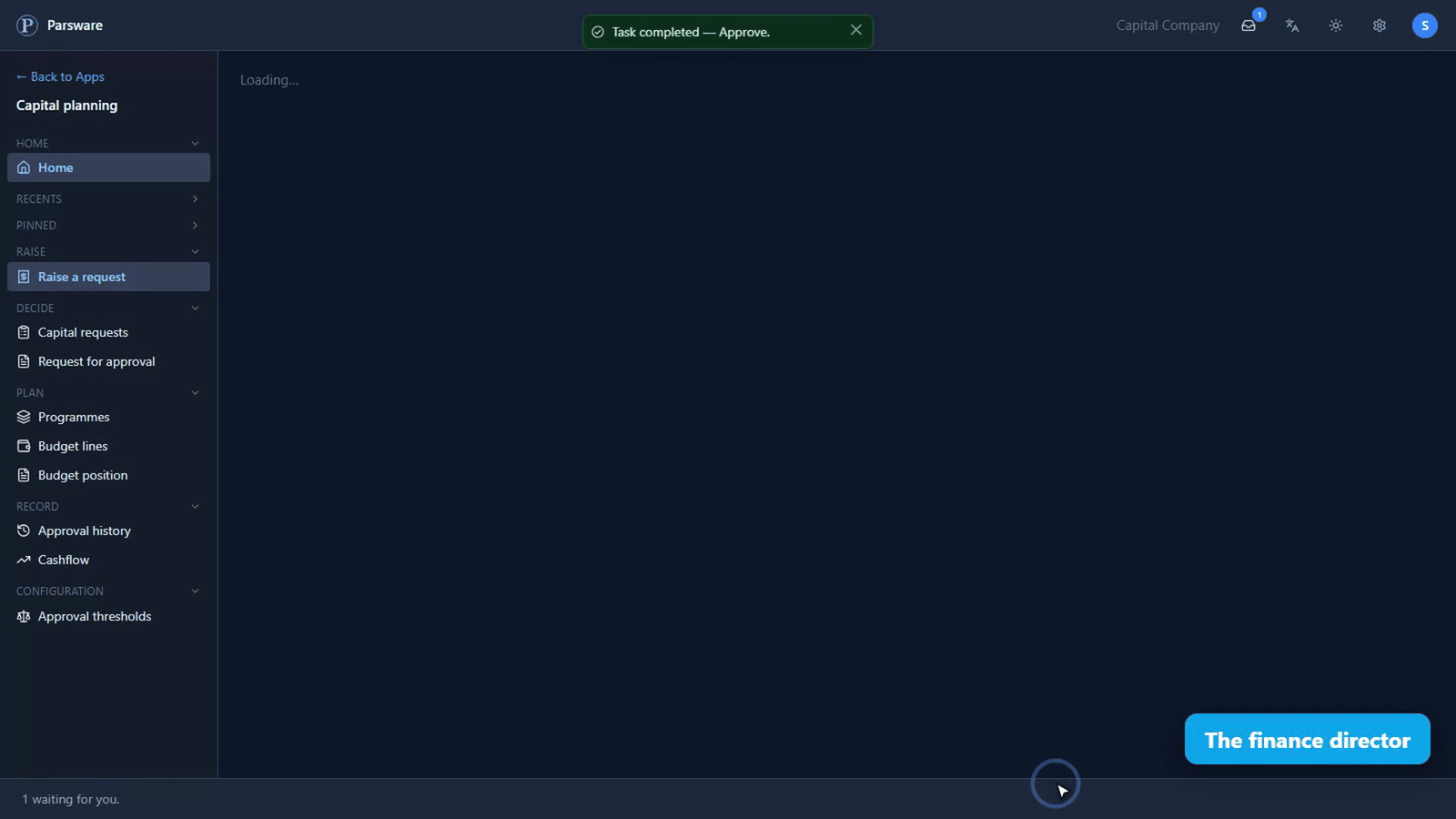
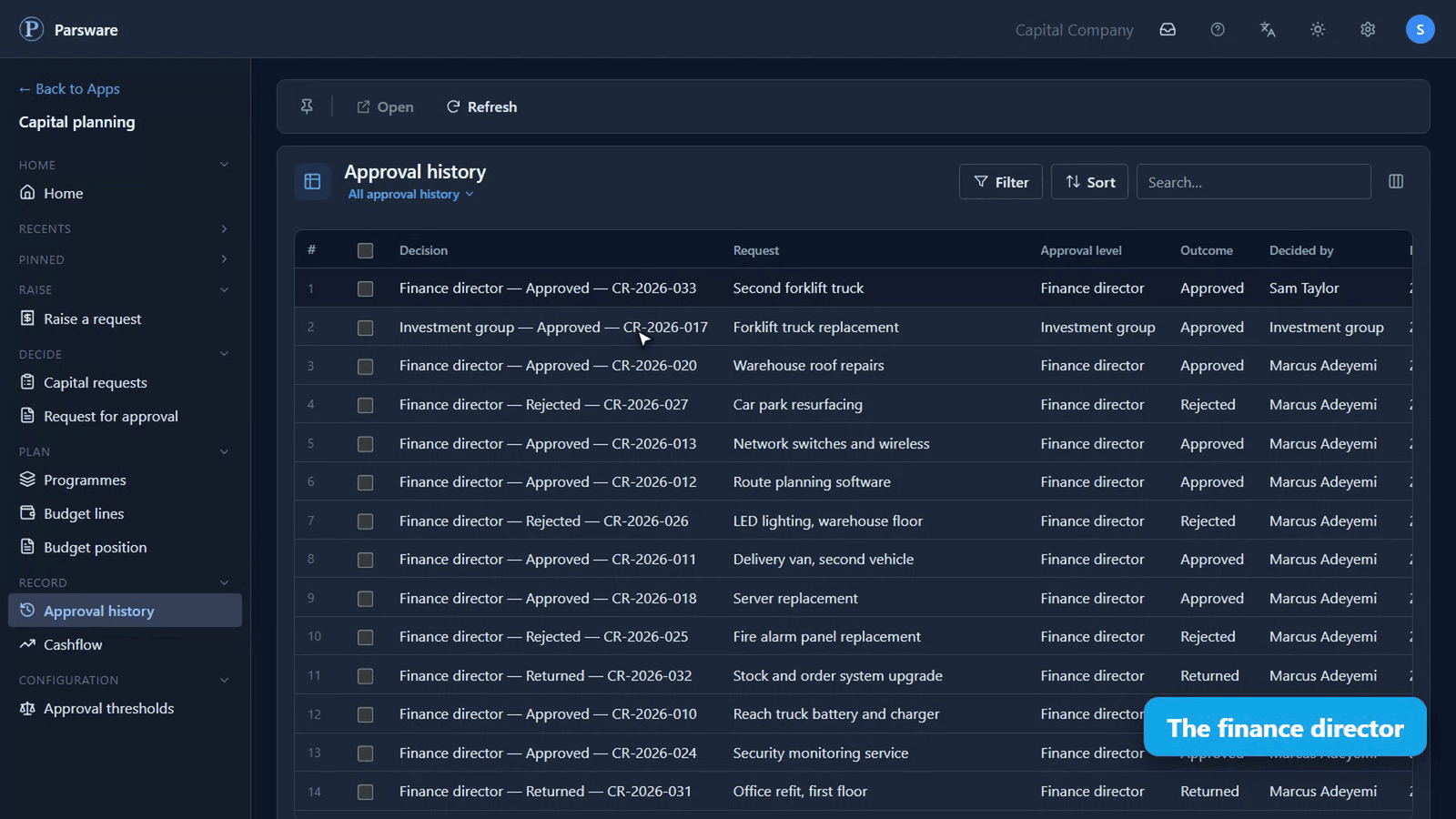
And it is written down
Who decided, on what day, at what level, and what they said. Nobody typed that up. It's simply there, newest first, so a year from now nobody has to search an inbox to find out who approved the truck.
The page your board asks for
Every budget in the company on one page, tightest first, with a total at the bottom: what it started with, what has been committed, what has been spent, and what is left.
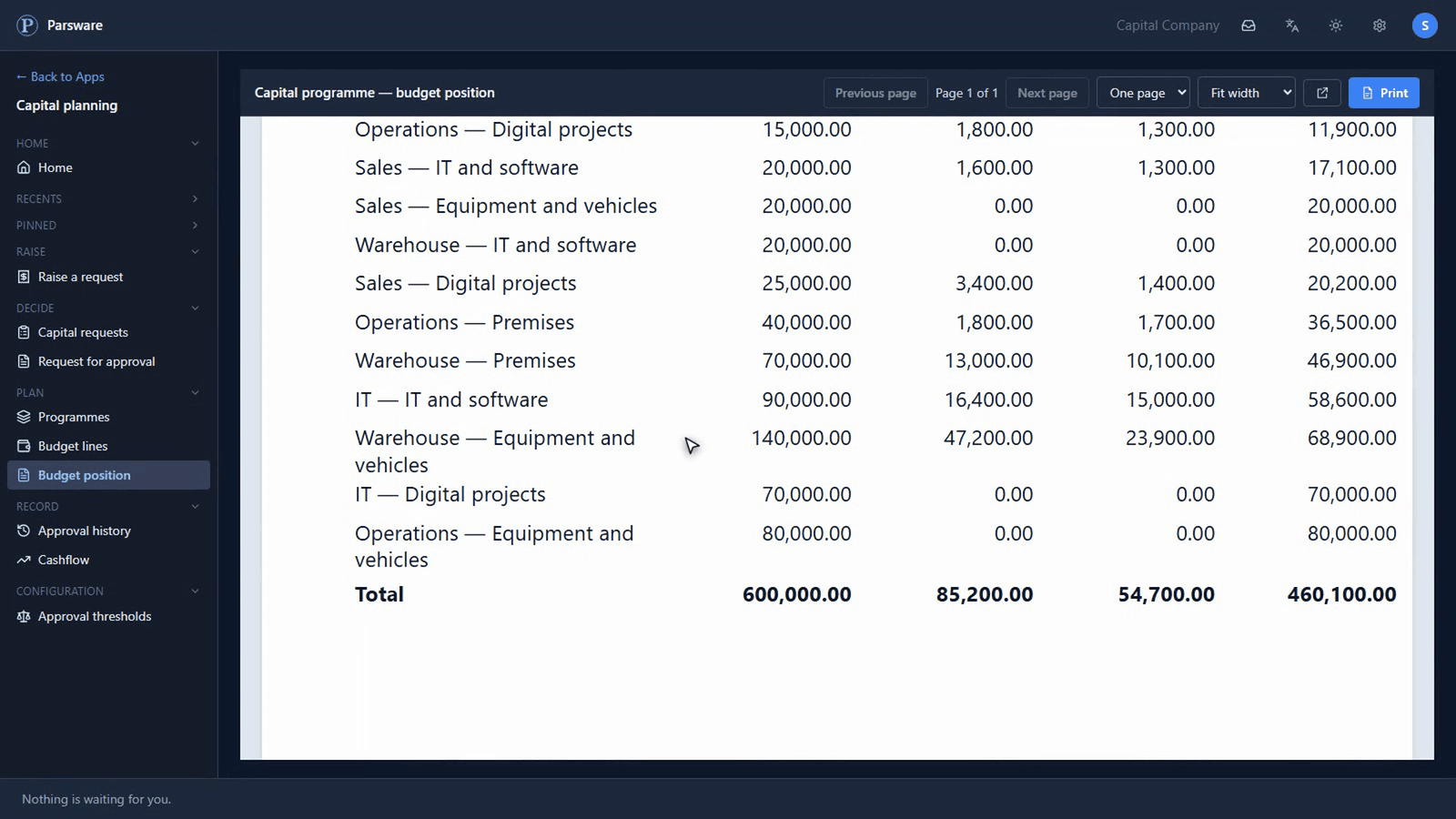
The truck is already in it. Warehouse equipment now shows it as committed, and what's left has fallen from £87,400 to £68,900. Nobody typed that in either, and every line adds up: £140,000, less £47,200, less £23,900, is £68,900.
So the next person in the warehouse who asks sees the new number straight away. Not last month's. Today's.
What you know now that you didn't
- How much of every budget is left, without asking anybody.
- That every request went to the person your limits name, without anybody having to remember them.
- Who approved each request, when, and what they said.
Tell us how your business runs, and we'll show it to you running on Parsware: parsware.com/contact.