Your limits, in one place
Anything over five thousand pounds goes to the finance director. Says who? Here are a company's spending limits in one list, moved the day it decides, with the next request going to someone else.
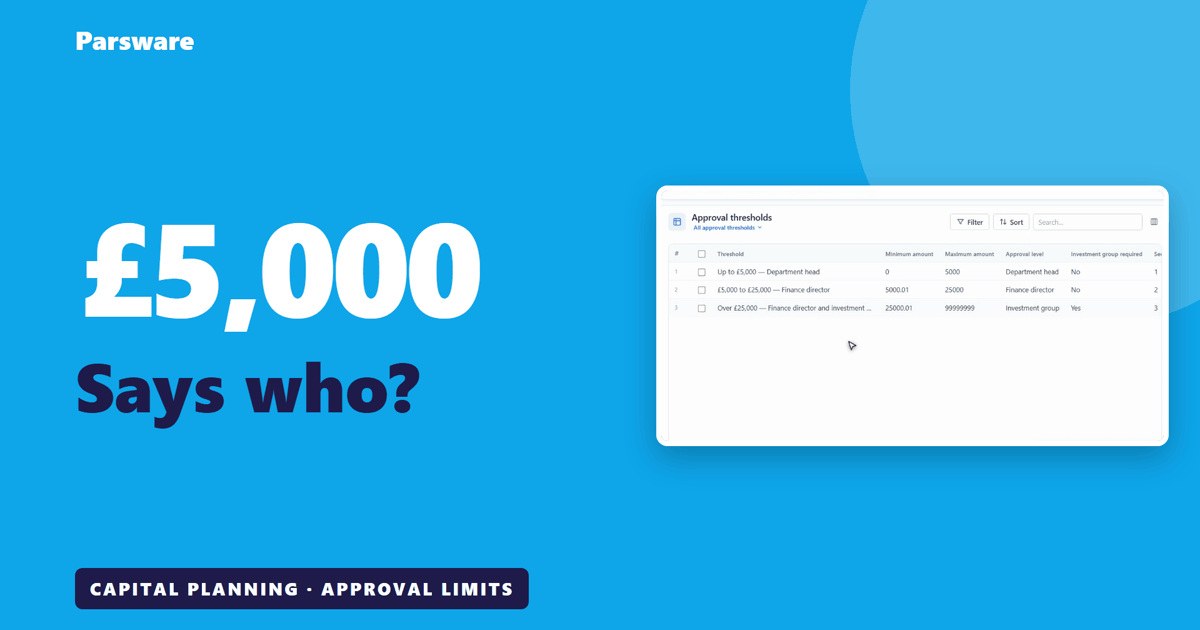
Anything over five thousand pounds goes to the finance director. Says who? And where is that written down?
In most companies, it's an old policy, an email from two years ago, and whatever somebody remembers. And changing it means a ticket to somebody, and a wait.
Here are the limits on Parsware, in a demonstration company of forty people. There is one list, and the finance director can change it.
Who decides what
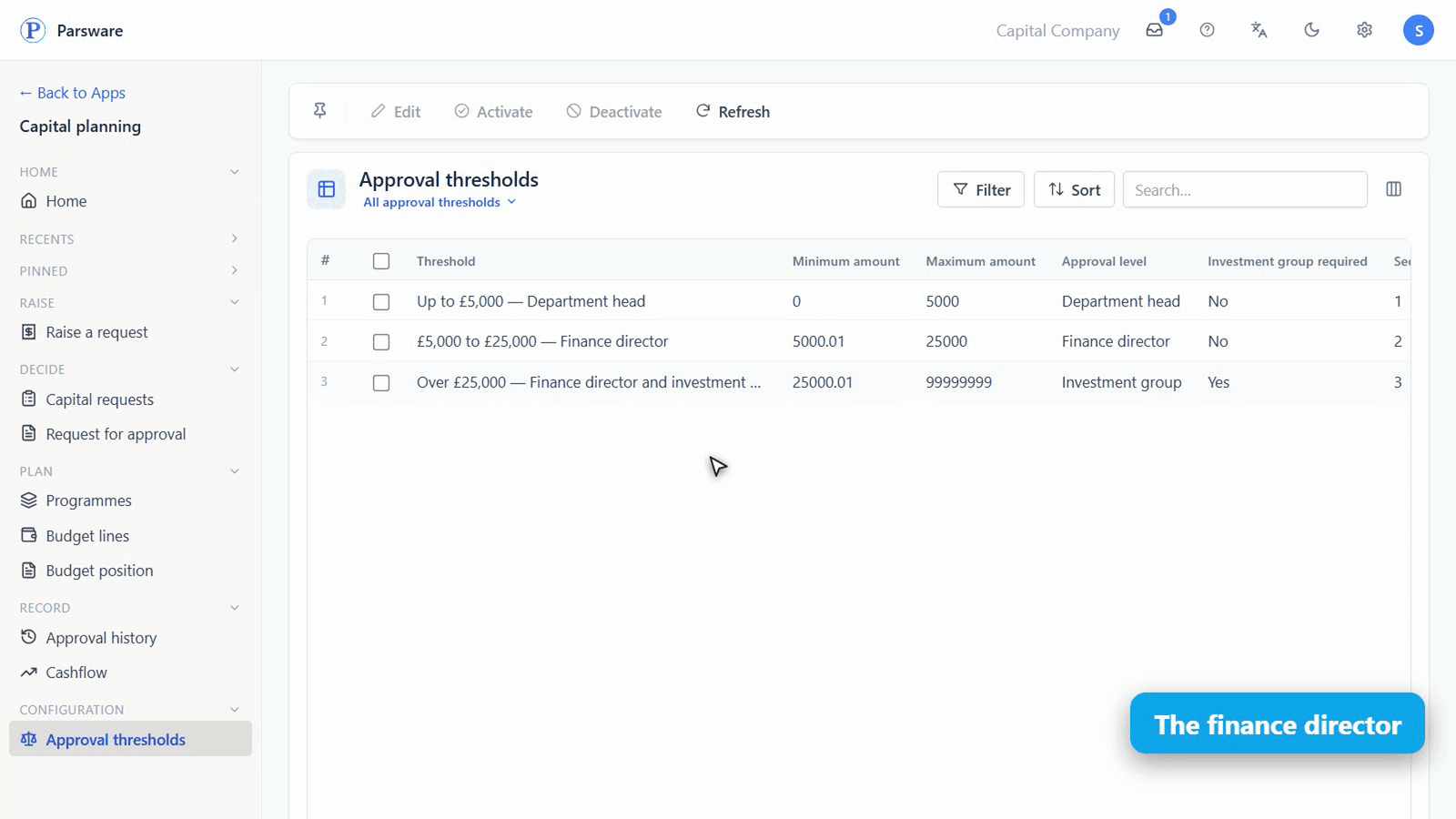
Three lines say who decides what:
| How much | Who decides |
|---|---|
| Up to £5,000 | The department head |
| £5,000 to £25,000 | The finance director |
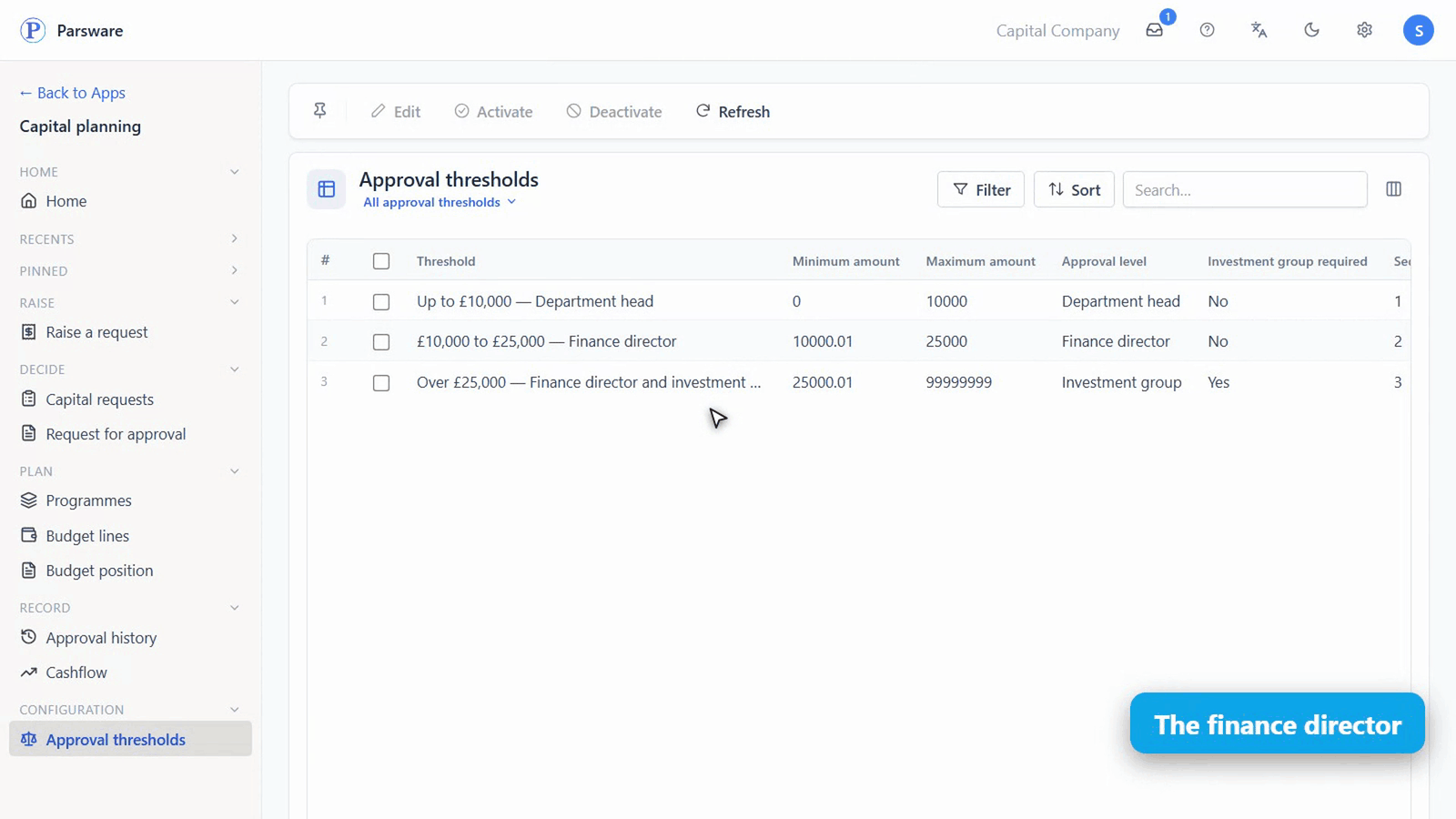
| Over £25,000 | The finance director, then the investment group |
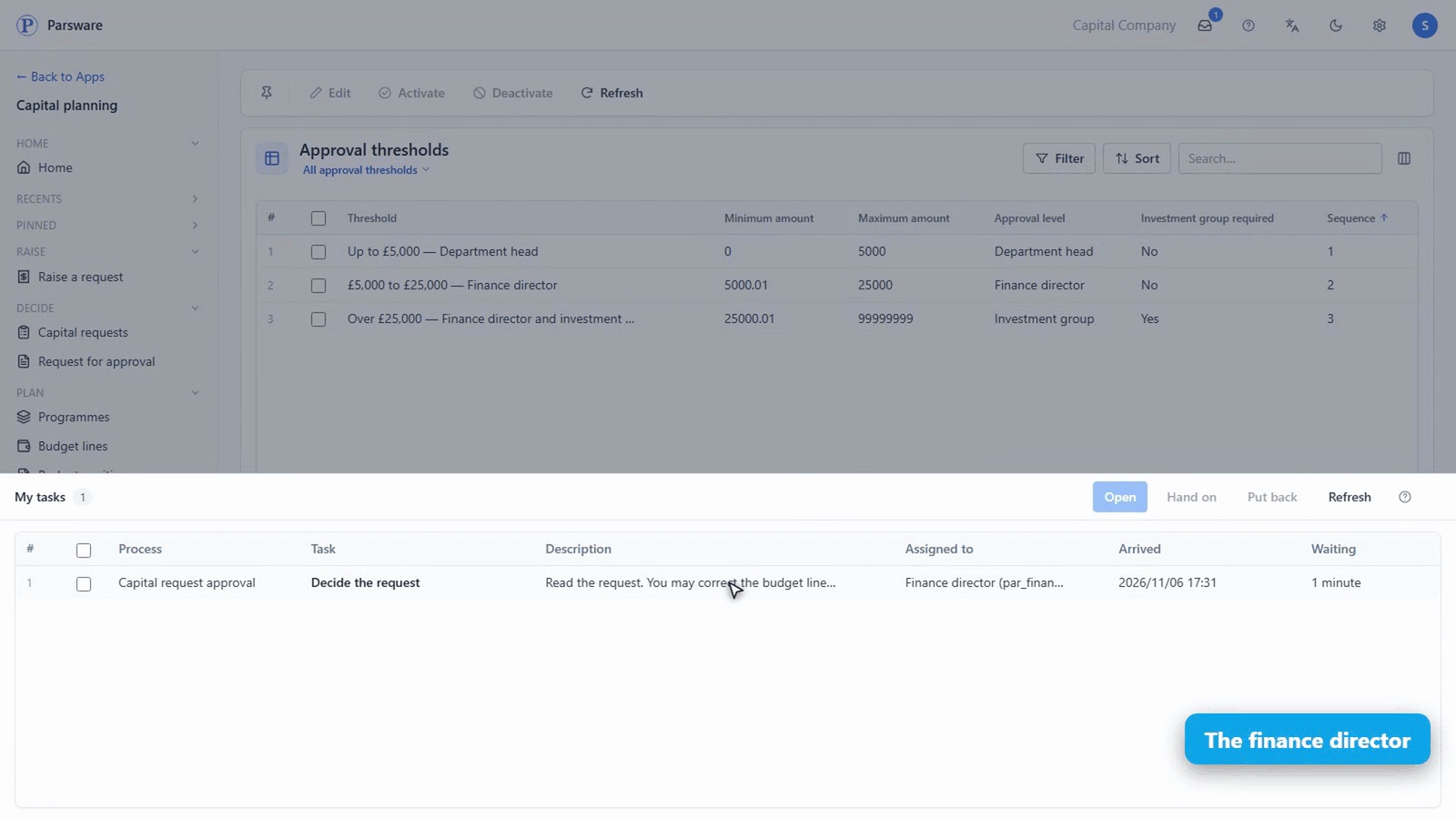
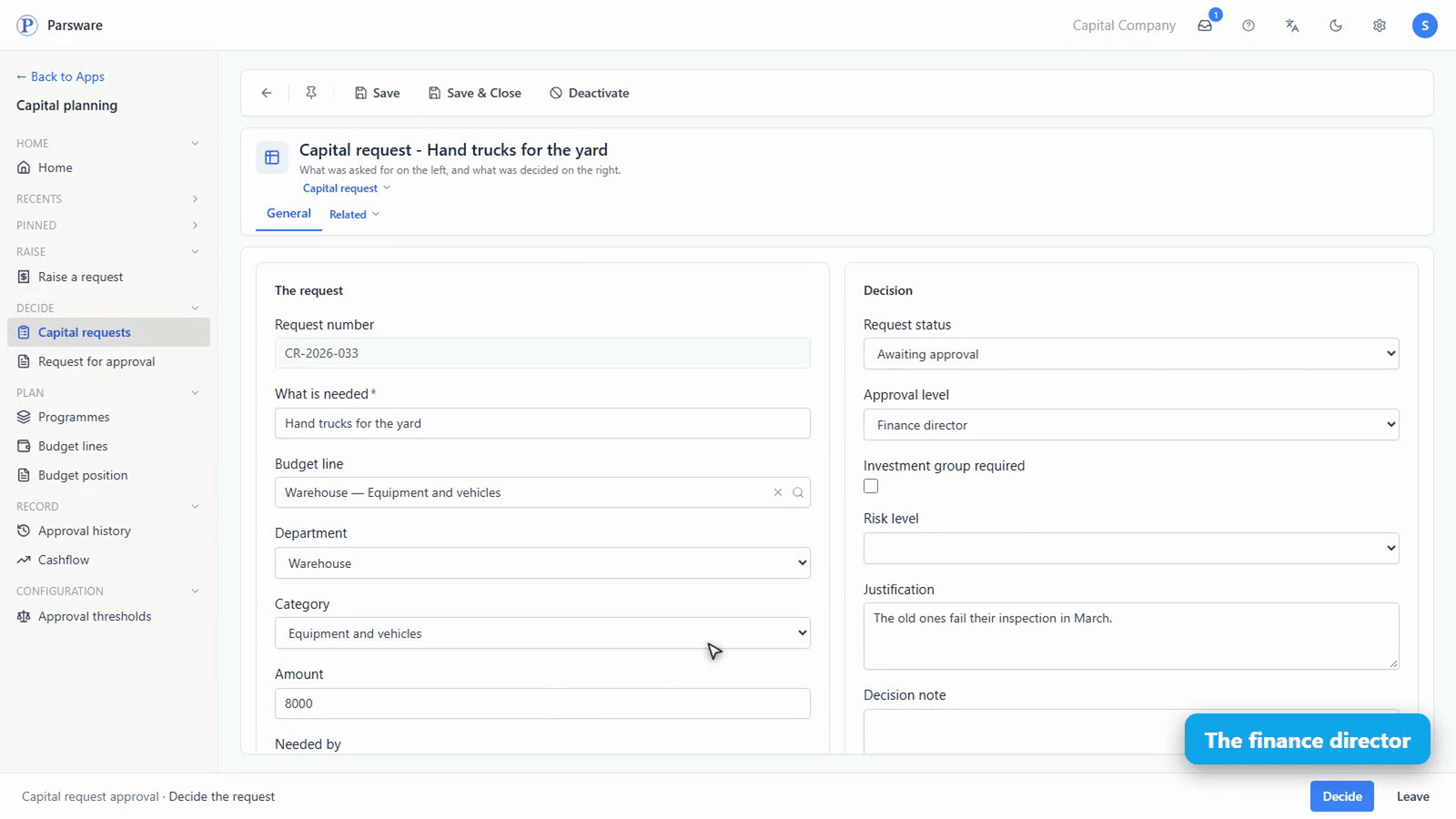
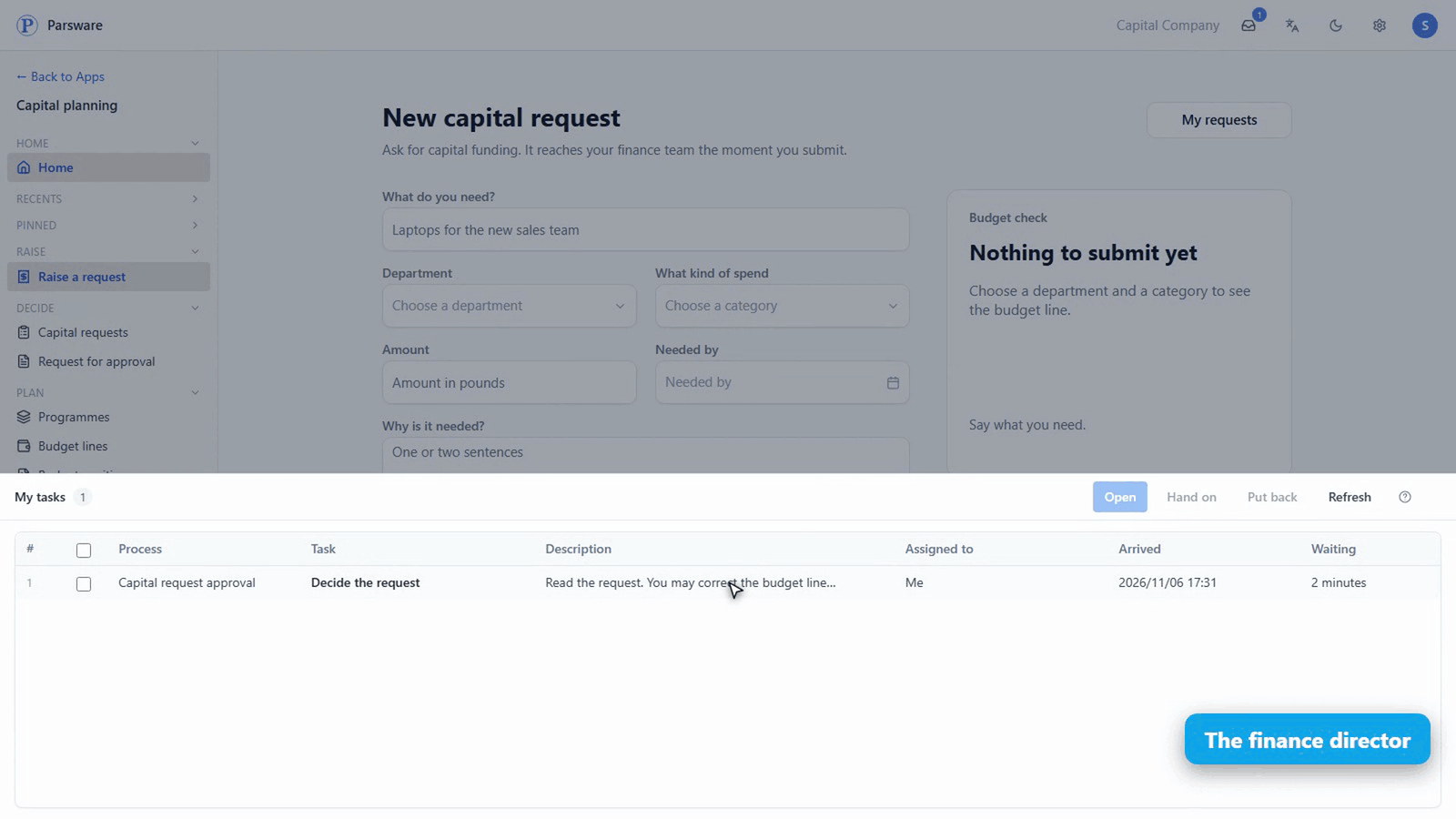
So today, a request for £8,000 is waiting in the finance director's inbox.
It's hand trucks for the yard, and it's there because £8,000 is over the £5,000 limit.
Moving a limit
Say that's too small for the finance director to be looking at, and you decide department heads can say yes up to £10,000.
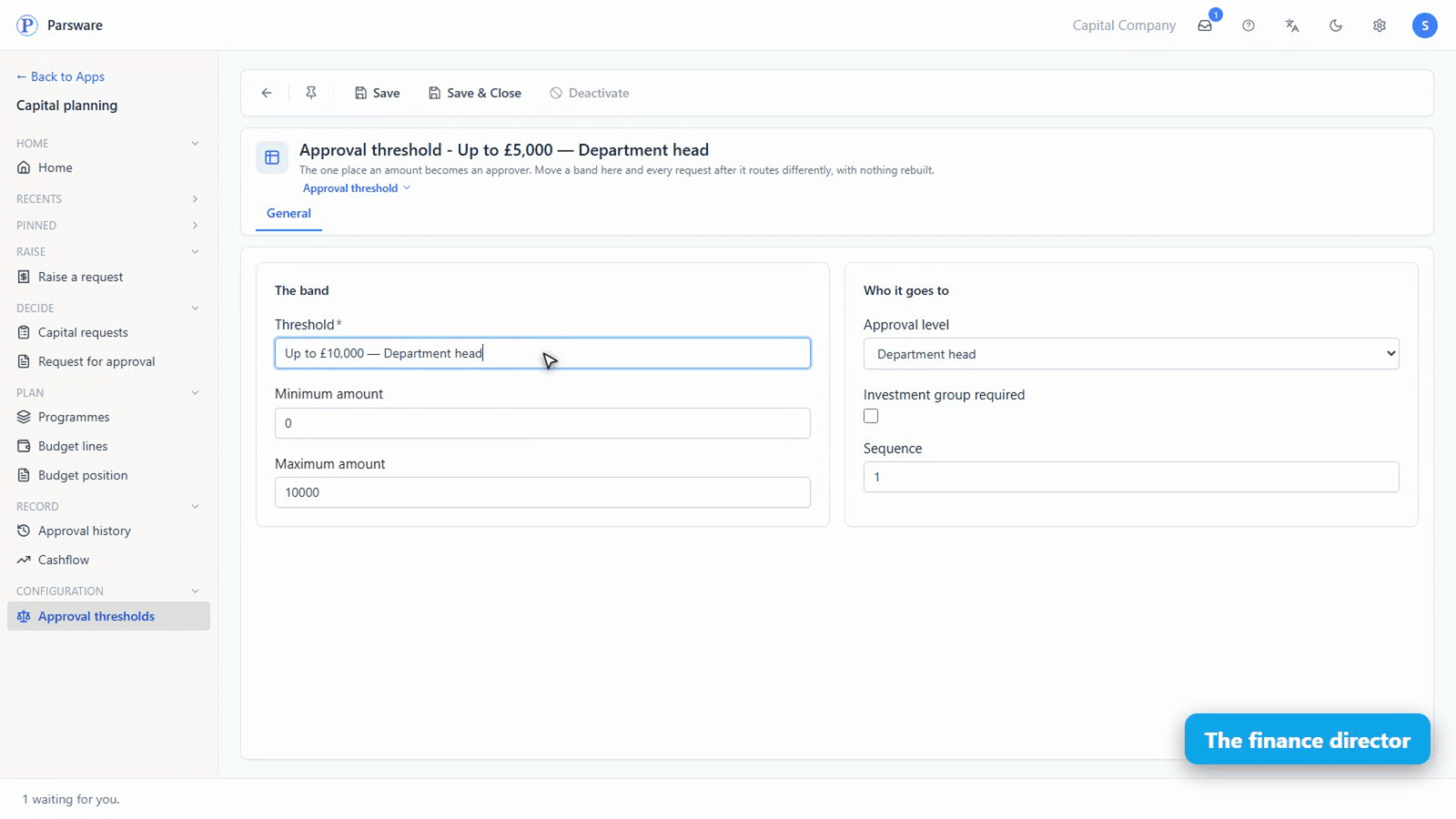
Open the first limit and make £5,000 into £10,000. Its name says ten as well, so nobody reads the old number.
The next limit moves with it, and now starts where that one ends, so every amount still falls under exactly one limit. Give it its new name too. A number that would swallow a limit next to it is refused, and says why.
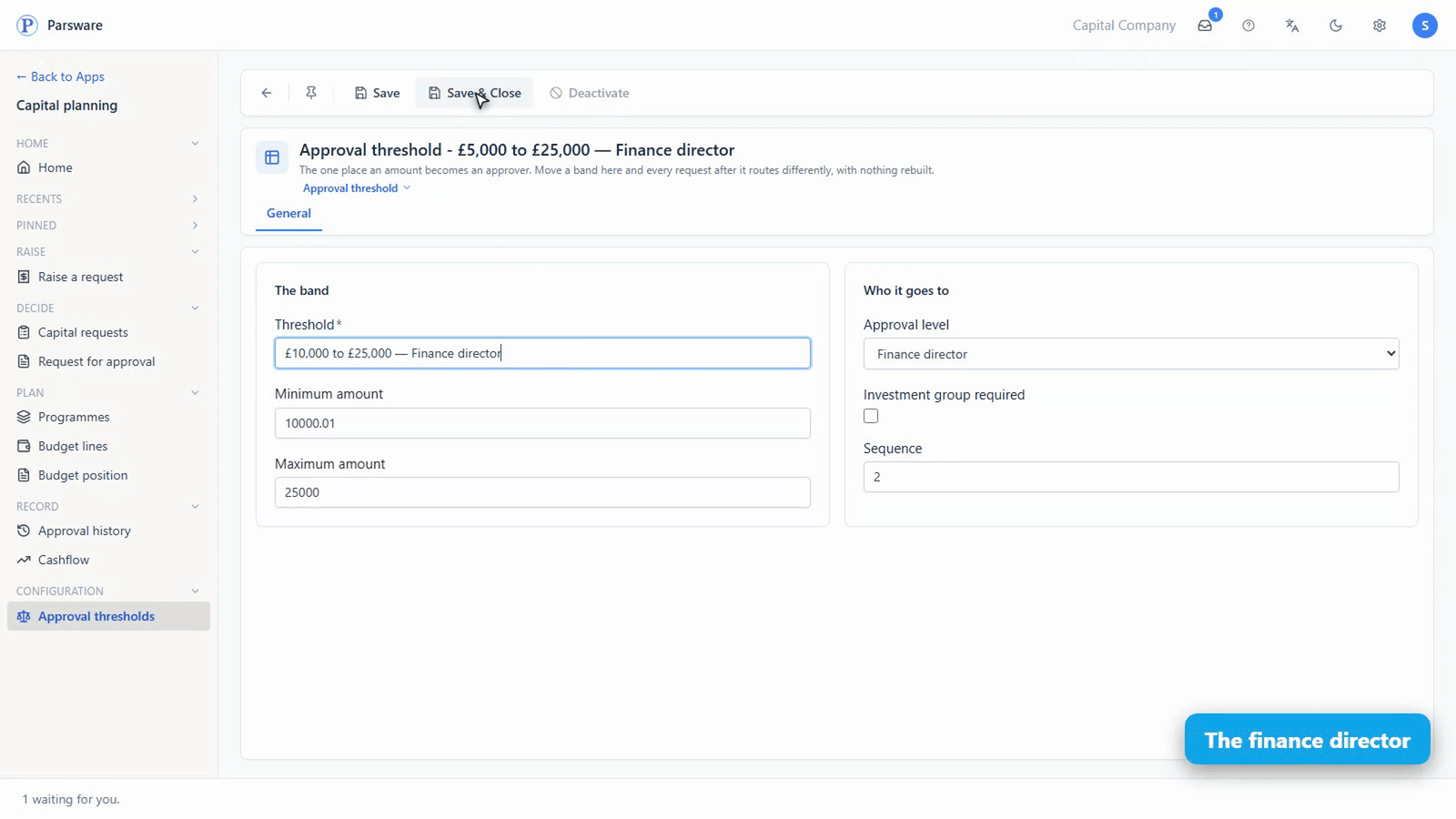
That's the whole change. There's no ticket, and nothing to rebuild.
The same amount, a different person
Now the warehouse manager asks for the same £8,000, from the same budget. This time, the page says the department head.
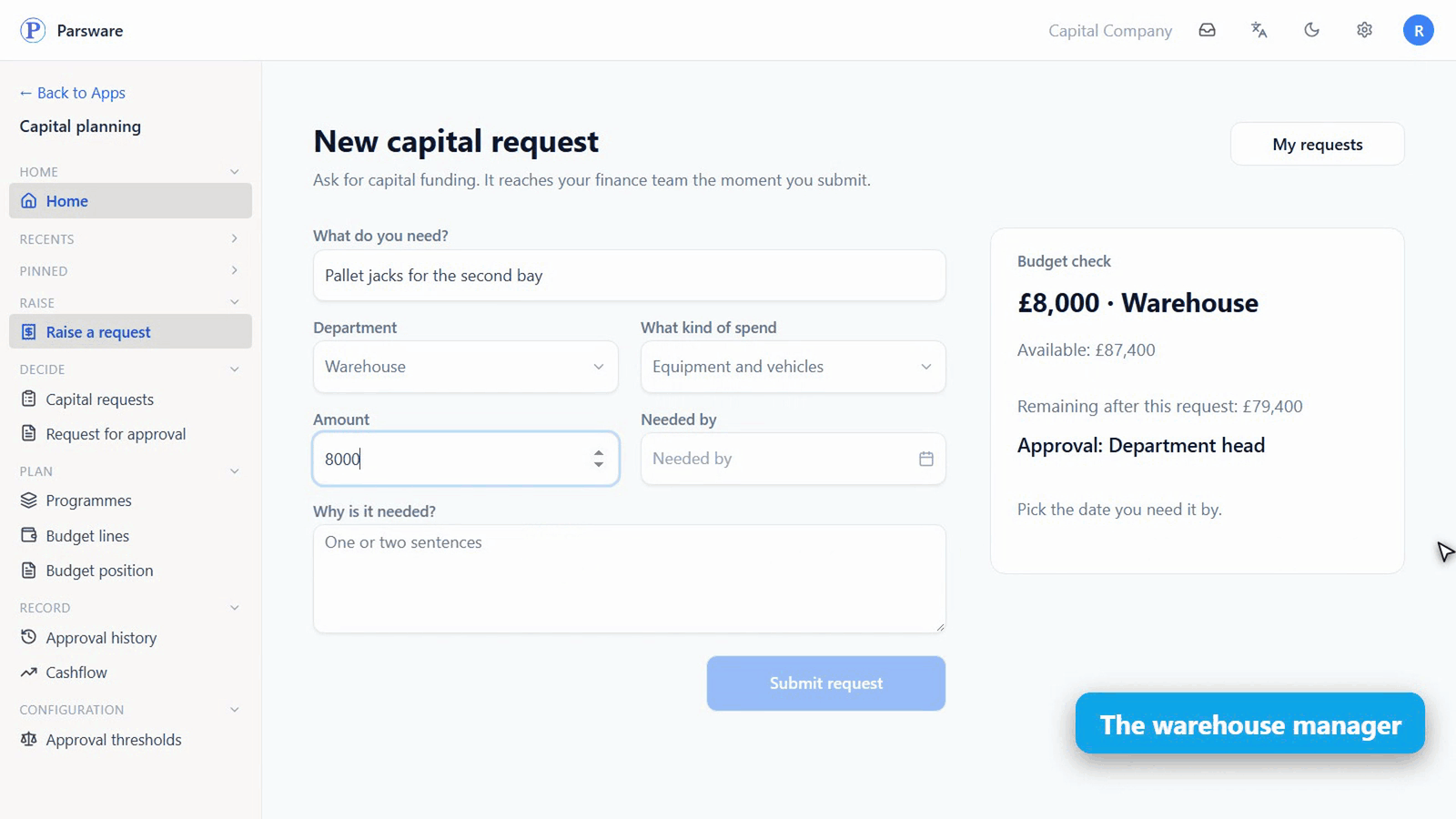
They add the date and the reason, and send it.
And the finance director's inbox? Still one. The new request never came to them, and the one that was already waiting stays where it was. A new limit decides the requests raised after it, not the ones already on someone's desk.
What it means for you
- Your limits are written down in one place, where the people they affect can see them.
- You change them yourself, on the day you decide.
- The next request follows the new limit, and nothing already waiting moves.
Tell us how your business runs, and we'll show it to you running on Parsware: parsware.com/contact.