Decided, and written down
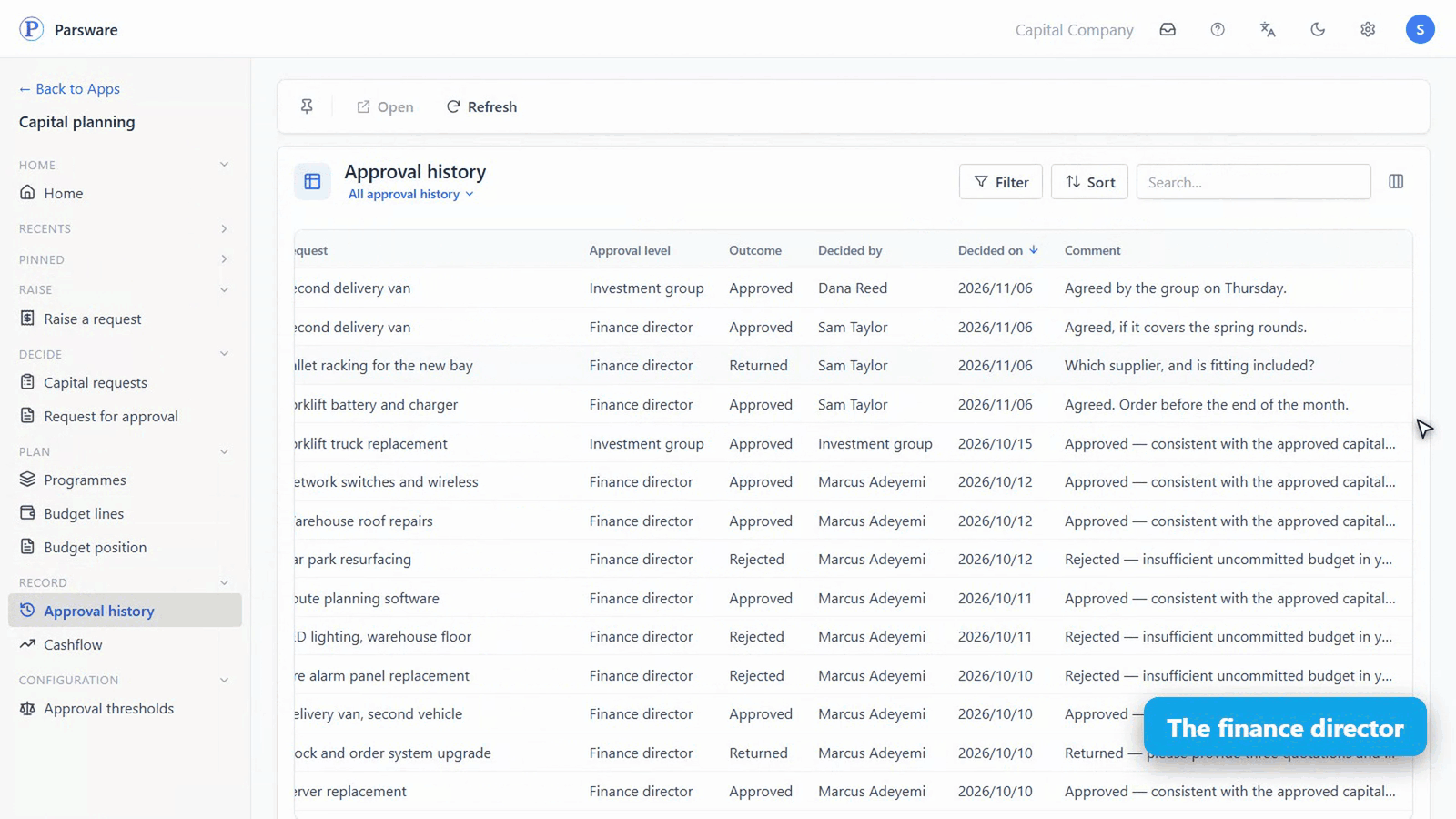
The second van has been ordered. Thirty thousand pounds. Who said yes? Here are three requests decided, with a row left behind for every decision: who, when, at what level, and what they said.
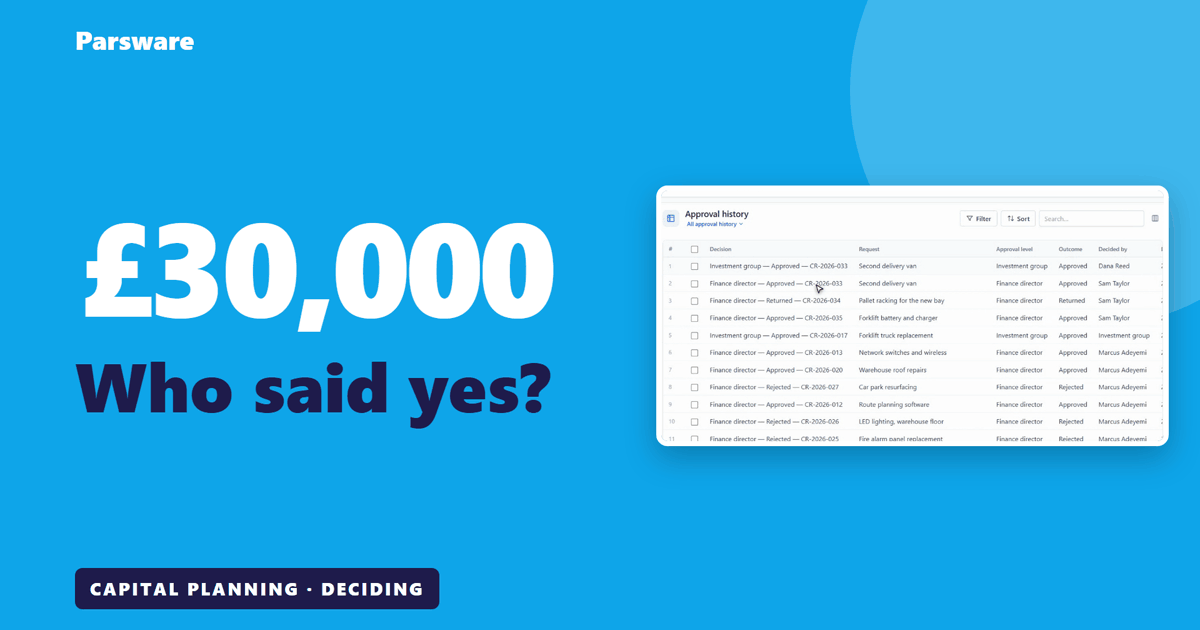
The second van has been ordered. Thirty thousand pounds. Who said yes?
In most companies, the yes is a word in a corridor, a line in a group chat, and a note from a meeting. And a year later, nobody can find it.
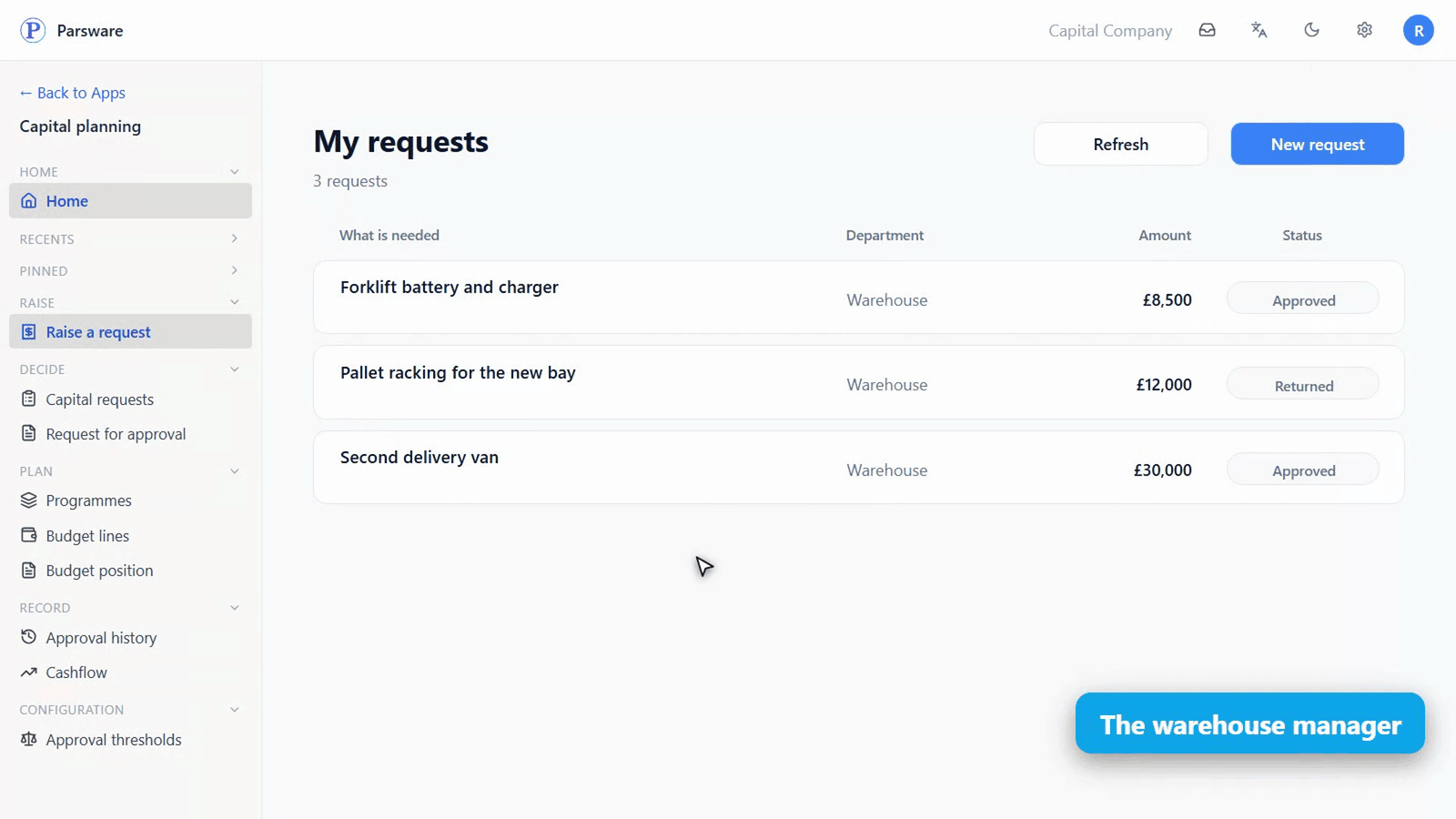
Here is the same thing on Parsware, in a demonstration company of forty people. Three requests from the warehouse are waiting for the finance director. Nobody forwarded them.
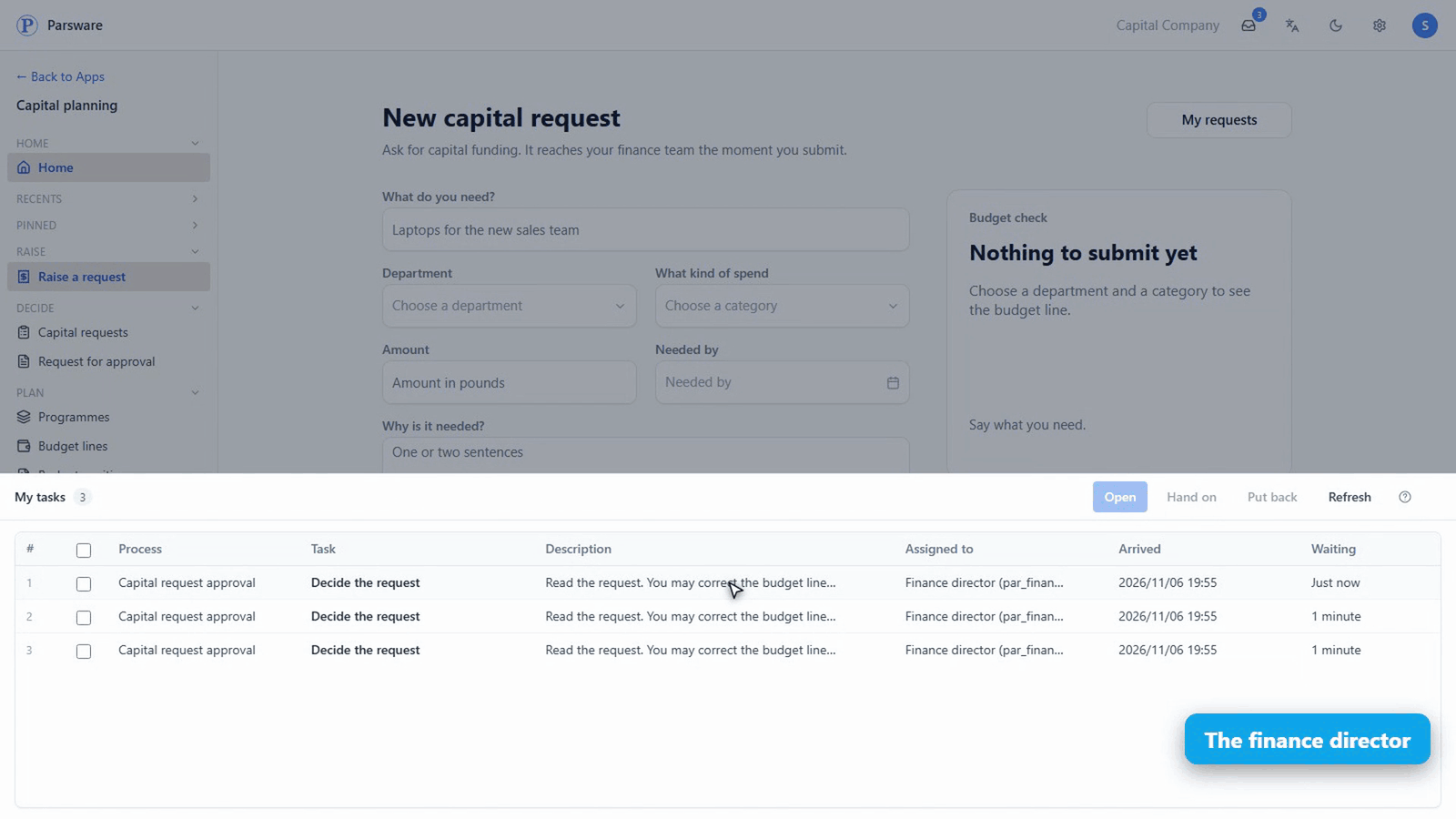
Four choices, and a note
The first is a forklift battery, at £8,500. Opening it shows the whole request, with the decision beside it. There are four choices:
| Choice | What happens next |
|---|---|
| Approve | It's approved, and the budget is charged. If it's over the top limit, it goes on to the investment group first |
| Send to the investment group | The group decides, whatever the amount |
| Return for more detail | It goes back marked Returned, with the note saying what's missing |
| Reject | It's turned down, with the note saying why |
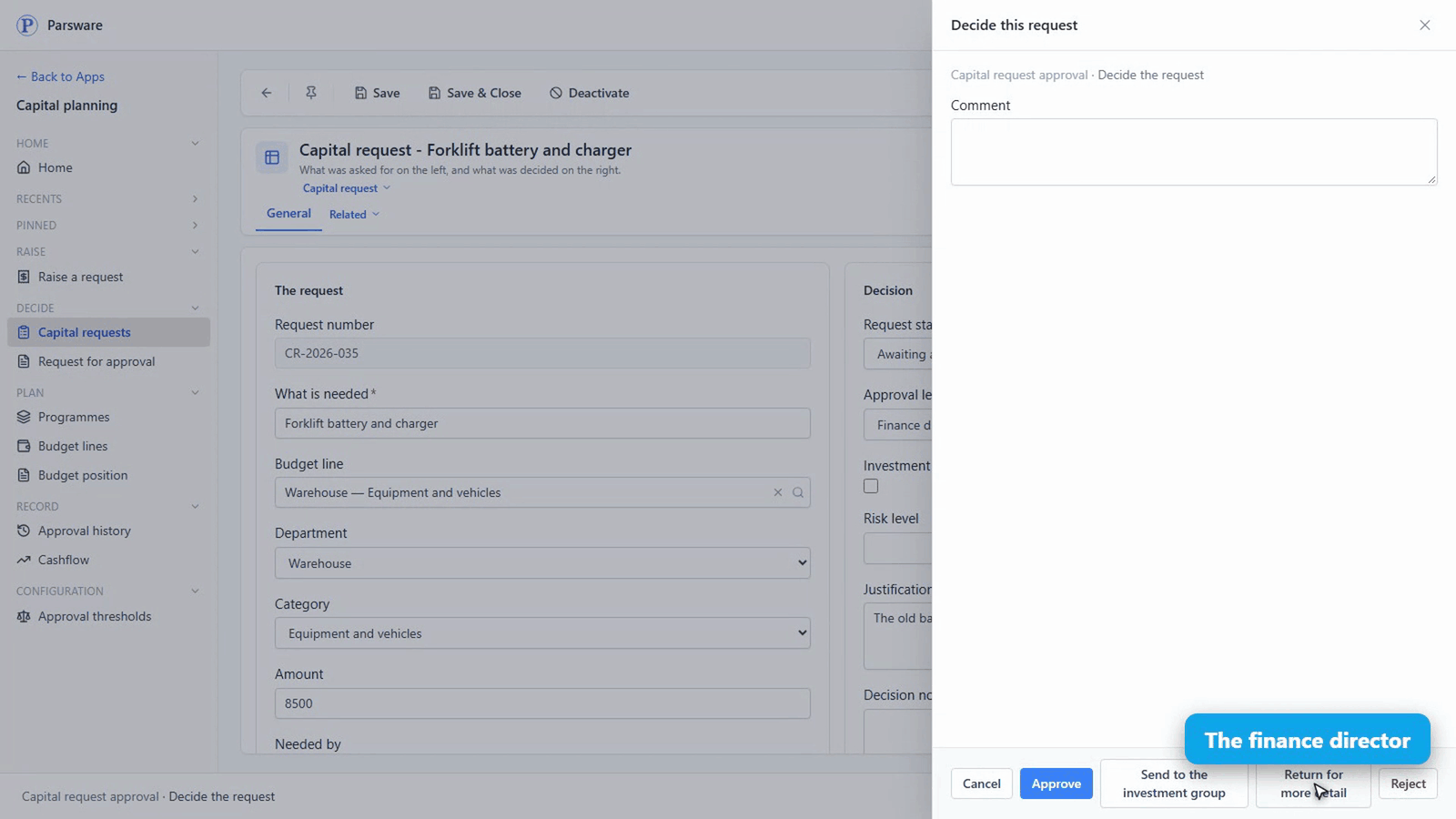
This one they approve, with a note saying why.
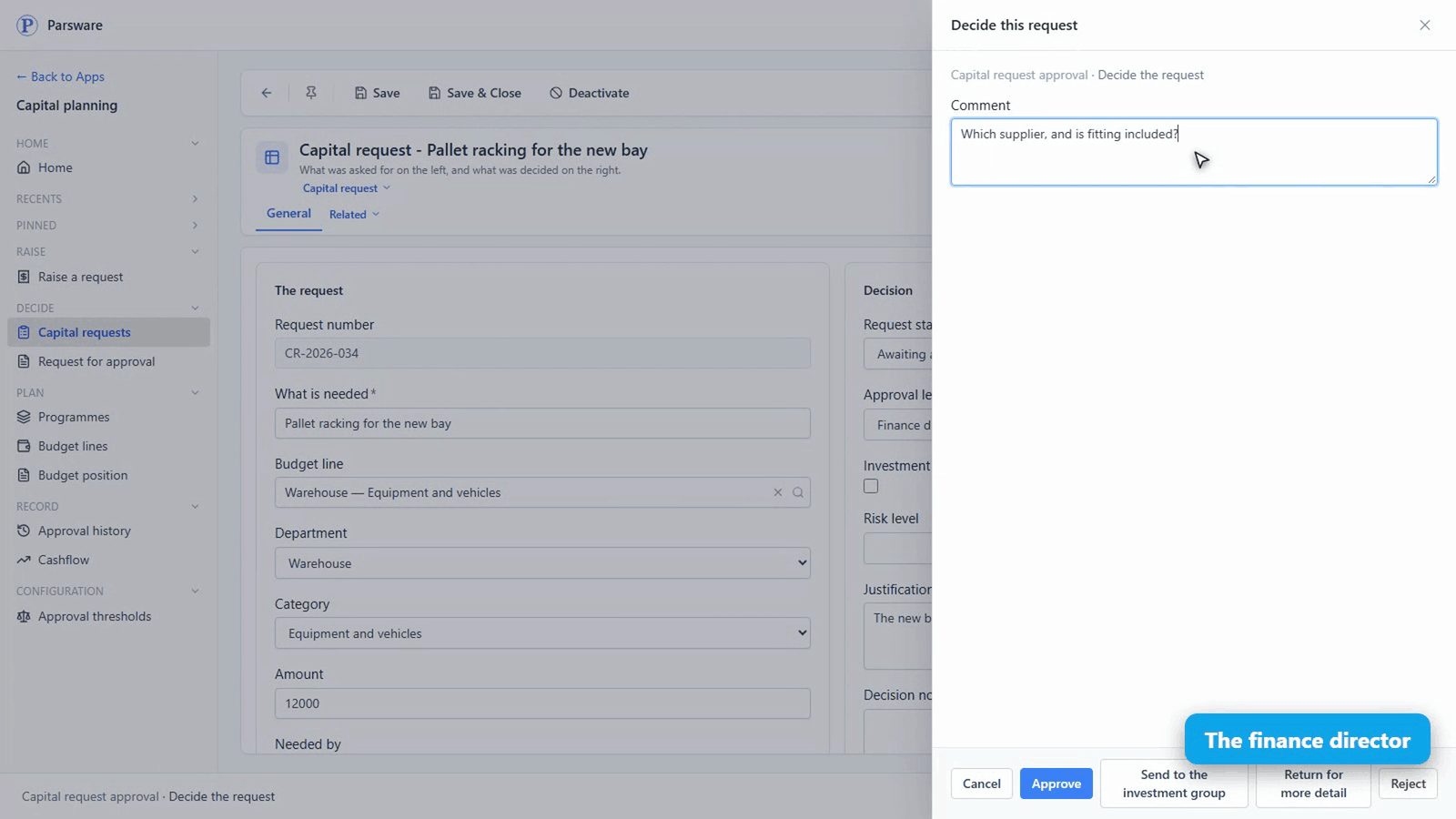
The second is pallet racking, for £12,000. Something's missing, so it goes back, and the note says what: Which supplier, and is fitting included?
Over the top limit, one yes isn't the last word
The third is the van, for £30,000. That's over the top limit, so the finance director's yes isn't the last word. They approve it with a note, and it goes on.
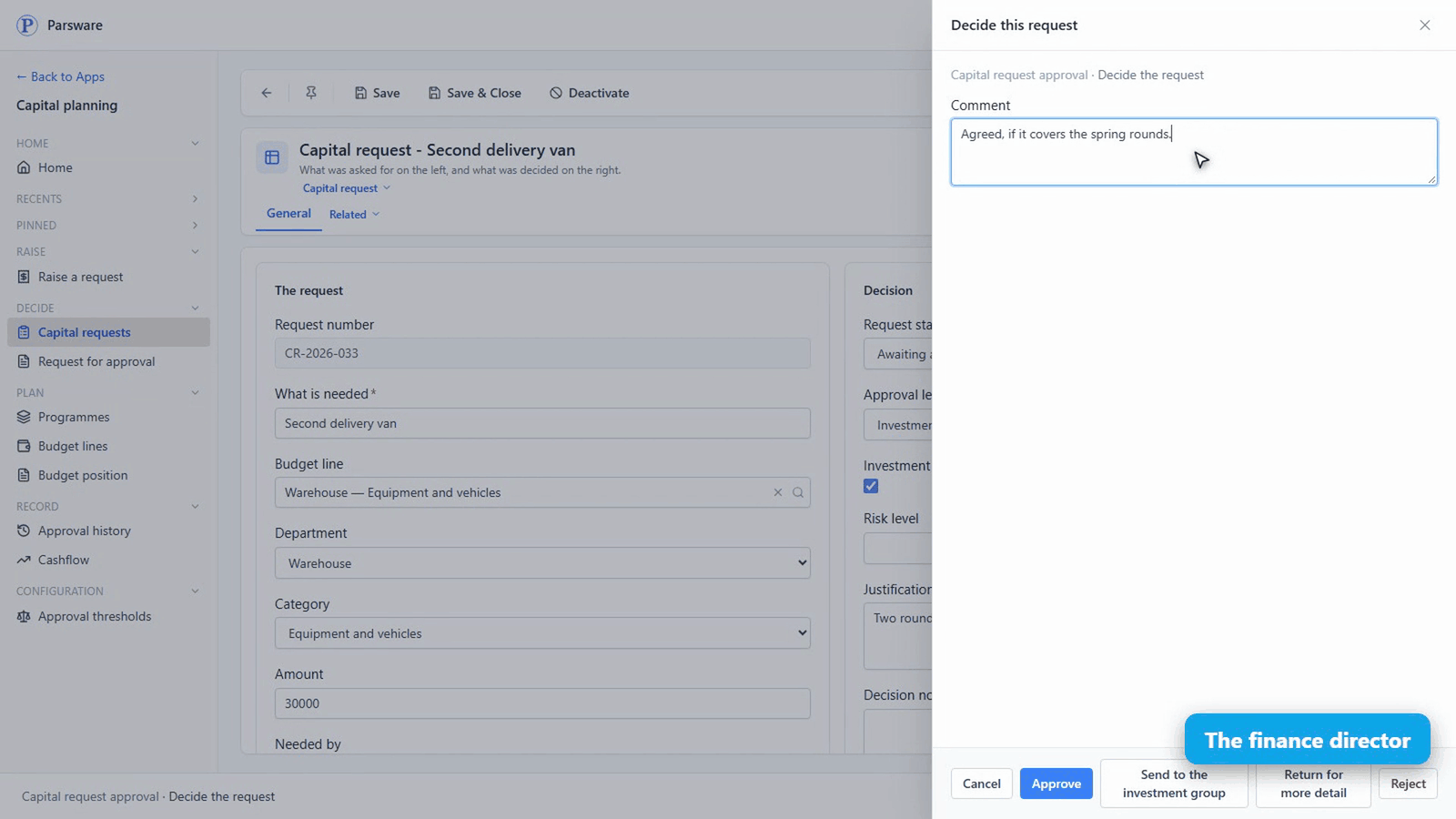
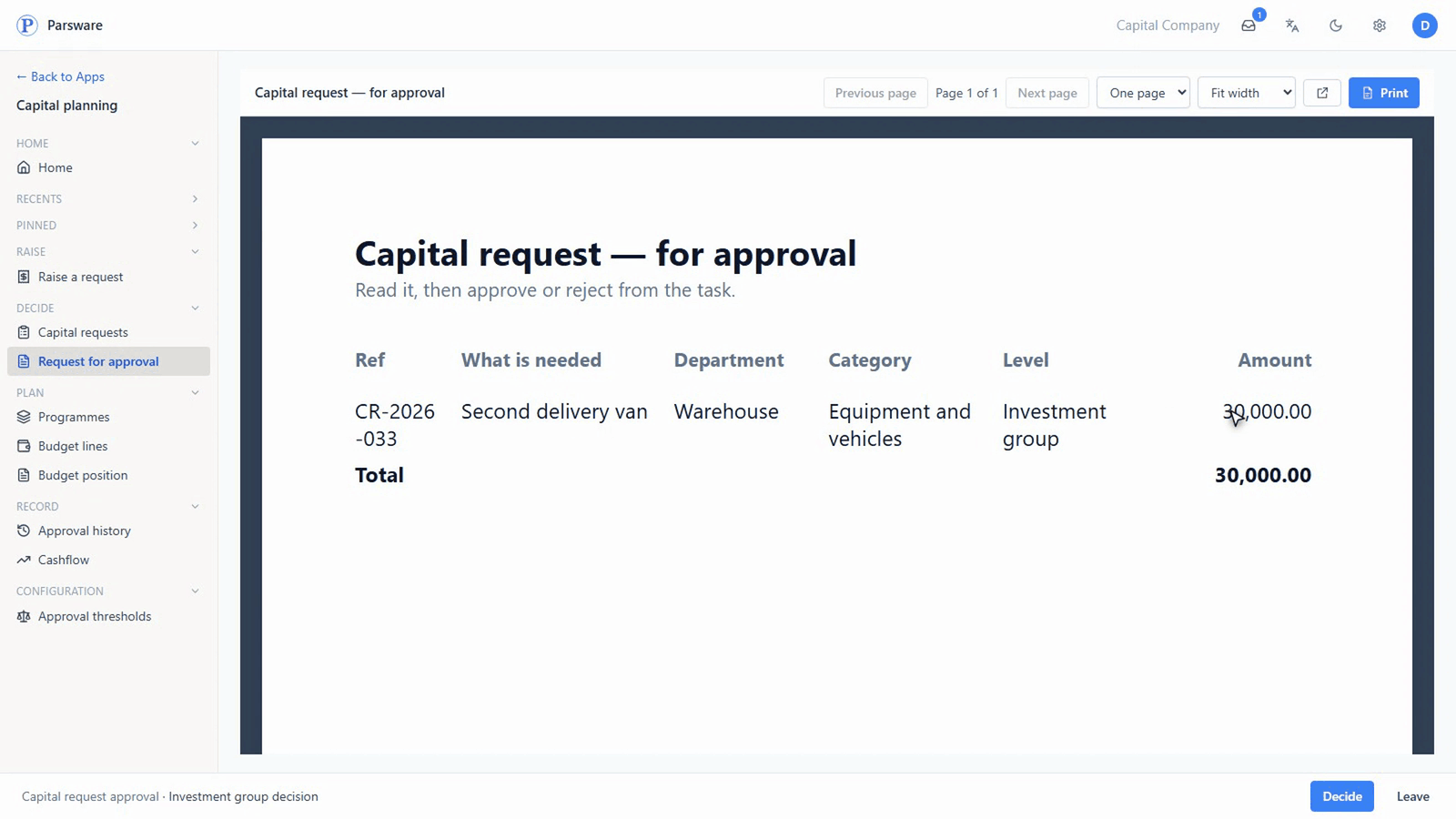
Now it's waiting for a member of the investment group. They get the request on one page, to read, with nothing to change. They agree, and they say so.
A row for every decision
Here is what all of that left behind. Each decision has its own row, and the van has two: the finance director's yes, then the group's.
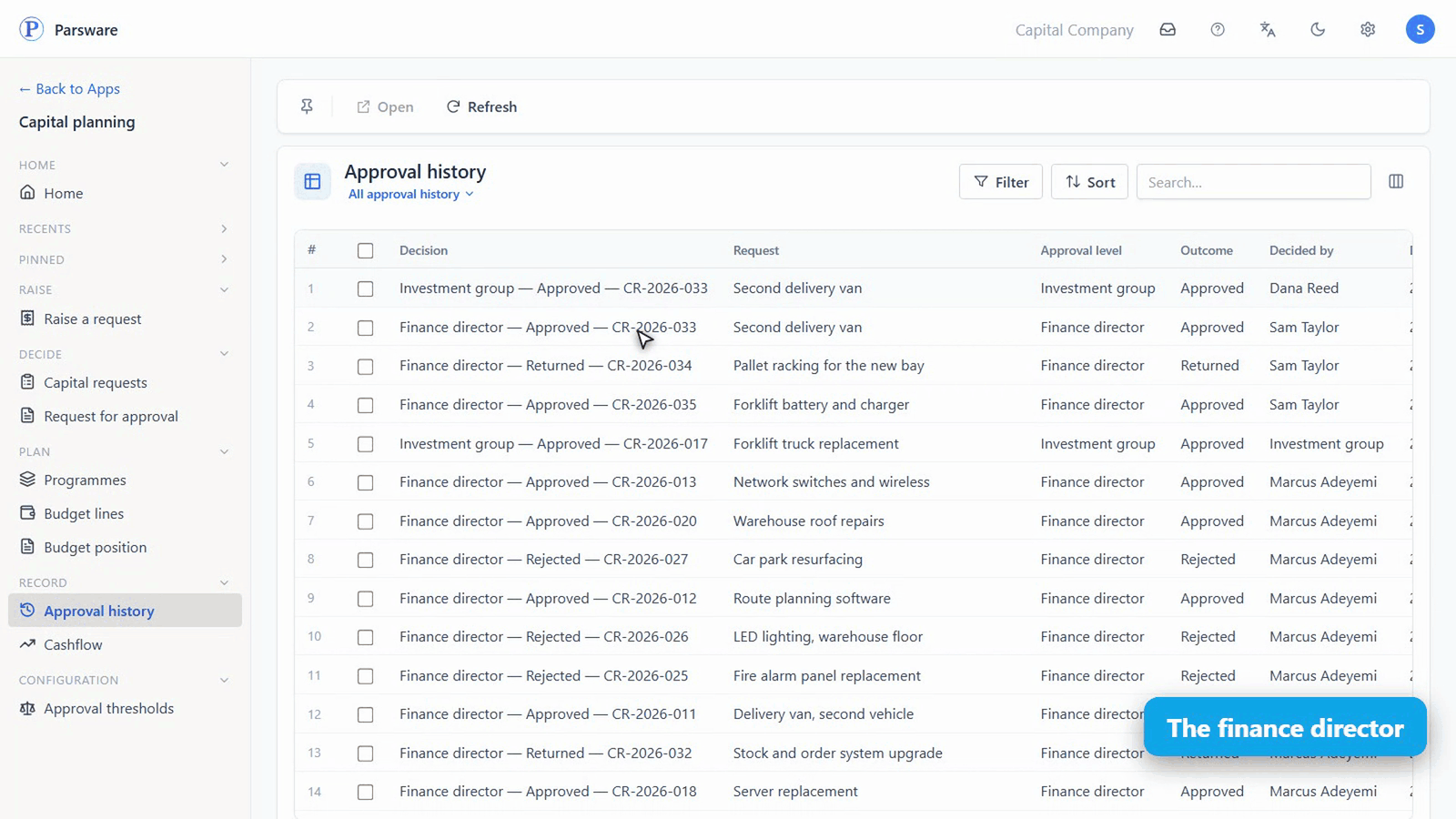
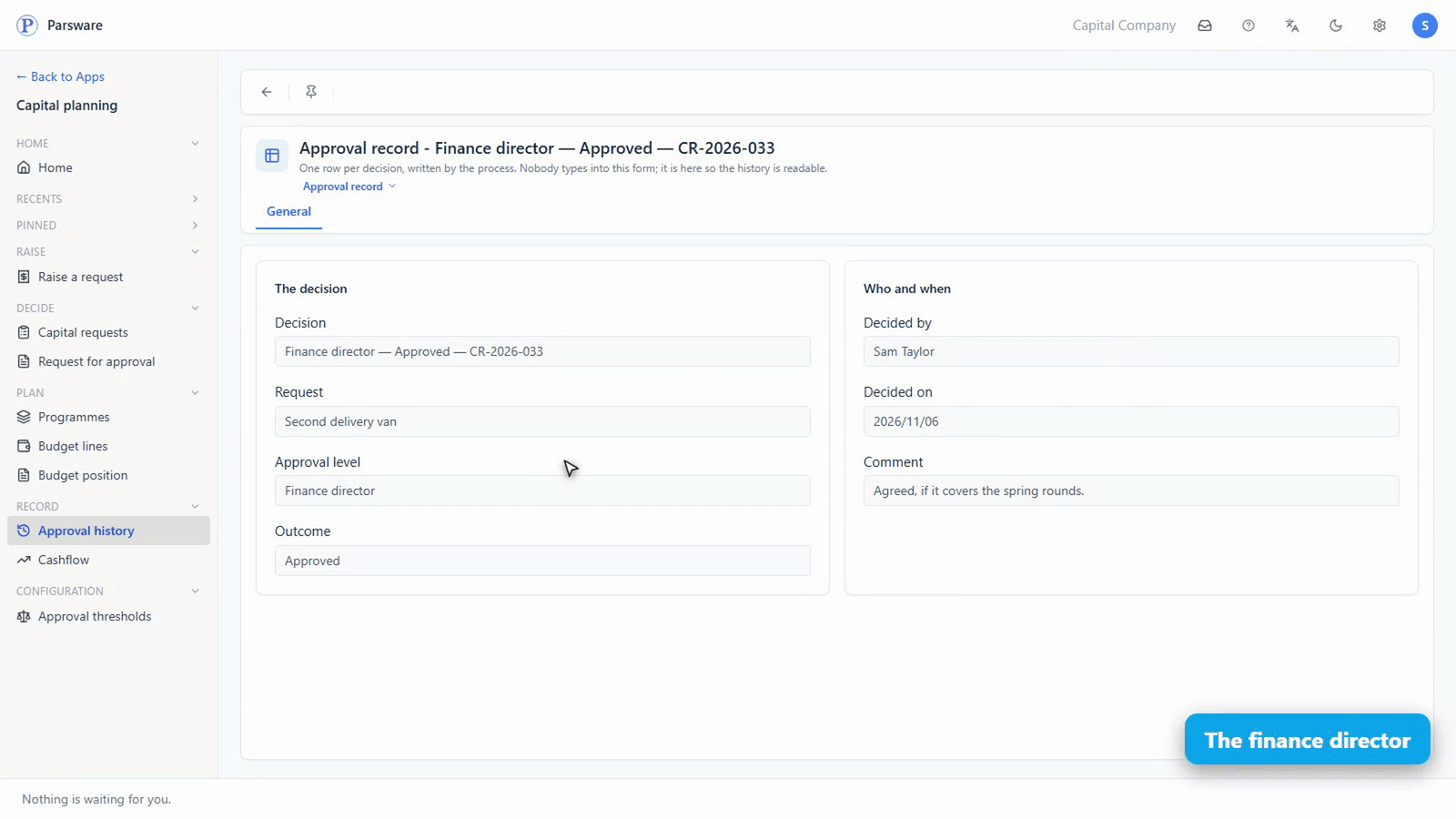
Open one, and there it is. Who decided, on what day, at what level, and what they said.
And the racking says Returned, with the question that was asked.
The warehouse manager can see where each one got to on their own list, without asking anybody.
What it means for you
- Every decision is written down as it's made, with the name of the person who made it and their own words.
- When a request needs two people, both of them are there.
- A year from now, when somebody asks who said yes, you look it up.
Tell us how your business runs, and we'll show it to you running on Parsware: parsware.com/contact.