Where the budget stands, before the meeting
The budget meeting is in ten minutes. How much is left? Here is one page with every budget line on it: what it was given, what's promised, what's spent and what's left, and a line that moves when somebody says yes.
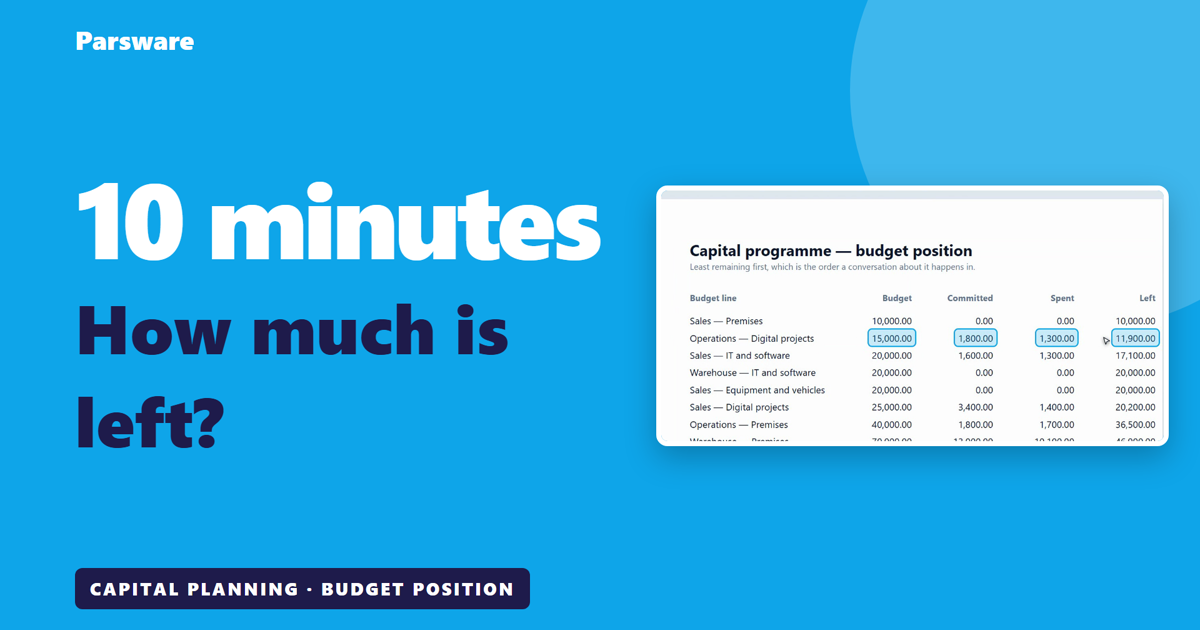
The budget meeting is in ten minutes. How much is left?
In most companies, the answer is a spreadsheet somebody updated last month, a second copy with different numbers, and a phone call to the one person who knows. And the meeting starts without it.
Here is the same thing on Parsware, in a demonstration company of forty people with £600,000 to spend this year. The finance director opens one page.
One page, four numbers on every line
The budget position lists every line of the year's budget:
| Column | What it says |
|---|---|
| Budget | What the line was given |
| Committed | What's been promised: requests approved against it |
| Spent | What's actually been paid |
| Left | What's still free to ask for |
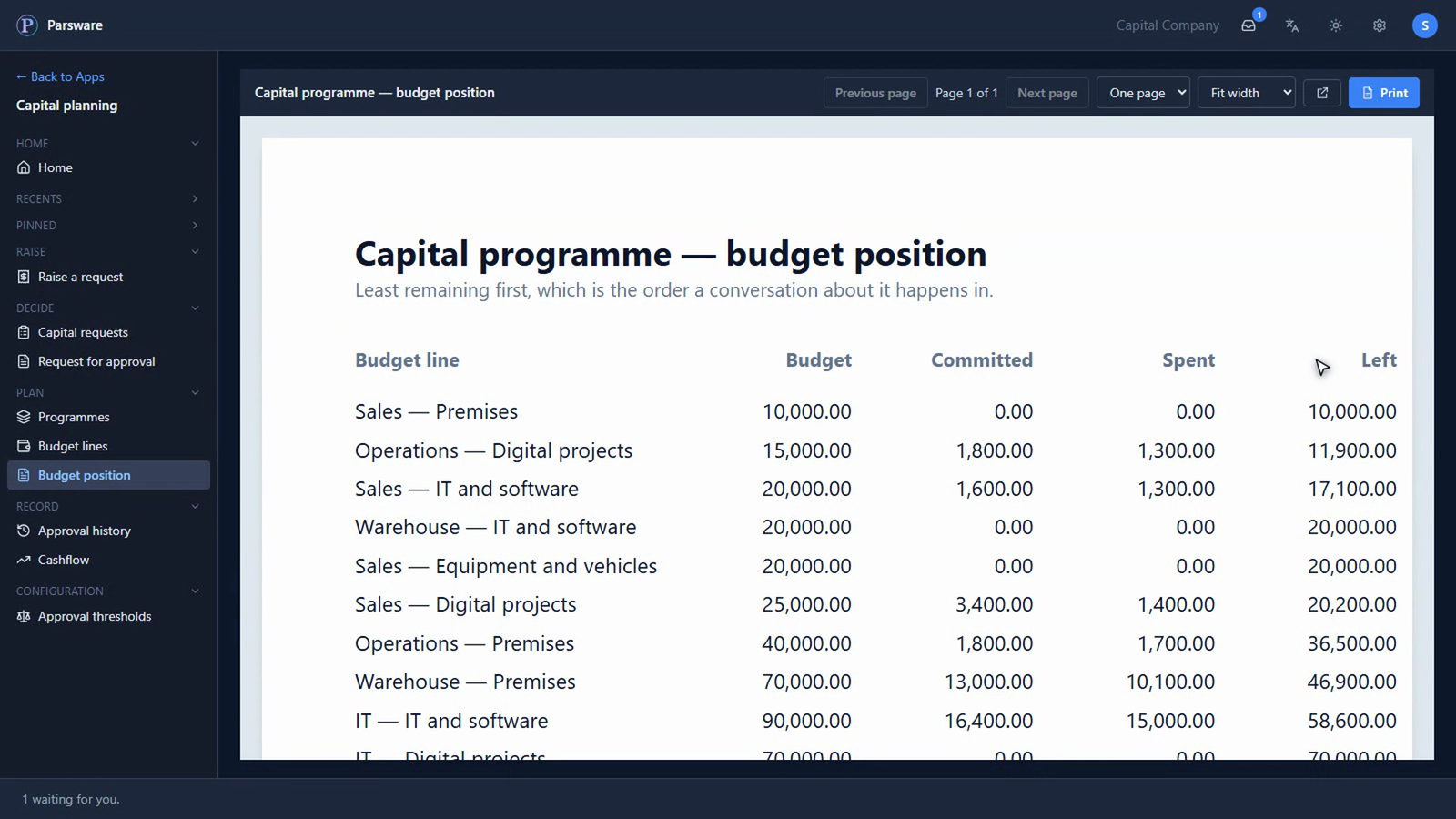
The line with the least left comes first, because that's where the conversation starts.
A line that adds up
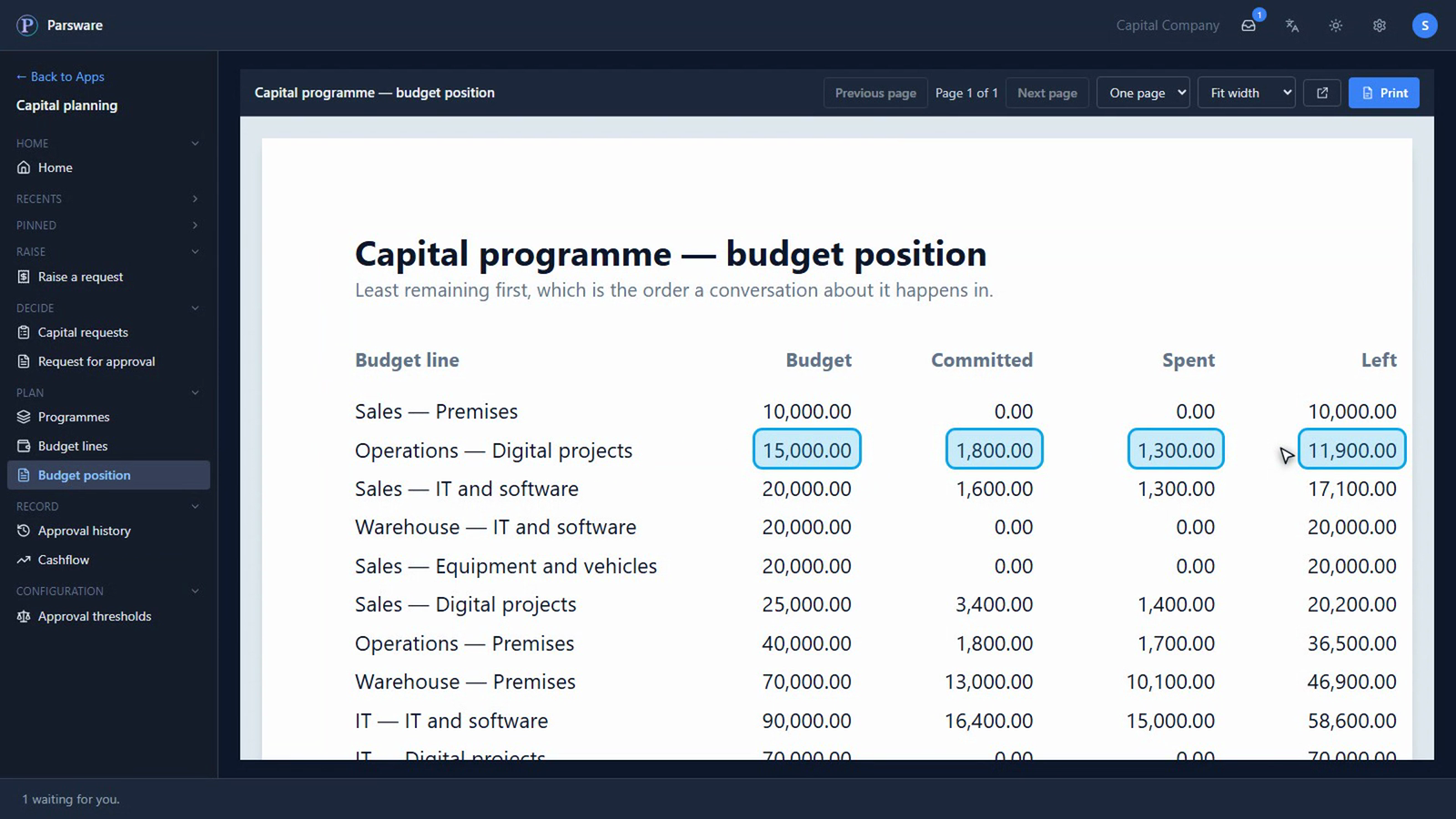
Take Operations, digital projects:
| Budget | £15,000 |
| Committed | − £1,800 |
| Spent | − £1,300 |
| Left | £11,900 |
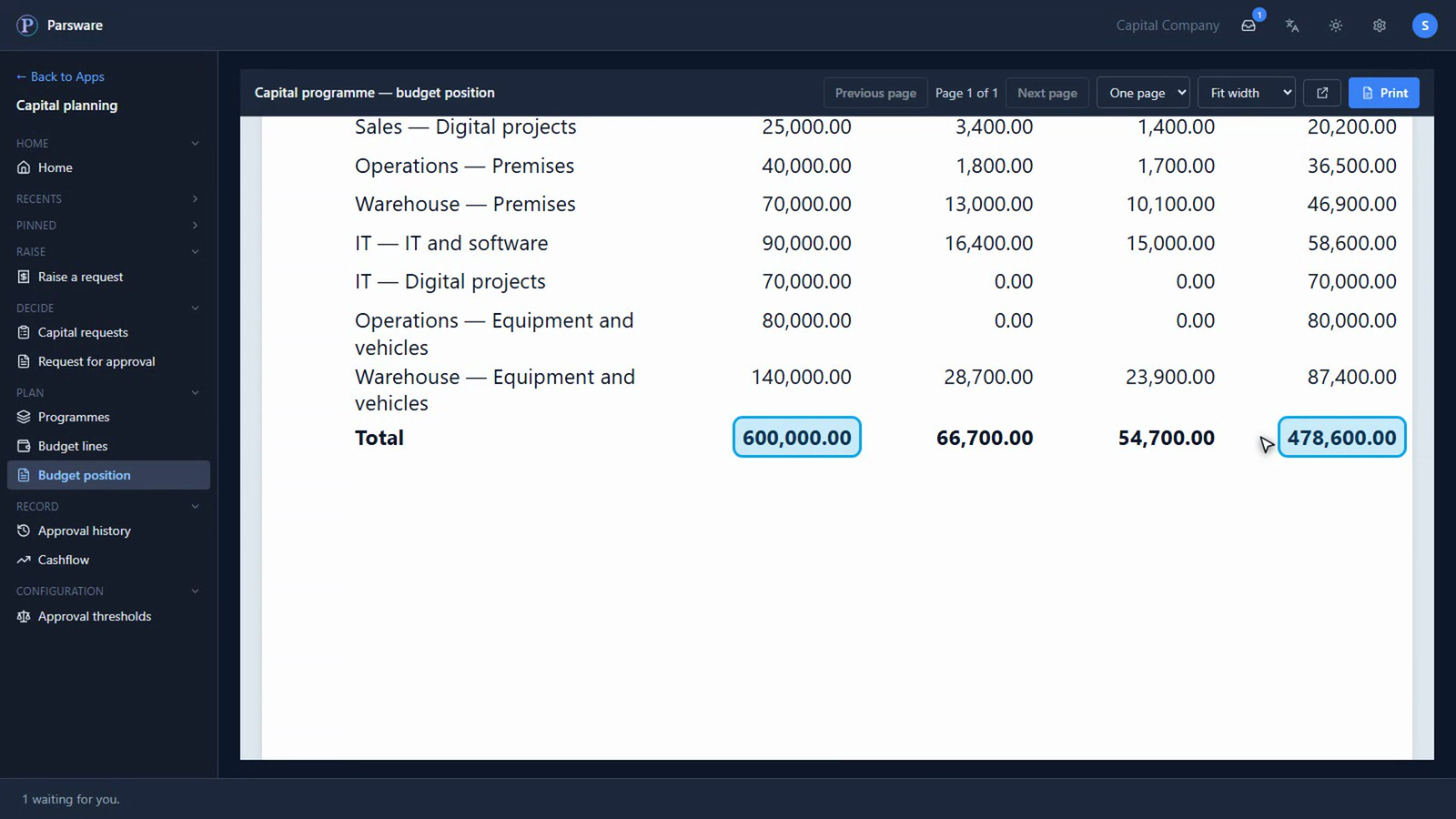
At the bottom is the whole year: £600,000, with £478,600 still left.
Say yes, and the line moves
Now watch one line. The warehouse's equipment has £87,400 left.
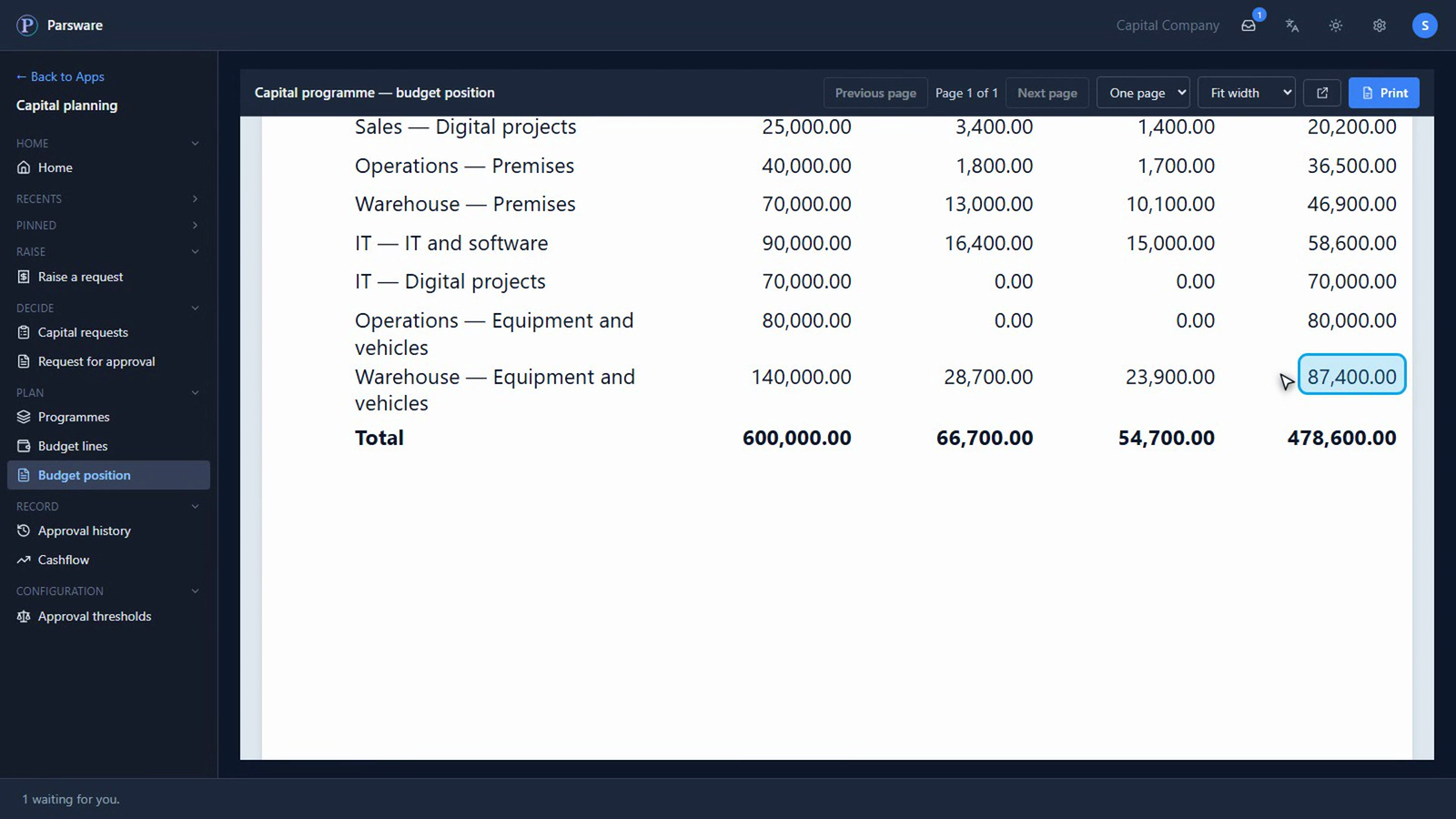
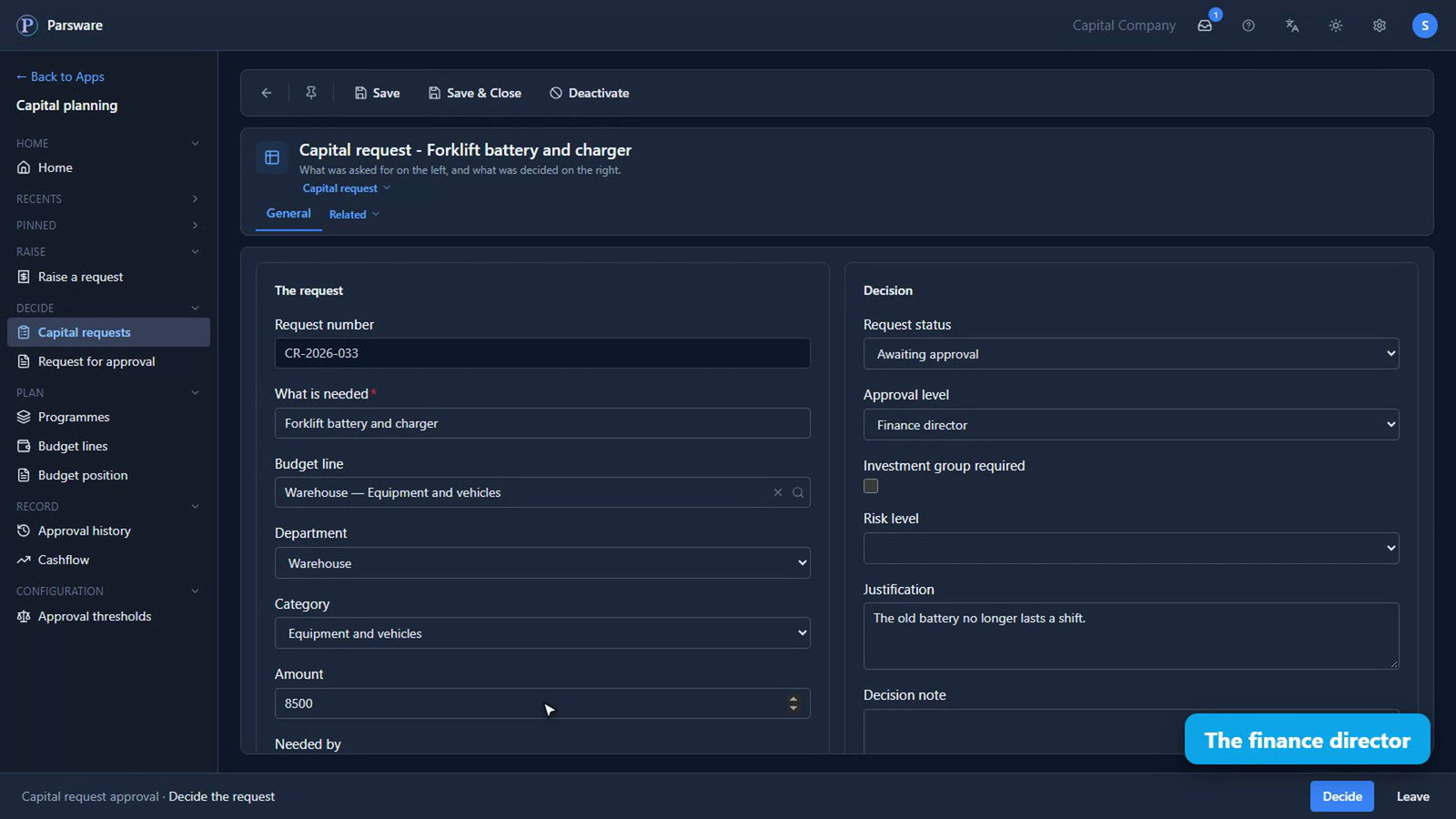
A request is waiting for the finance director: a forklift battery, for £8,500. They approve it with one click.
Back on the same page, that line says £78,900 left, and £37,200 committed instead of £28,700. Nobody typed it in. The line has also moved up the list, because it now has less left than the line below it.
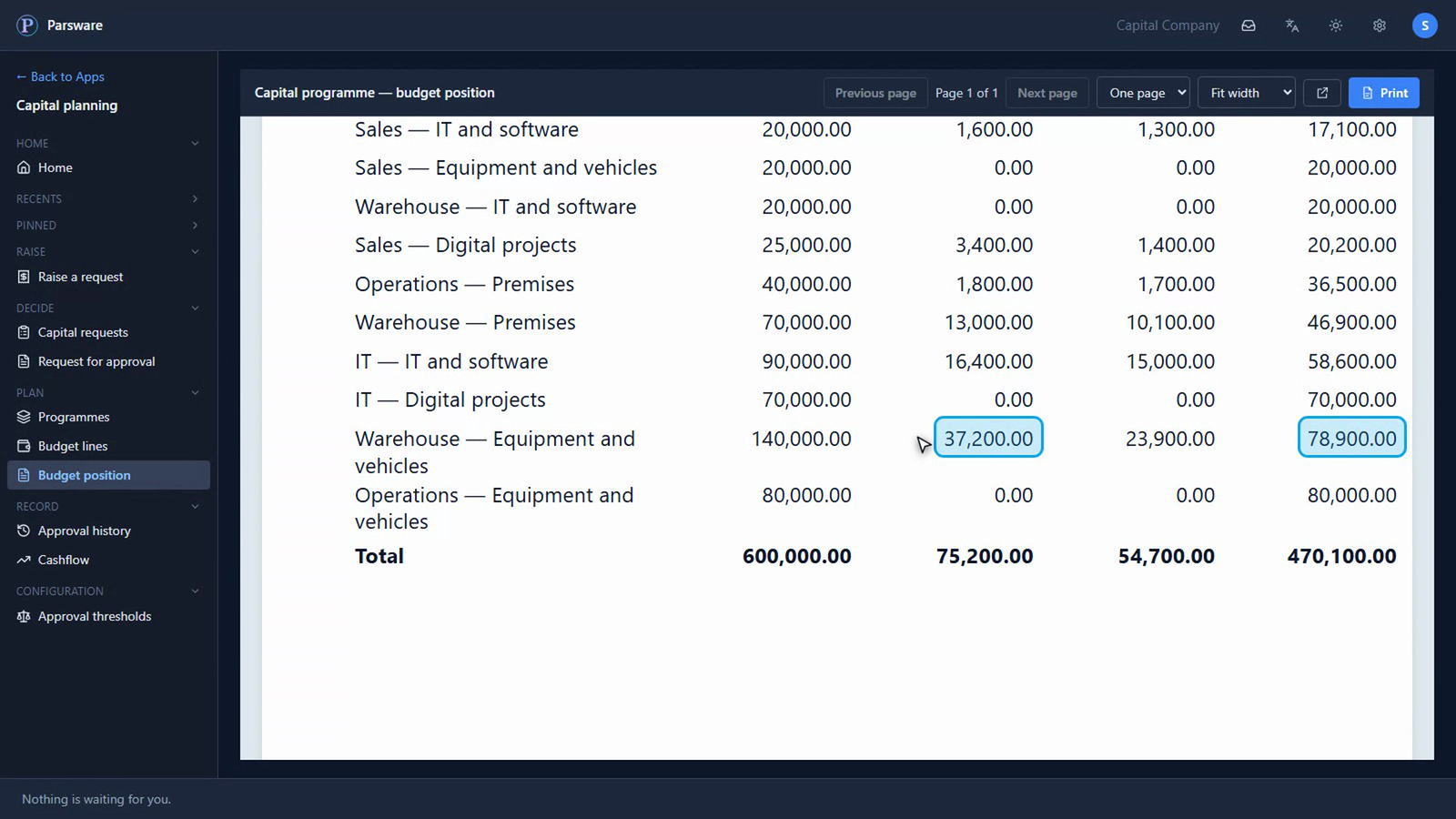
What moves is what's been promised. An approval doesn't change Spent or the cashflow: those are what went out of the bank, recorded when it happens.
From there, it can go on the screen in the meeting, or to the printer.
When does the money go out?
That's the other question somebody will ask. The cashflow lists every request, month by month: what was forecast, and what actually went out. In April, the network switches had £2,000 forecast and £1,900 paid.
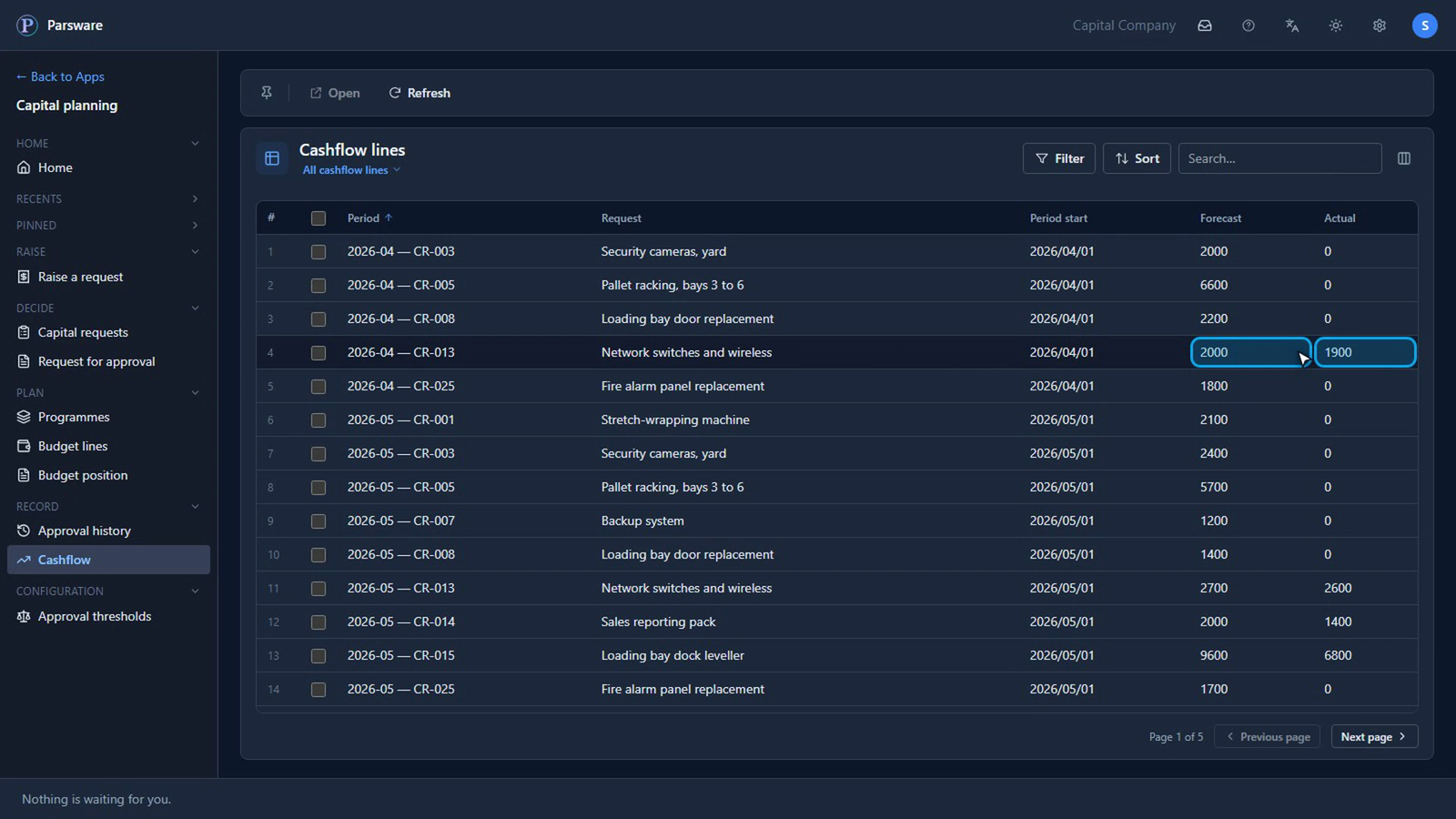
It's a list, not a chart, and it doesn't add up the months for you. In this demonstration, everything in its Actual column comes to the same £54,700 as the Spent total on the report.
What it means for you
- One page answers how much is left, for every line and for the year.
- Each line adds up in front of you, so nobody has to take the total on trust.
- When a request is approved, what's promised and what's left change at once, with no second copy to update.
Tell us how your business runs, and we'll show it to you running on Parsware: parsware.com/contact.