Ask for it once, with the answer on screen
You ask for two laptops, and two weeks later the answer comes back: wrong budget. Here is one request that goes round once, because the page says what it needs and what's left while it is being filled in.
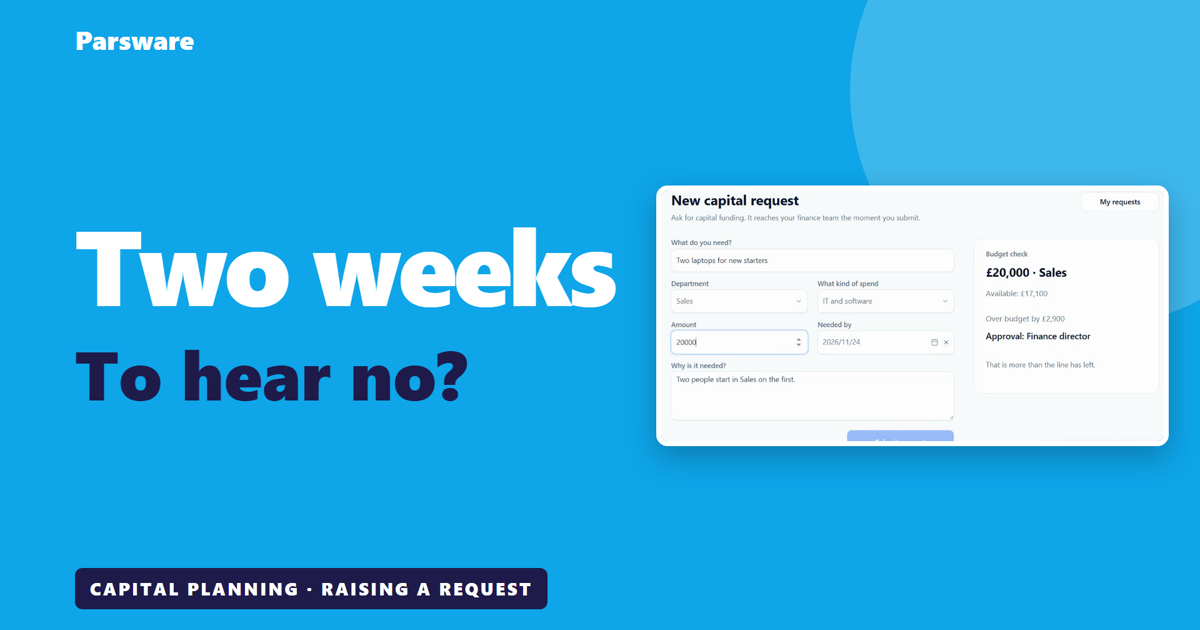
You ask for two laptops. Two weeks later, the answer comes back: wrong budget.
Most requests go round at least twice. The wrong budget. The wrong person to sign it. A box nobody knew to fill in. Each trip costs days, and the person asking can't see any of it coming.
Here is the same request on Parsware, raised by a sales manager in a demonstration company of forty people. There is one page, and a panel beside it that answers as you go.
It says what it needs next
The panel always names the next thing missing, so nobody has to work out what a finance team will send back. In order, it says:
| What's missing | What the panel says |
|---|---|
| What it's for | Say what you need. |
| The department | Choose a department. |
| The kind of spending | Choose what kind of spend it is. |
| The amount | Enter an amount in pounds. |
| The date | Pick the date you need it by. |
| The reason | Say why it is needed. |
| Nothing | Ready to send. It will be submitted in your name. |
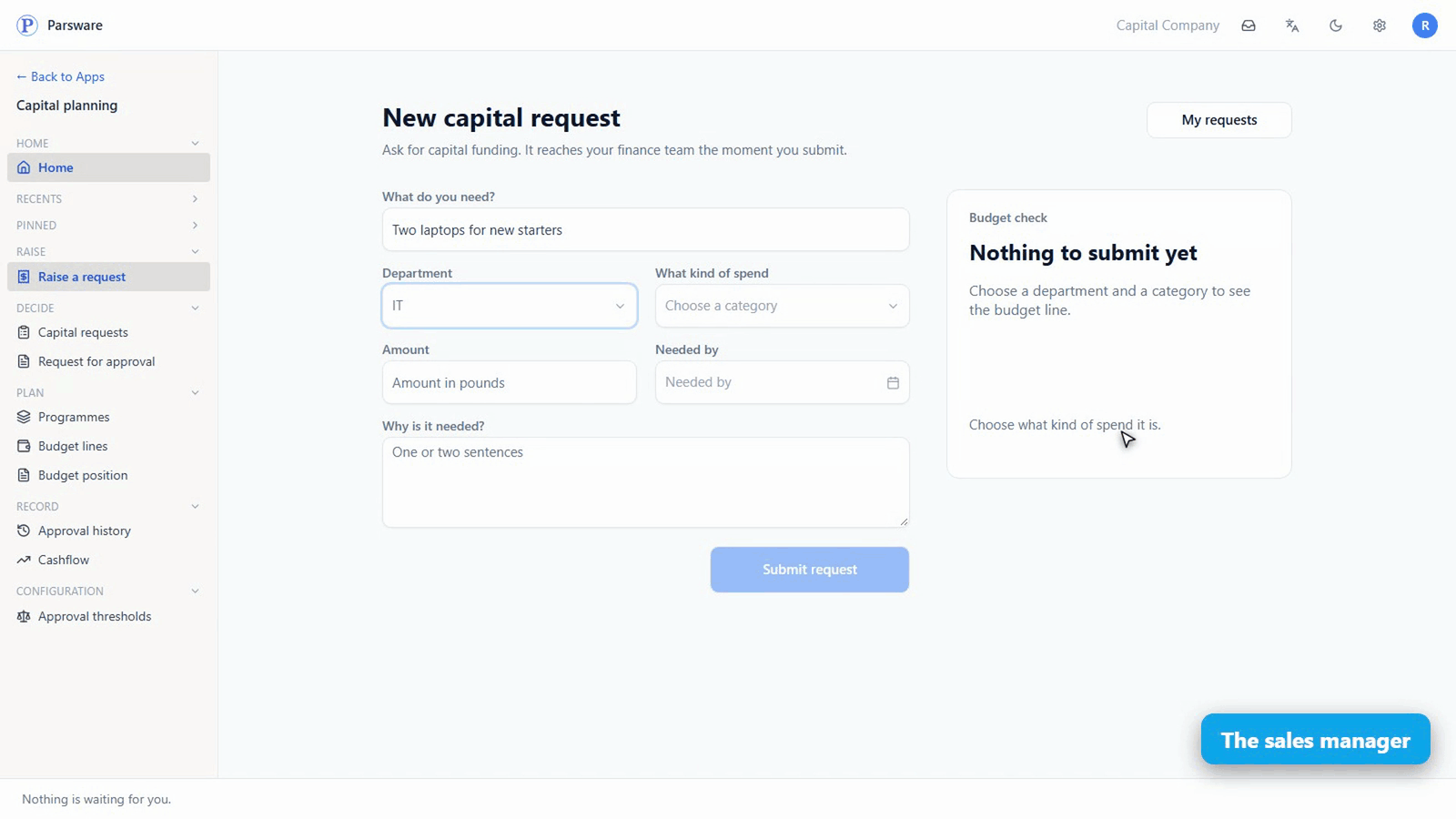
A budget that doesn't exist says so at once
A department and a kind of spending together name a budget. Choose a pair that doesn't have one, and it says so straight away, rather than in a fortnight.
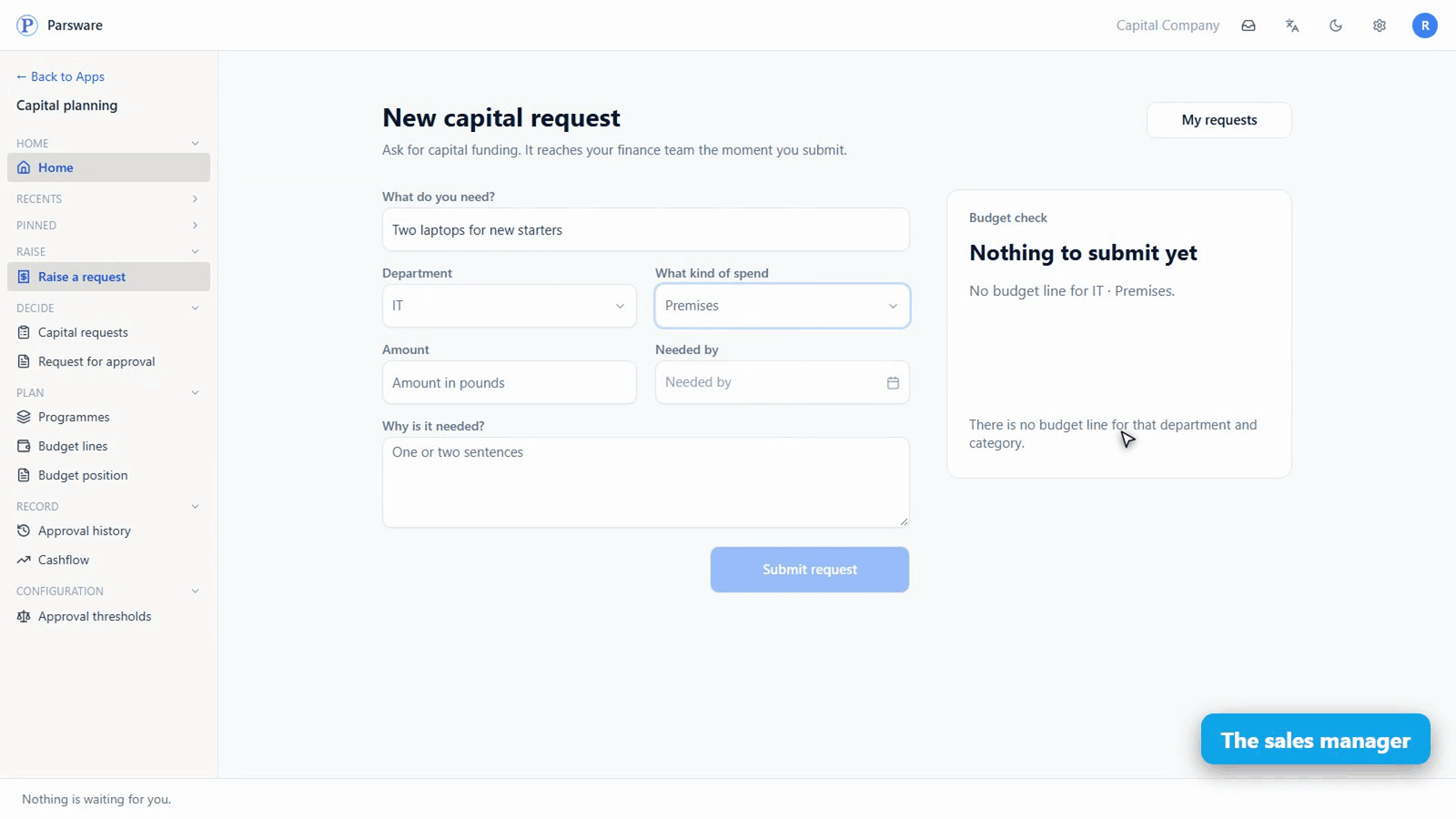
Choose the right pair, and there is the first answer: £17,100 is left for Sales to spend on IT and software.
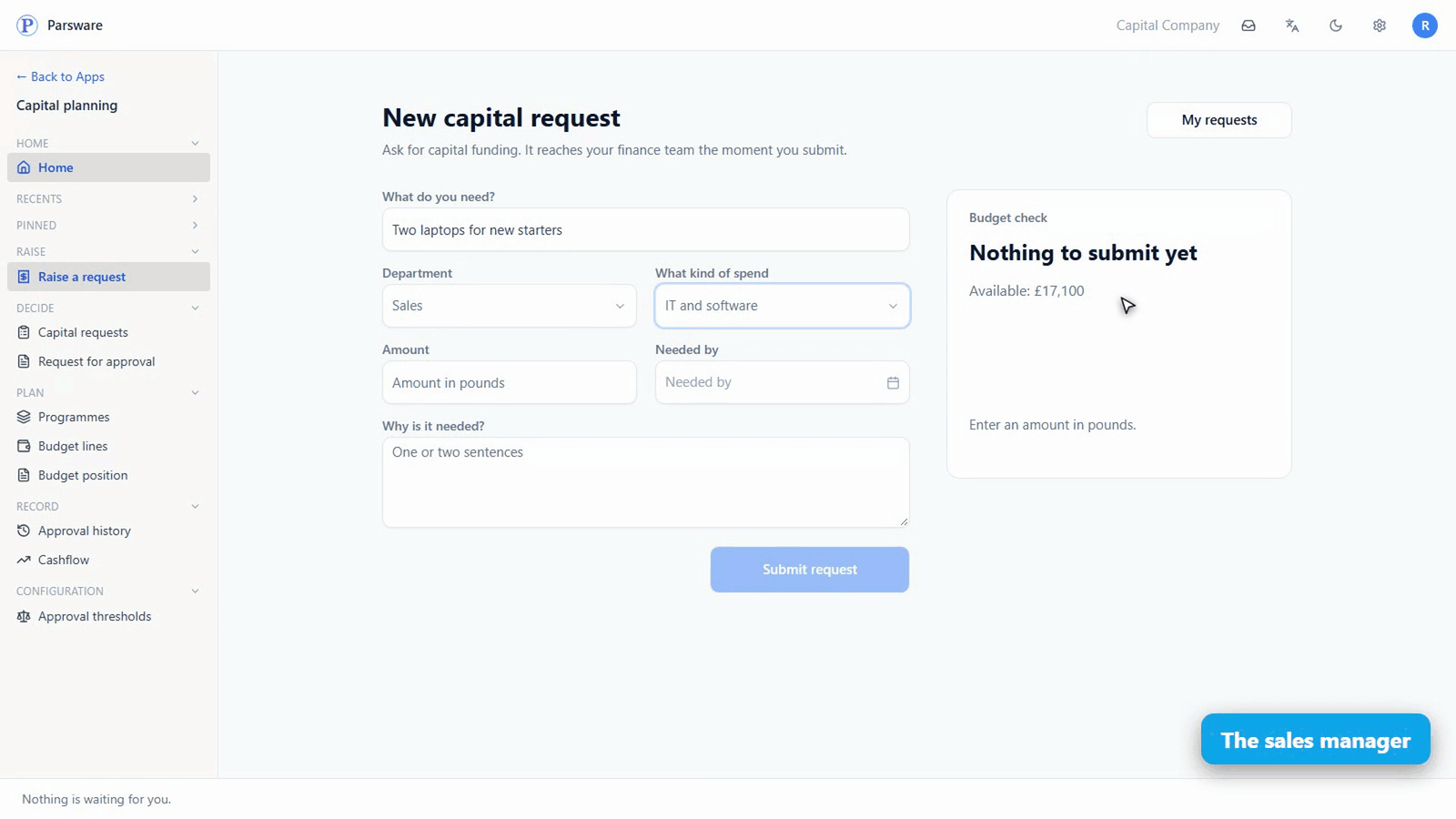
It shows who decides while the amount is typed
Type £2,800, and it shows what this would leave, £14,300, and who decides: the department head, so it's a short trip.
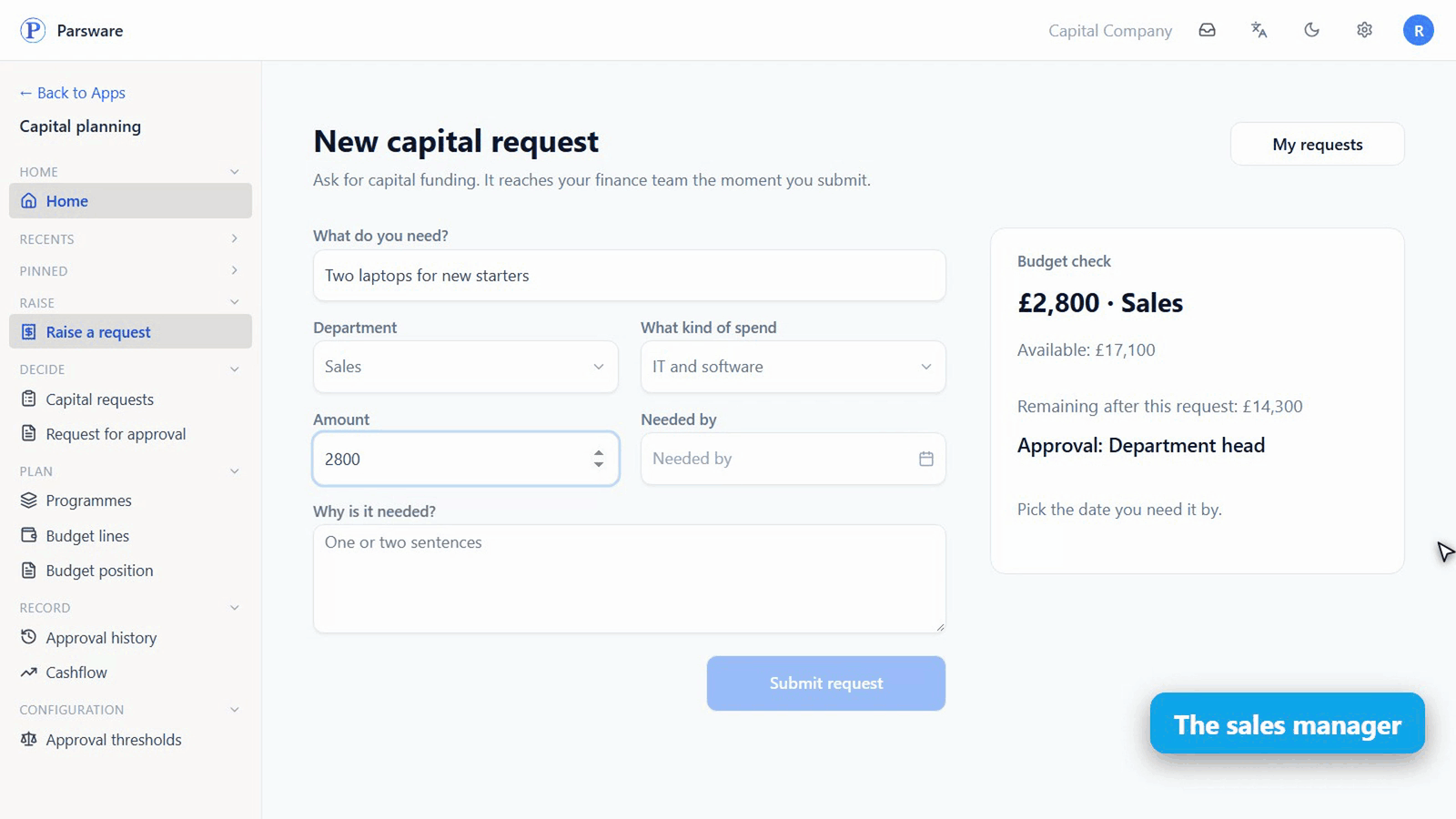
Make it £6,000, and that changes by itself. That one is the finance director's, under the limits you set. Nobody had to look the rule up, or know there was one.
It won't send what can't be met
Add the date and the reason, and when nothing is missing, it says so and the button comes on.
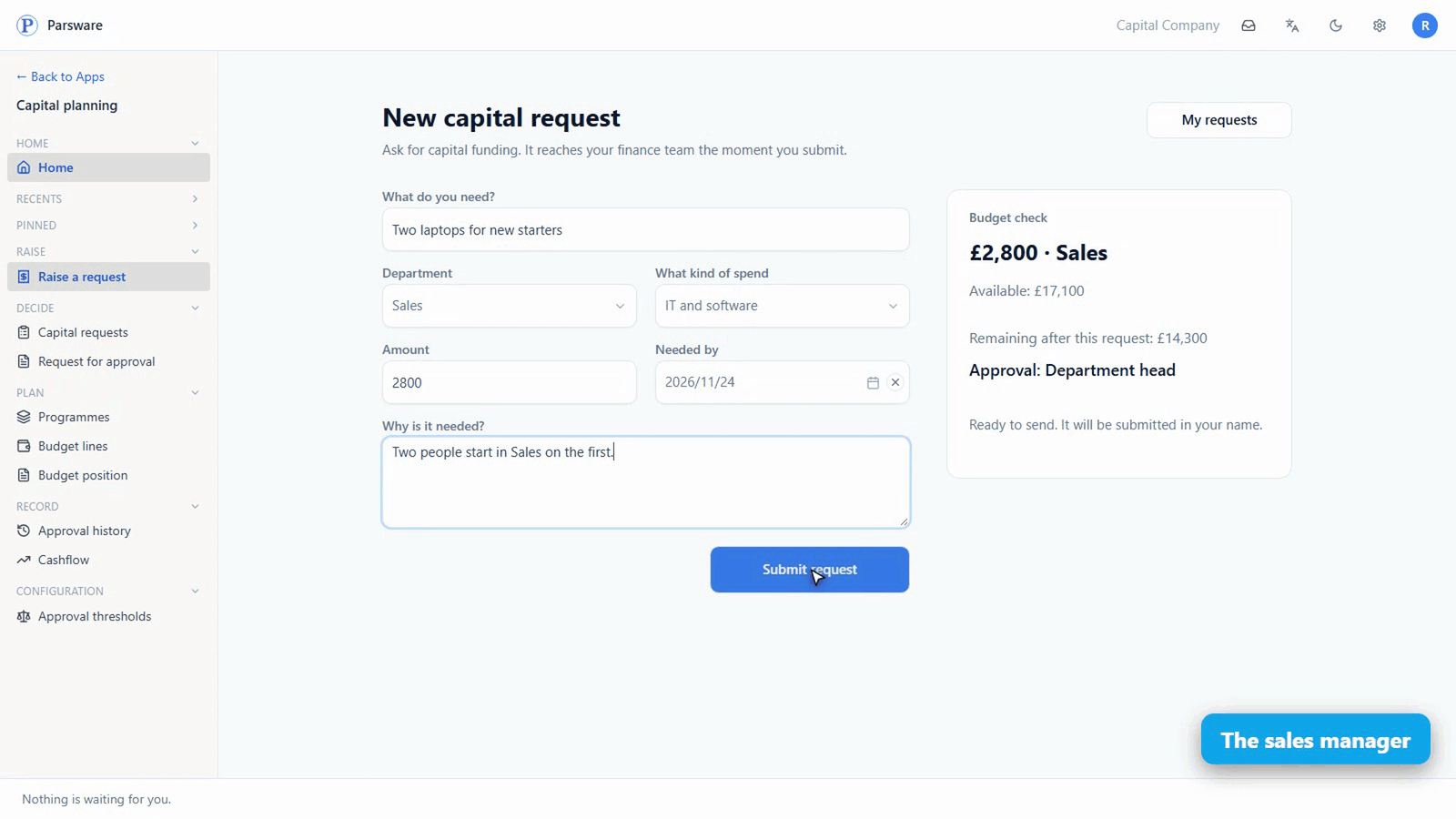
Now ask for £20,000. That's more than this budget has, so it says by how much, and the button goes dead. A request that can't be met can't be sent.
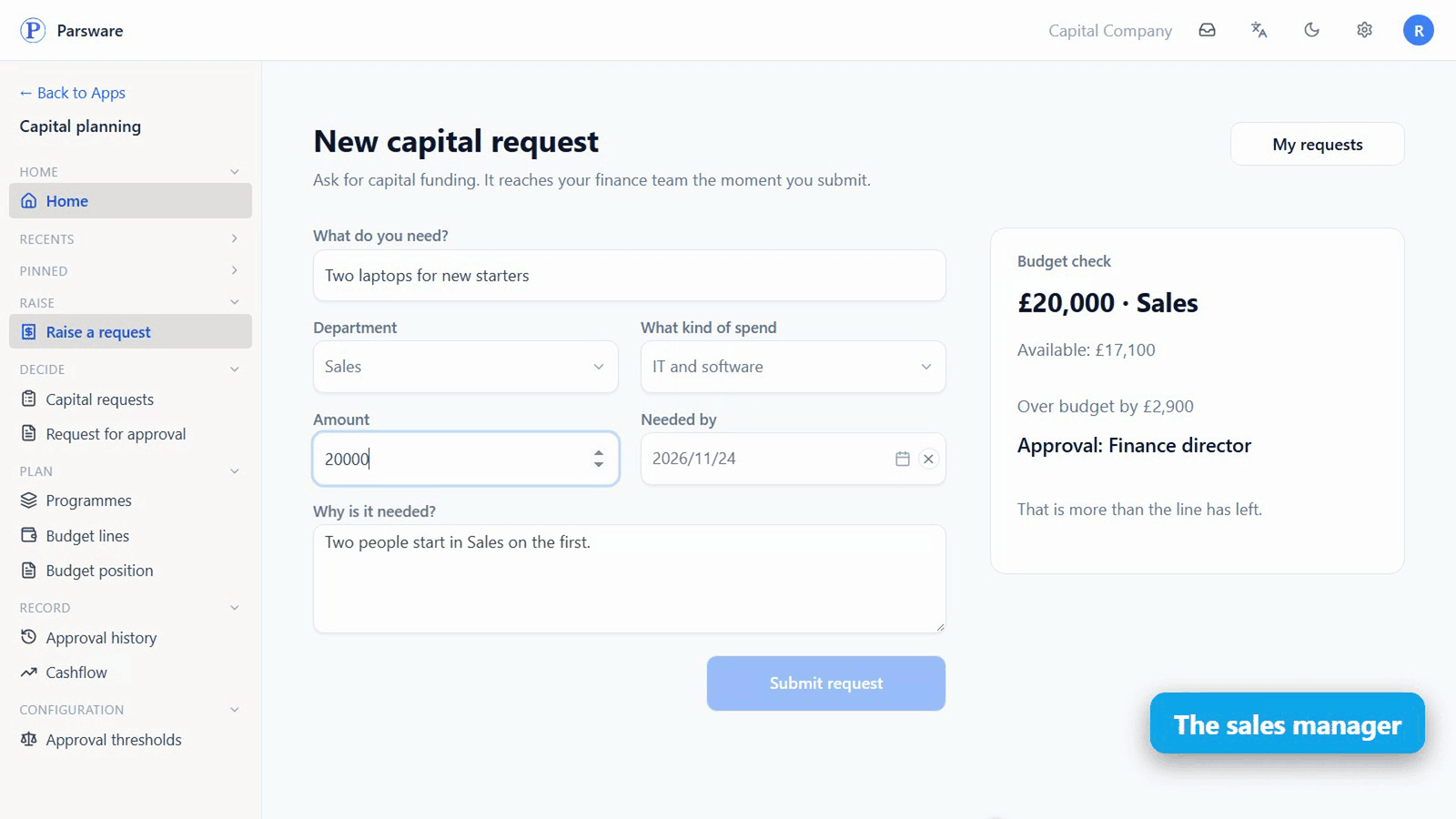
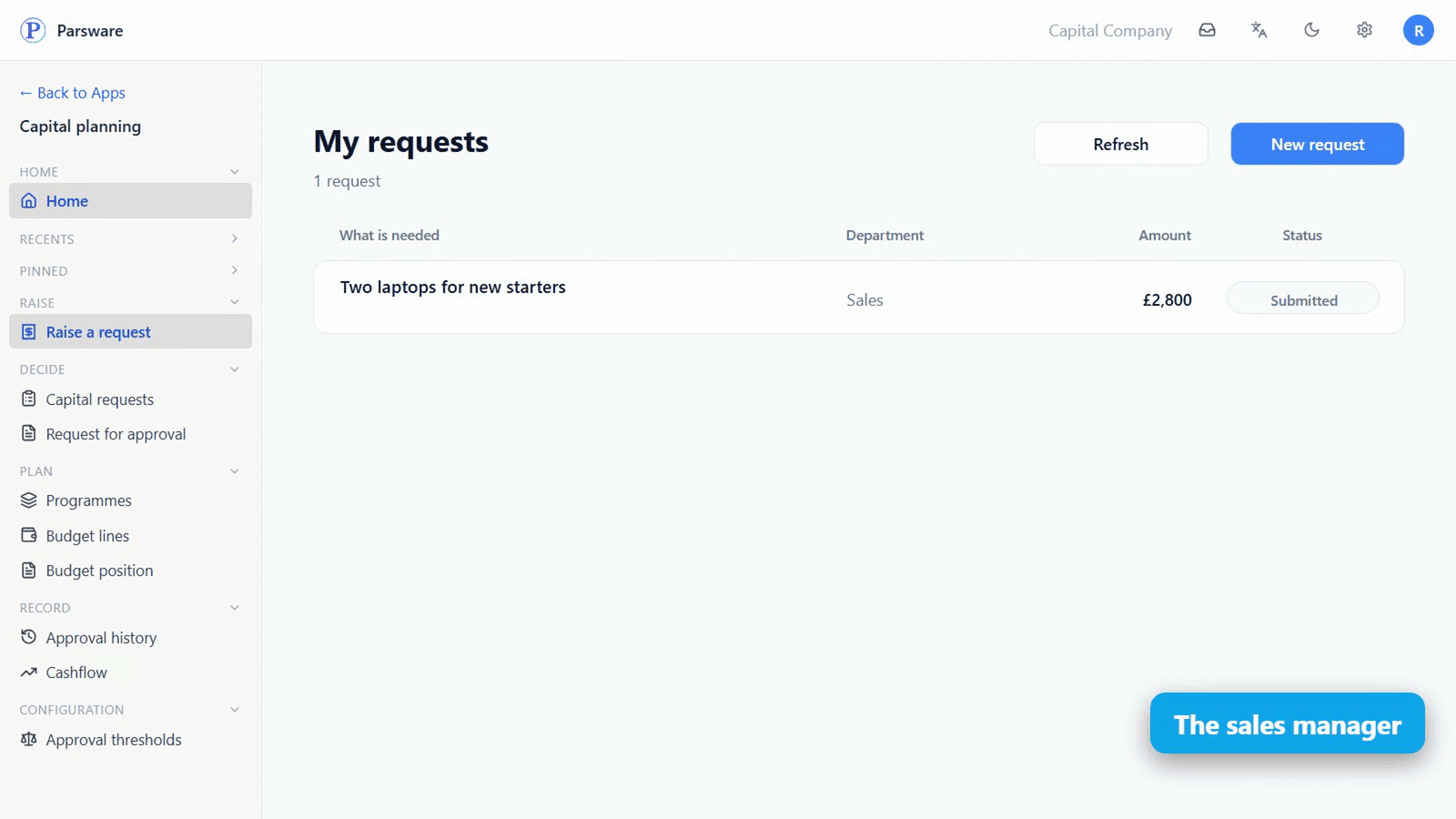
Back at the right amount, it goes, once. And there it is on the manager's own list, with where it has got to, so there is nobody to chase.
What it means for you
- Every request reaches its decider complete, because it can't be sent otherwise.
- Every request is against a budget that can pay for it, on the day it was asked.
- Nobody spends a fortnight finding out it was wrong.
Tell us how your business runs, and we'll show it to you running on Parsware: parsware.com/contact.