Every change, on the record
Who approved that change, and what was it before? In a demonstration bank on Parsware, the order says who asked and who decided, a person's history stays as it was, and the audit trail keeps every change, before and after.
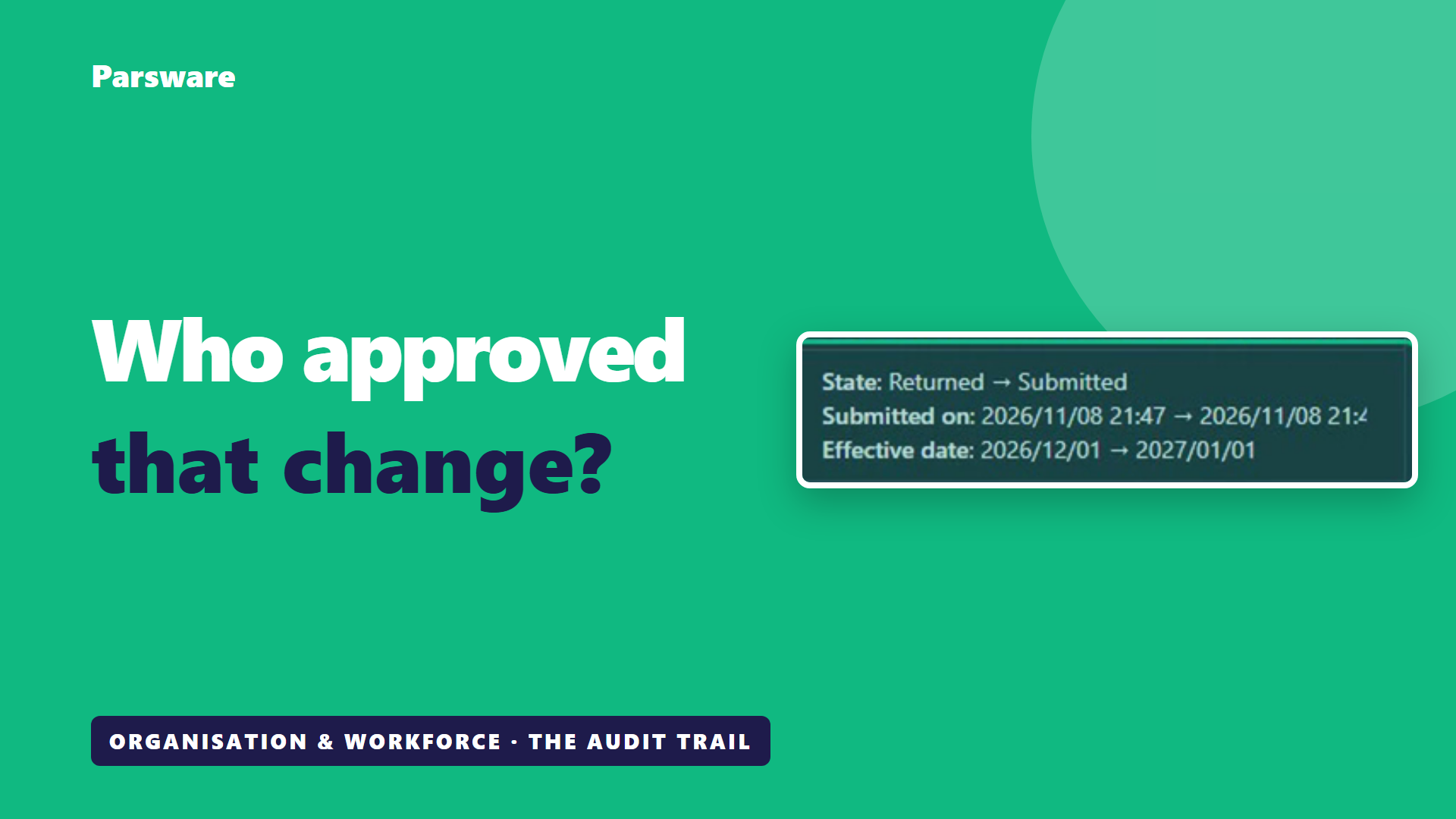
Who approved that change? And what was it before?
In most organisations, somebody goes looking through old emails. The change was made. Who made it, and what it replaced, nobody wrote down.
Here's the other way, in a demonstration bank on Parsware. This isn't banking software. It's how any large organisation keeps its changes on the record. The screens are the real application, and the people and the data are made up for the demonstration.
The order says who asked, and who decided
Rachel works in HR. She opens Tom's transfer, the order from an earlier article.
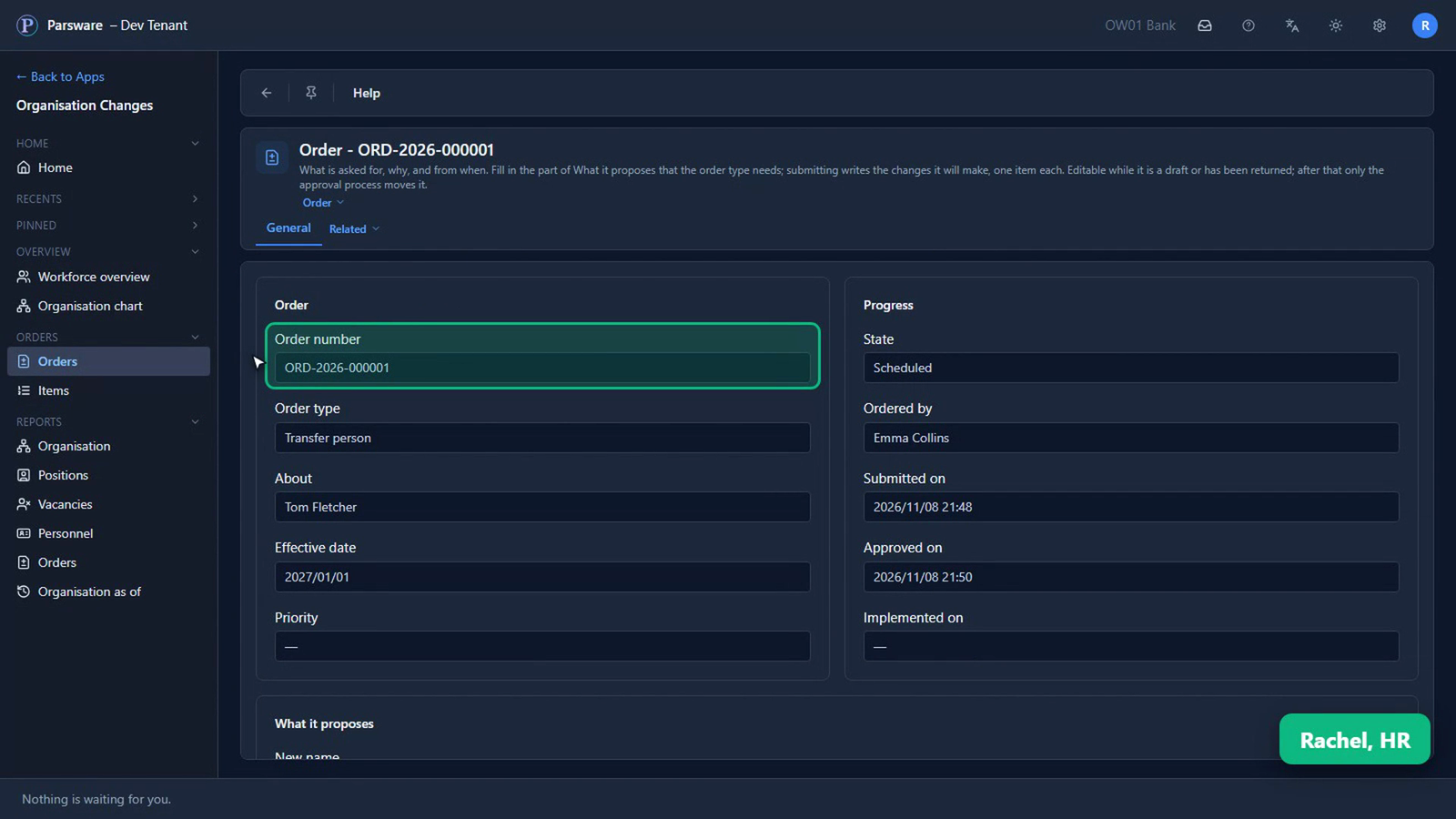
Who asked for it, and when, is on the order. Emma, a teller, sent it.
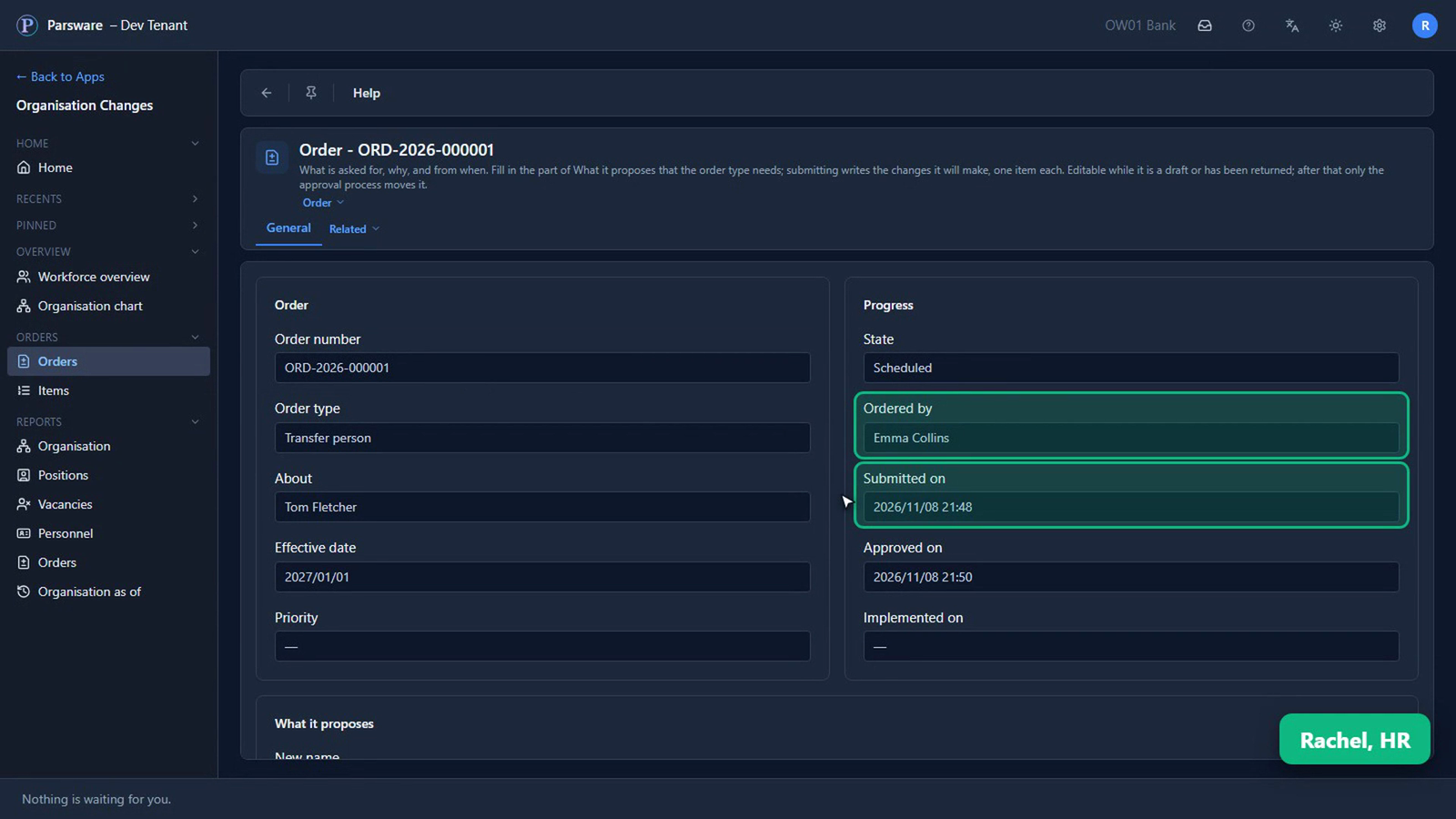
Who decided, and what each of them said, is on it too. Laura approved. Daniel returned it with a note. The second time round, all four approved, Rachel last.
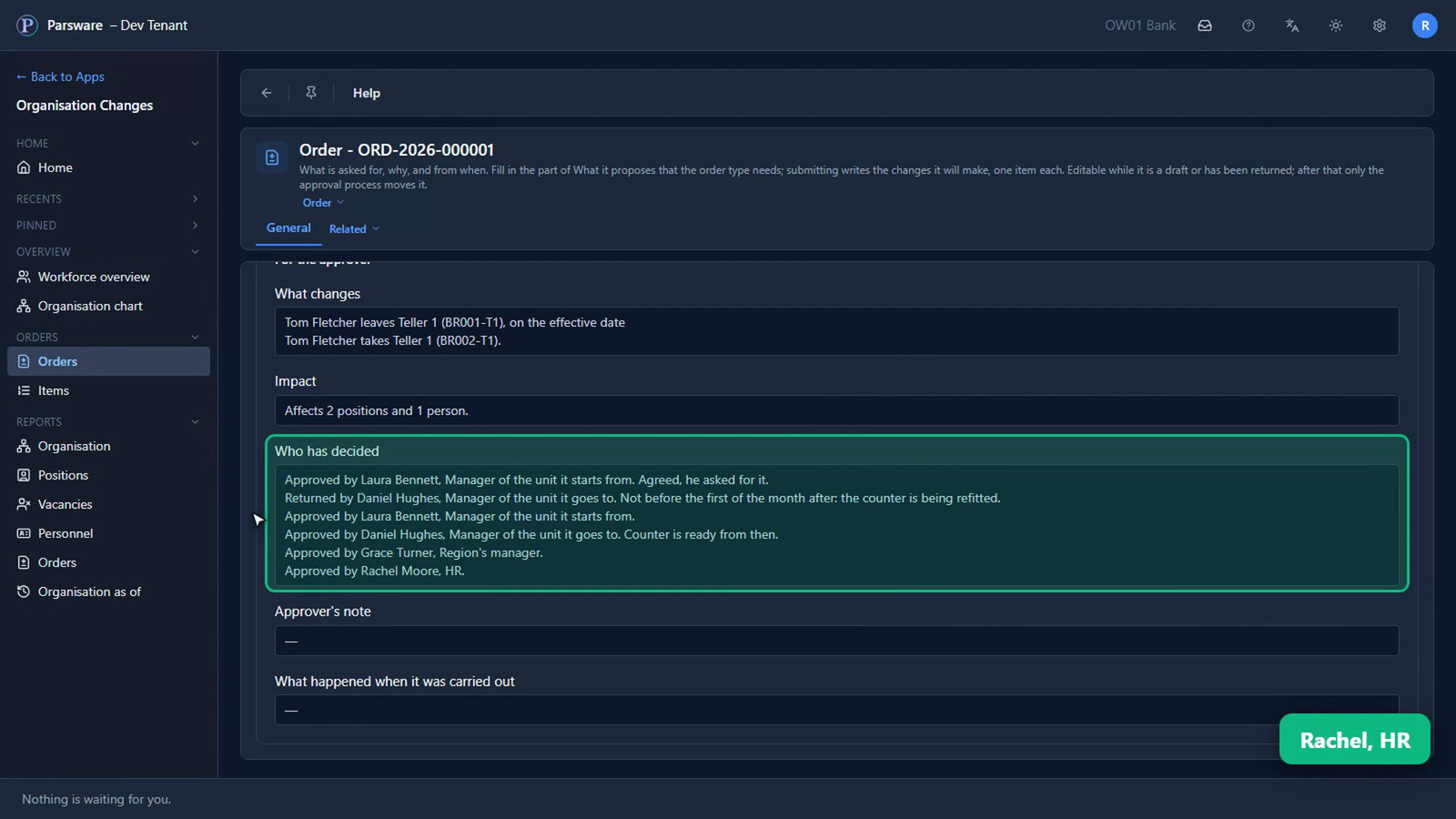
And what it changes, in words: Tom leaves one teller seat and takes the other.
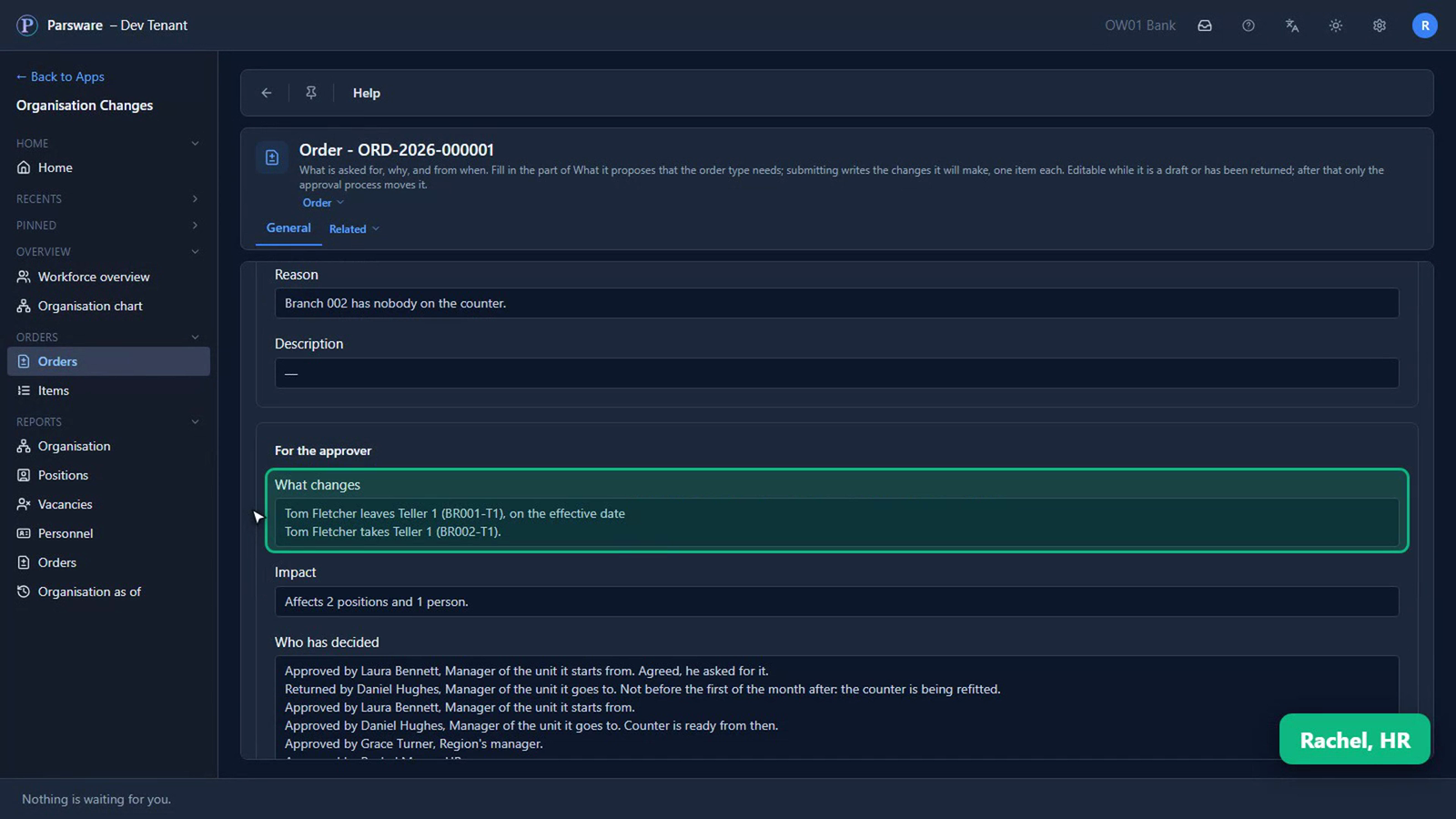
Nobody typed any of this. The process wrote it down as it happened, and nobody can change it afterwards.
History stays as it was
A person's history is kept the same way. Tom's assignments: Branch 002 from 2020, then Branch 001 since the start of 2025.
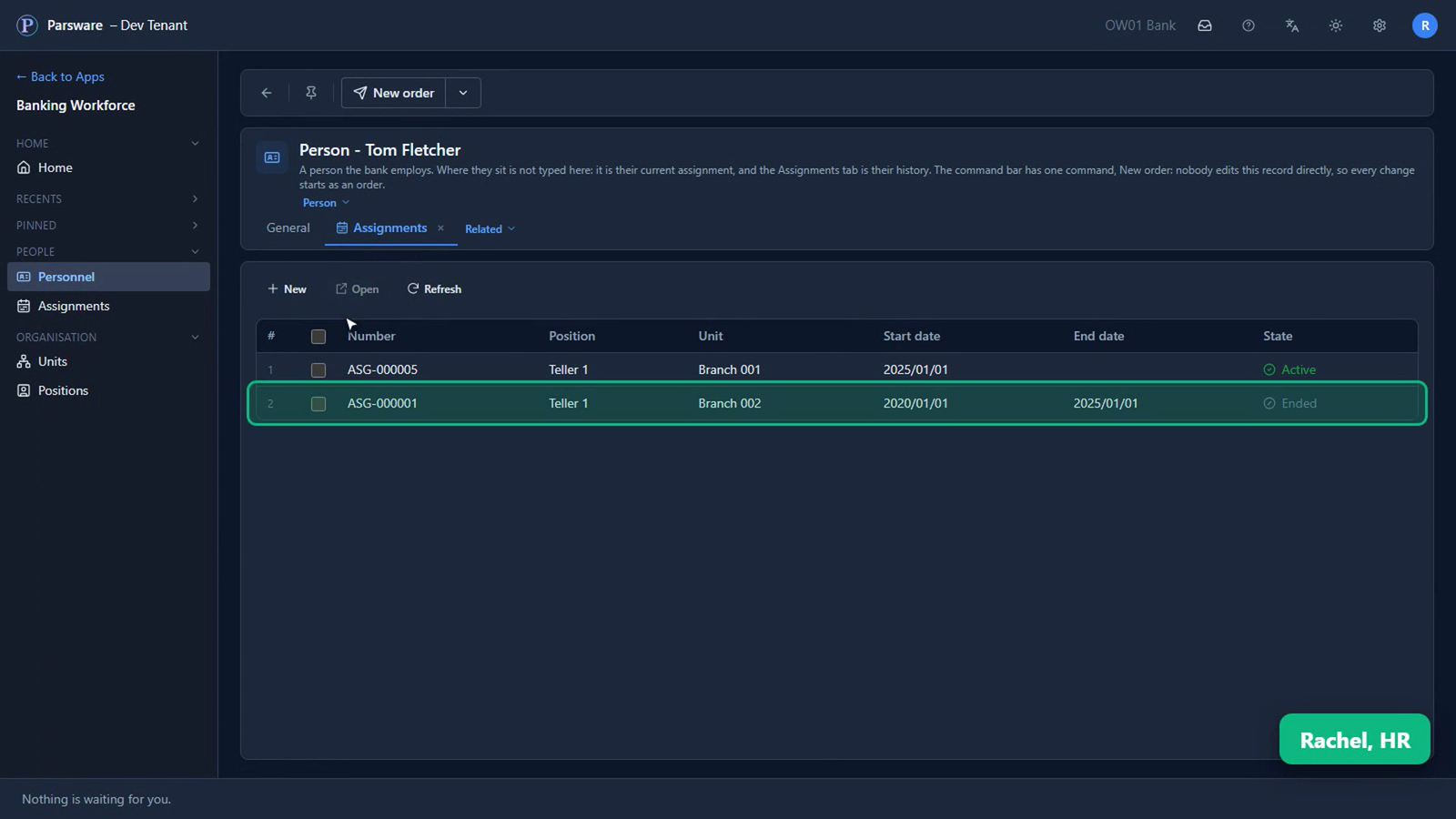
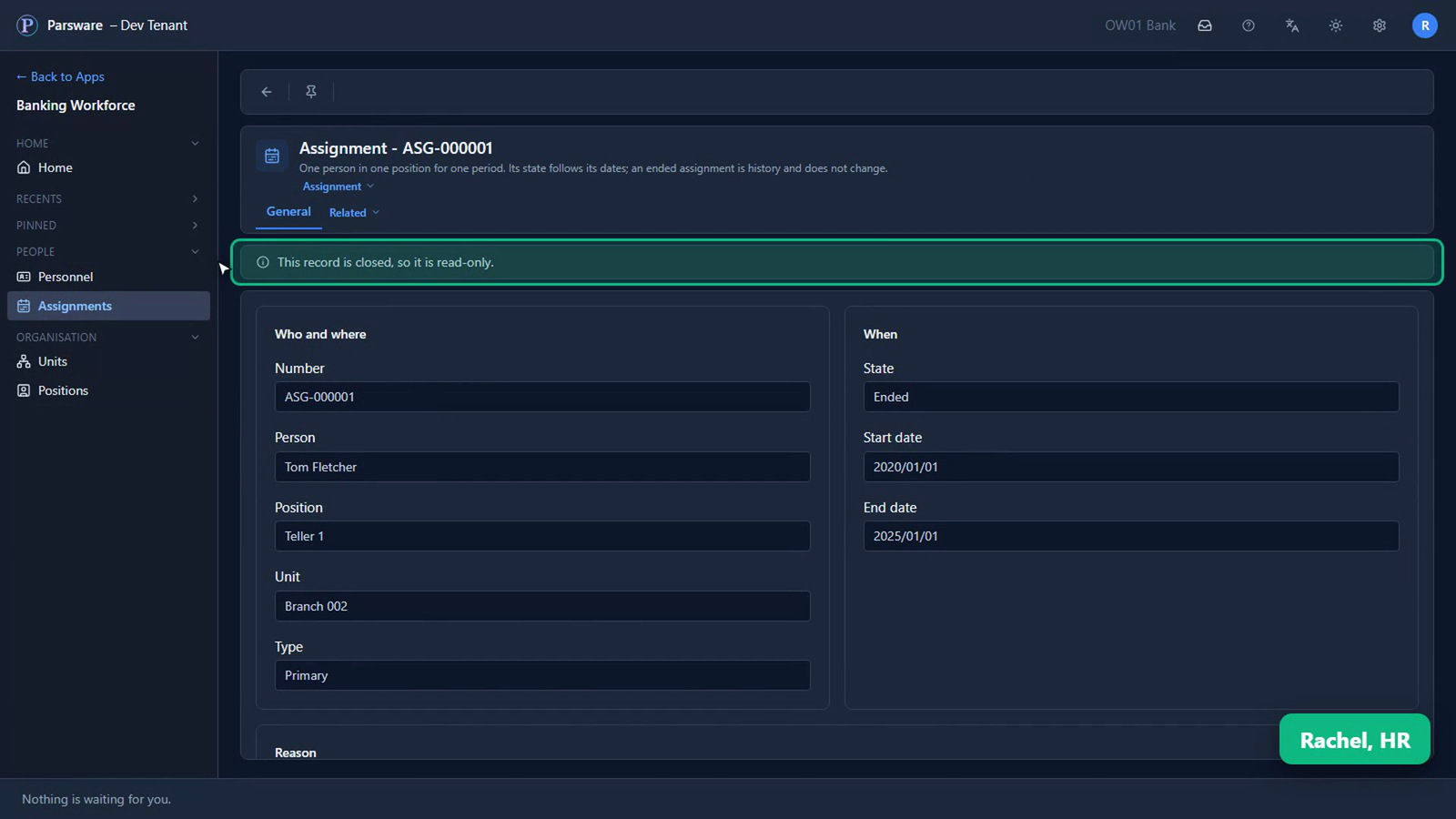
An assignment that has ended is history. It opens closed. Nothing on it can be changed, and it can't be deleted.
And under all of it, the audit trail
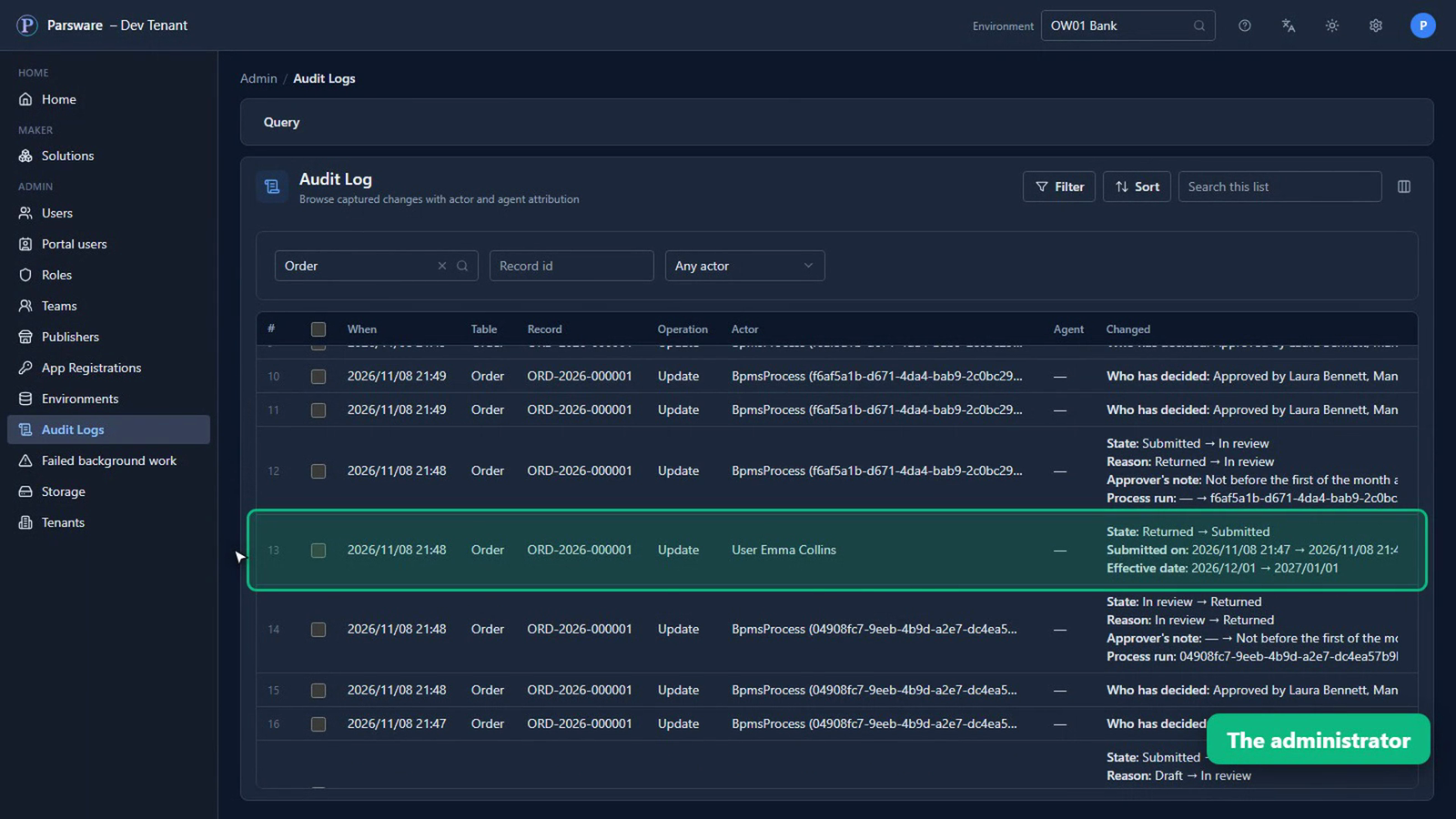
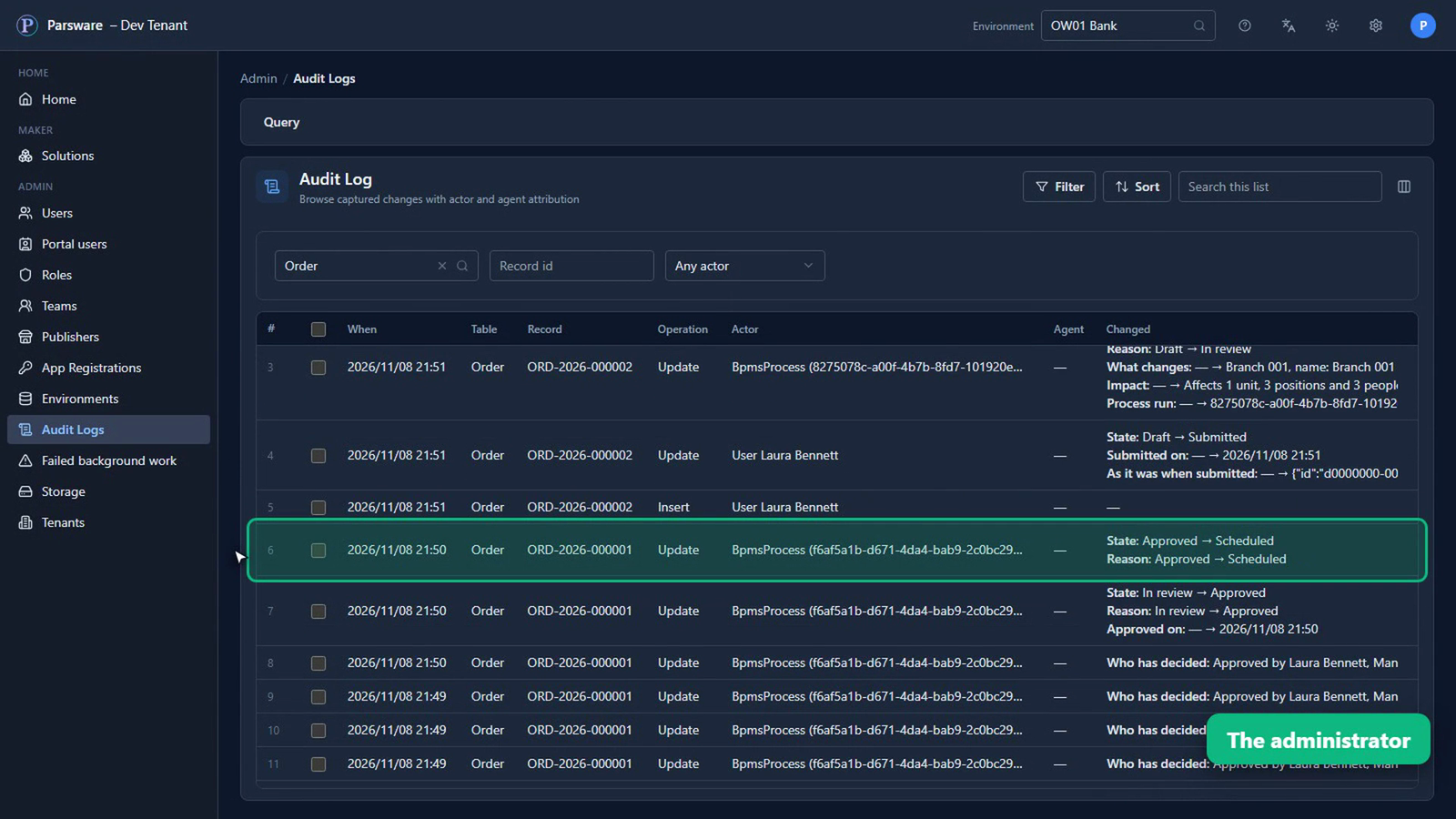
The bank's administrator sees every change to every record: when, who, and what it was before and after.
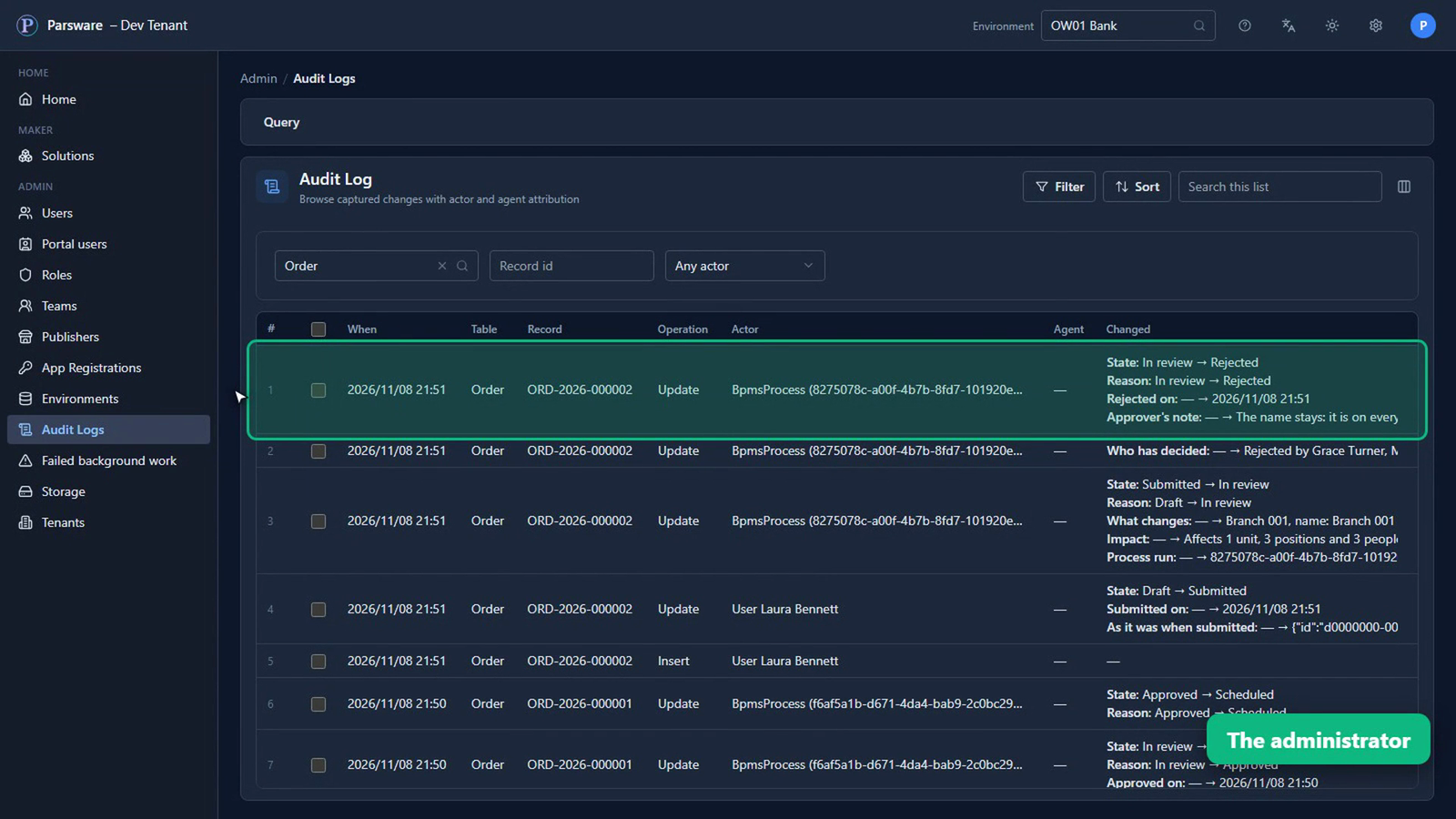
Here's Tom's transfer, step by step. Daniel returned it. Emma sent it again, with a later date: the first of December became the first of January.
Then the approval process approved it, and scheduled it for its date.
What you know now that you didn't
- Who asked for a change, who decided and what each of them said are on the change itself, written as it happened.
- A person's history stays as it was: what has ended can't be changed or deleted.
- The audit trail keeps every change to every record, who made it, and what it was before and after.
- Nobody has to go looking through old emails to find out who approved something.
Tell us how your business runs, and we'll show it to you running on Parsware: parsware.com/contact.