3 things you should never hardcode into business apps
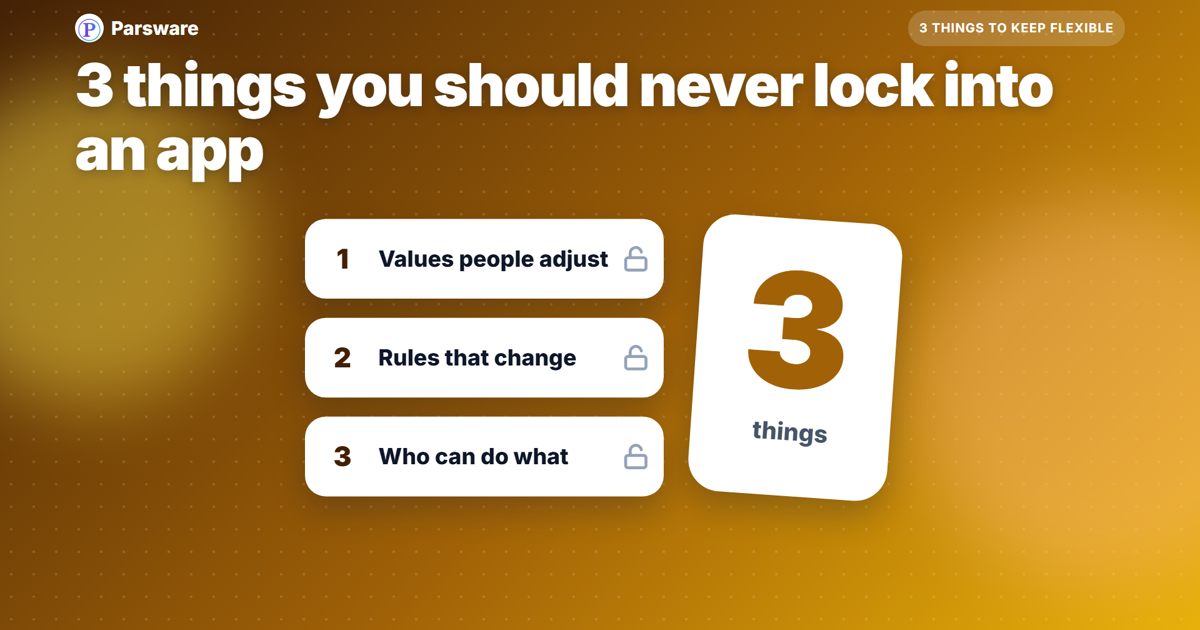
If your business rules change often, don't lock them into the app. Values people adjust, rules that change with operations, and who can do what should be settings, not code.
"Hardcoding" is a developer's word, but the problem it describes is a business one. When something is hardcoded, it is written into the application itself, so changing it means changing the application: a request, a developer, a test, a release. For things that never change, that is fine. For things that change every few months, it is a recurring bill.
Three kinds of thing are worth keeping out of the code.
1. Values that business users need to adjust
Prices. Discount rates. Approval limits. Notice periods. Reorder levels. These are business decisions, made by managers, and they change whenever the business decides they should.
If they live in the application's code, every price rise is a software change. If they live in a table the right person can edit, a price rise takes a minute and happens the same day.
Ask of any app: when we change a price or a limit, who does it, and how long does it take?
2. Rules that regularly change with operations
Who approves what. Which requests need a second signature. What happens when a booking is cancelled late. Rules like these follow the business: a new manager, a new branch, a new policy.
When a rule is configurable, the business adjusts it. When it is fixed in code, the business either waits for a release or starts working around the system, which is how processes end up in email.
Ask of any app: can the rule be read and changed by the people responsible for it?
3. Access permissions that need clear administration
Who can see the takings, who can change a price, who can approve a request. Permissions change every time someone joins, moves or leaves.
They need clear administration: roles that can be given and taken away, and a way to see who has what. If access is decided in code, or worse, by everyone sharing a login, nobody can be sure who can do what.
Ask of any app: when someone joins or leaves, how is their access set up or removed, and by whom?
Change without a project
Important business changes should not always require a full redevelopment project. Some changes do need developers, and that is fine. The point is that the frequent, everyday ones shouldn't.
Where Parsware fits
Parsware is an app platform where values and rules can be records in tables, processes are edited in a designer, and access is managed through security roles. Forms, processes and reports are shaped to your business, AI is built into the designers, and we build custom mobile apps for iOS and Android.
Here is a permission at work in our Sports & Leisure sample application, a fictional leisure business (sample data, not a customer). The front desk can read a price list, so they can answer a customer, but there is no Save and nothing to type into: changing prices belongs to another role.
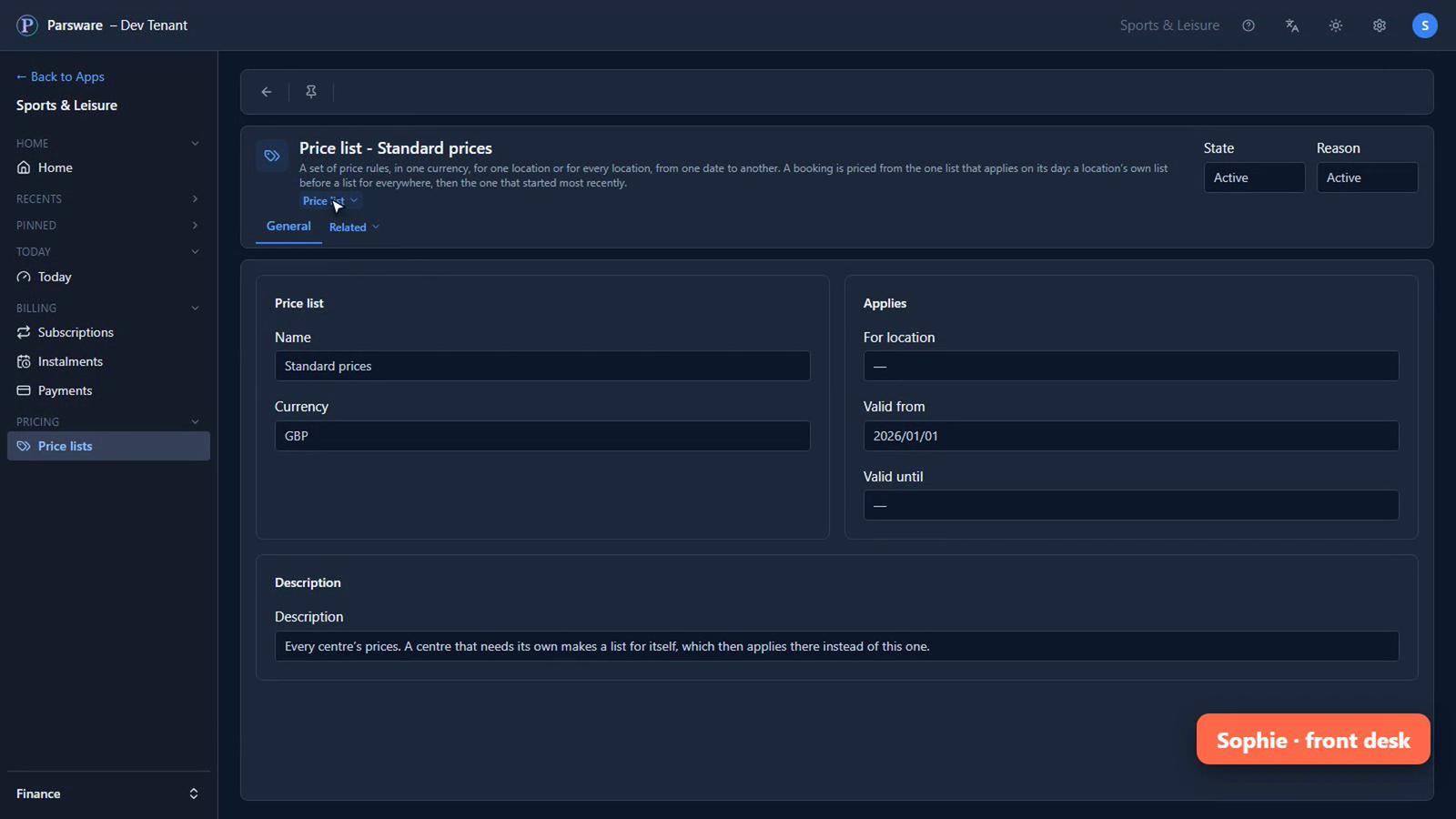
How each role gets its own access is in Everyone sees their own job.
Have you ever had to pay for a small software change? And if your business has a problem nobody has solved yet, tell us about it.