3 myths about building business applications
It always takes a huge project. Every business needs the same software. Changing a process means rebuilding the app. Three common beliefs about business applications, and what is actually true.
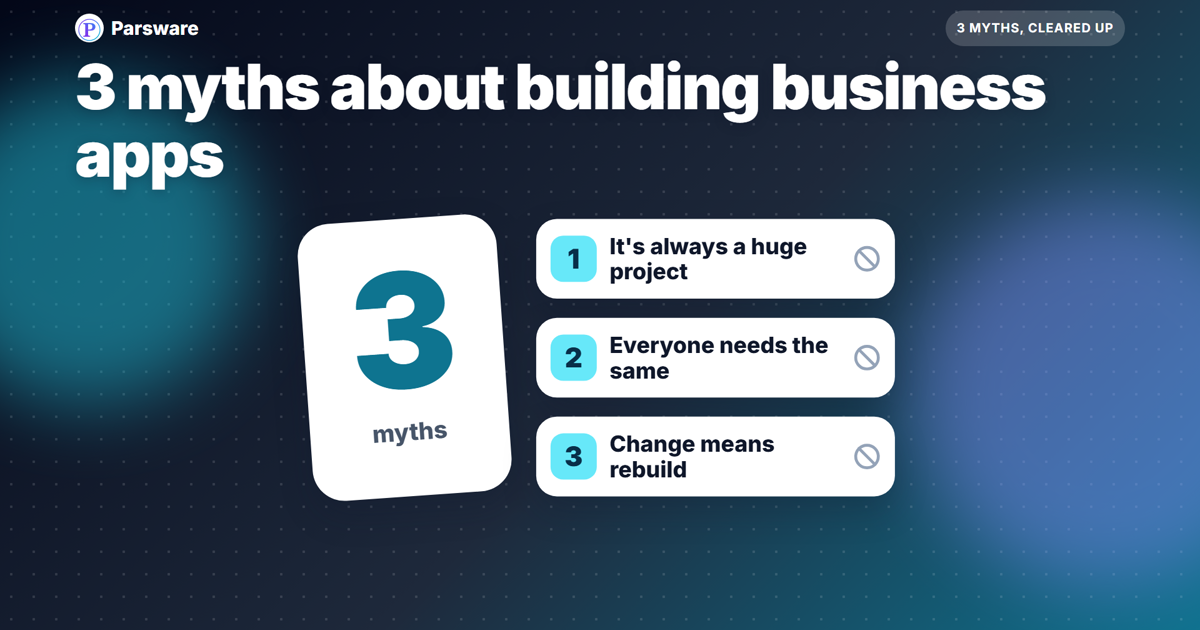
Ask a business owner why they haven't replaced the spreadsheets yet, and you will often hear one of three reasons. Each has some truth in it. None is true as often as people think.
Myth 1: Every business application requires a large traditional development project
The picture is familiar: a long specification, a large team, a year of work, a budget that grows. Some applications genuinely need that.
Many don't. A large share of business applications are records, forms, approvals and reports arranged around one process. Those can start small: one process, built and used, then extended when it works. Starting small also means finding out early whether the idea was right.
What is true: the size of the project depends on the problem, not on the fact that it is software. Start with the smallest version that does useful work.
Myth 2: Every business needs the same software
Packaged software works because many businesses share many needs, and for those needs it is often the right choice. But a leisure club, a warehouse, a head office and a shop do not run the same way. Their pricing, their approvals, their exceptions and their reports differ, and often those differences are what makes each business work.
What is true: use packaged software for what is genuinely standard. Where your process is your own, it is worth asking whether the software should fit it, rather than the other way round.
Myth 3: Changing a process always means rebuilding the application
Businesses change: a new approval limit, a new step, a new field. If every change needs a developer, a quote and a release, the application slowly falls behind the business, and people work around it.
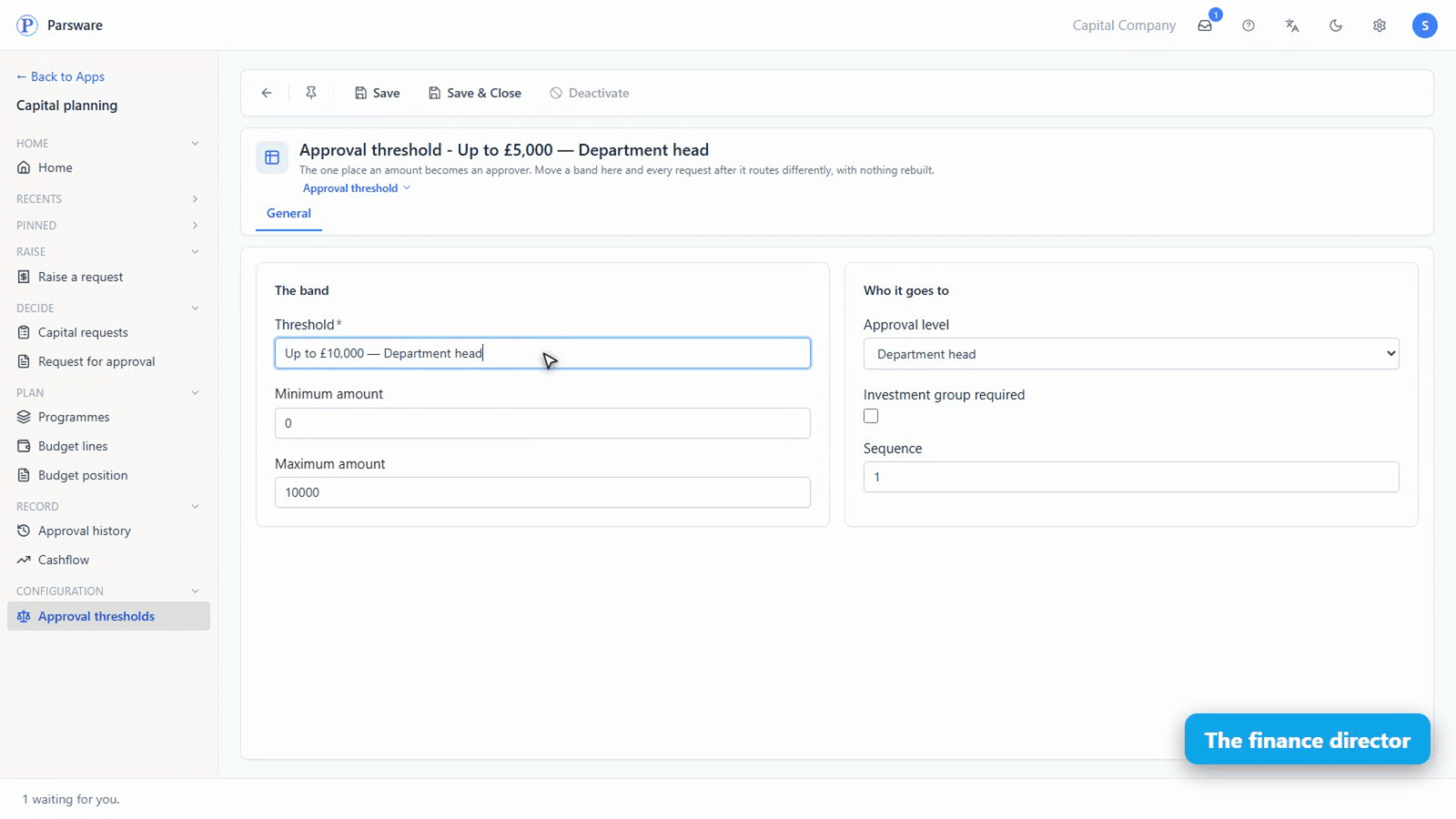
In many applications, the parts most likely to change can be settings and records that the business edits itself: a limit in a table, a step in a process designer, a field on a form.
What is true: some changes do need development work, and that is fine. But a well-built application separates the rules that change often from the code that doesn't.
It depends on the need
There are different ways to create and adapt business applications, and the right approach depends on the requirements. Packaged, custom-built and platform-built applications all have their place. The useful question is not "which is best?" but "which fits this problem?"
Where Parsware fits
Parsware is one of those ways: an app platform where forms, processes and reports are designed around your business, and many changes are edits in a designer rather than a rebuild. AI is built into the designers. It does not mean no technical work is ever needed; some work still needs developers, and we build custom mobile apps for iOS and Android too.
Here is myth three in practice, in our Capital planning sample application, a fictional company's budgets and approvals (sample data, not a customer). The finance team raises an approval limit from £5,000 to £10,000 by editing a record. Nothing is rebuilt, and every new request follows the new limit:
How the limits decide who approves each request is in Your limits, in one place.
Which software myth have you heard most often? And if your business has a problem nobody has solved yet, tell us about it.